Poland's National Veterinary Research Institute (PIB): what it means for your farm
The National Veterinary Research Institute (Państwowy Instytut Weterynaryjny, PIB) is based in Puławy and supervised by Poland's Ministry of Agriculture and Rural Development. It runs laboratory diagnostics and research. Farmers usually benefit from its work through their vet. Here is what is useful on a poultry farm and how to use it safely.
verifiedFrom the team that has organised work on poultry farms for years.
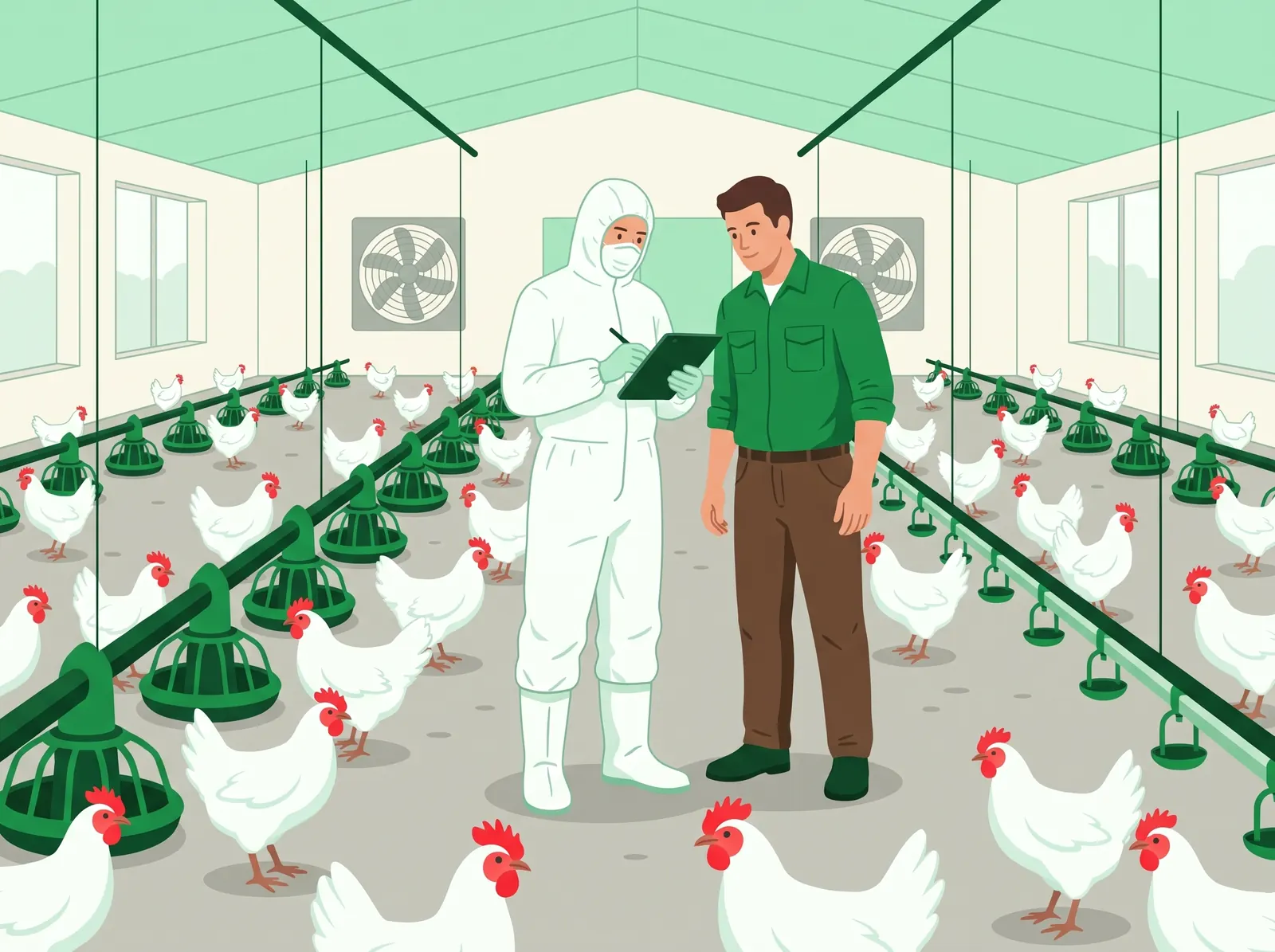
The Państwowy Instytut Weterynaryjny PIB in Puławy is a research institute. It handles animal disease diagnostics, scientific research and support for the official veterinary service. For a poultry farmer it is not the contact point for a specific flock. That is your vet. Still, vets and inspectors rely on the institute, so it helps to know what from its work reaches farm practice. We describe record keeping in our guide to regulations and documents for poultry farmers.
What the institute does for you indirectly
The institute tests samples and develops diagnostic methods that laboratories use. A test result usually goes first to the vet who ordered the samples, and only then to you. So you normally deal with the institute through your vet, not directly. Check which laboratory produced the analysis, because it makes the talk about the result easier. Write every result into the flock records. You will need it for later decisions and inspections.
How to use its materials
The institute's website has information on animal diseases and scientific material. Treat it as background, not as instructions for your farm. When you set up biosecurity rules, check your plan with your vet and use the biosecurity plan generator. Log entries and exits in the QR entry and exit log. That makes it easier to show what was done and when.
What PIB is and what it cannot replace
A research institute, not a clinic
PIB does research and diagnostics. It does not visit your flock, issue treatment advice for a specific farm or replace your vet. Treatment and the choice of medicine are always set by a vet who knows your flock and its history. The rule is simple: a lab result is information for a decision, not the decision. Every medicine given to birds has a withdrawal period that you must observe before slaughter. The vet always gives the dose and the way to give it.
What the split means in practice
The institute supplies methods and test results, your vet interprets them for your flock, and you keep the records and carry out the advice. When one link is skipped, a record is usually missing. Keep the documents for bird purchases, feed and medicines in one place. After a test result you can then see at once which batches were in the house and which products were used.
Husbandry data: what to look for besides official notices
Temperature as chickens grow
The Ross Broiler Management Handbook 2025 describes broiler husbandry conditions. According to the handbook, for birds with a body weight of 590 g (1.30 lb) the ambient temperature is 24 °C (75.2 °F). The table shows that the required temperature falls as body weight rises, so you need to lower it as the birds grow. Keep temperature and bird weight in the digital flock record, so you can see at once whether conditions keep up with growth. This is not a PIB topic, but it shows what data you should have at hand next to test results.
Why compare sources
A producer's handbook and an institute's notice answer different questions. The first says how to keep the birds, the second what is happening with diseases in the country. If one source does not fit your flock, do not assume it is wrong. Check conditions on the farm, discuss the difference with your vet and write down your conclusions. EFSA prepares risk assessments at European level, so its material is a good addition to local data.
Farm samples and laboratory results
Orders through your vet
Taking samples and sending them to a laboratory usually happens on a vet's order. Ask what samples to take, in what packaging and when, because a badly taken sample can distort the result. Note the sampling date, the bird batch number and the place in the house. The laboratory and the vet need this, and at a later inspection it lets you show what was taken and when. You can keep records of tests and treatment in the module for treatment and withdrawal records.
How to read a result
A lab result usually gives the method, the result and sometimes a reference range. Do not interpret it on your own. One positive result does not always mean an outbreak, and a negative one does not close the matter if symptoms continue. Agree with your vet whether the result needs more tests, a change of routine or a report. Write the result in the flock records together with the decision that followed, because you will need it at later inspections.
Rules the institute refers to
Where to check the current text
You can find the current text of acts and regulations in Poland's Internet System of Legal Acts (ISAP) at isap.sejm.gov.pl. For each rule, note the publication reference and the legal-state date. You will find a list of acts for poultry farmers in acts and regulations for poultry farmers. We will cover animal welfare rules for farming in a separate text on the Animal Protection Act.
Templates and forms
Some documentation duties need forms. Download templates and forms from official sites, not from random copies. At an inspection, officials most often check that documents are complete and match the dates of events, so it is better to keep them up to date. We explain where to look for forms in templates and forms for farmers. Missing documentation can bring penalties, which we describe in penalties for farmers.
What to do when something is wrong in the flock
First steps
When you notice unusual symptoms, separate the birds showing them. Write down when the symptoms appeared, how many birds are affected and what happened beforehand. Call your vet before you start any treatment yourself. Do not give medicines without a prescription and do not use doses from forums. Your vet will decide whether tests are needed and whether the case must be reported to the authorities.
Biosecurity as the first line
Prevention is the cheapest protection. Limit visits by outsiders, keep a visitor log and watch footwear and vehicle hygiene. Build your rules step by step in the biosecurity plan generator and go through them with your vet. Keep entry and exit records for the house up to date, because in an investigation the order of events matters. The better your records, the faster you can establish what happened.
Frequently asked questions
Does Poland's National Veterinary Research Institute give advice for my farm?add
No. The institute does research and diagnostics. Advice for a specific flock comes from your vet, who knows the birds and the farm's history. If you need a result explained, ask the vet who ordered the test.
How do I order tests on samples from a poultry farm?add
Your vet usually orders the test and tells you what samples to take and how. Ask about the packaging and the shipping deadline too. Write down the sampling date and the bird batch number.
Where can I find the current text of poultry regulations in Poland?add
Poland's Internet System of Legal Acts (ISAP) publishes current texts at isap.sejm.gov.pl. Check the legal-state date and the publication reference for each rule. Talk to your vet before making changes on the farm.
Do I have to report a positive test result to the authorities?add
It depends on the disease and the type of result, so we give no general rule here. Ask your vet whether a report is required and by when. Have that talk right away, without waiting for more symptoms.
Can a farmer order a test directly from the institute?add
It depends on the type of test and the laboratory's rules, so ask the laboratory or your vet directly. In practice most farm samples reach testing through a vet. Settle this before taking samples, so you do not send them unnecessarily.
How long should I keep test results?add
The retention period depends on the rules, which you should check in the current text of the acts. In practice, keep results together with a record of the decision that followed. Digital documents are easier to find at an inspection.
Sources & resources
- linkRoss Broiler Management Handbook 2025
- linkChief Veterinary Inspectorate (Główny Inspektorat Weterynarii) — gov.pl/web/wetgiw
- linkMinistry of Agriculture and Rural Development — gov.pl/web/rolnictwo
- linkInternet System of Legal Acts — isap.sejm.gov.pl
- linkEFSA — efsa.europa.eu
Prepared by: DlaFerm Team based on data from the sources listed · Publisher: INSTA-TECH sp. z o.o.
Do you keep records of tests and treatment in your poultry flock?
The DlaFerm treatment and withdrawal module helps you keep your vet's orders, results and withdrawal dates in one place. Create a free farm account and see how it works in practice.
Phone
+48 796 258 151