Piglet prices: what a weaner and a feeder pig cost
A piglet has no single fixed price. It depends on the animal's weight, age and origin, and on the market that week. We explain what sets the price, where to look for data and how to enter piglet cost into your profitability calculation.
verifiedFrom the team that has organised work on poultry farms for years.
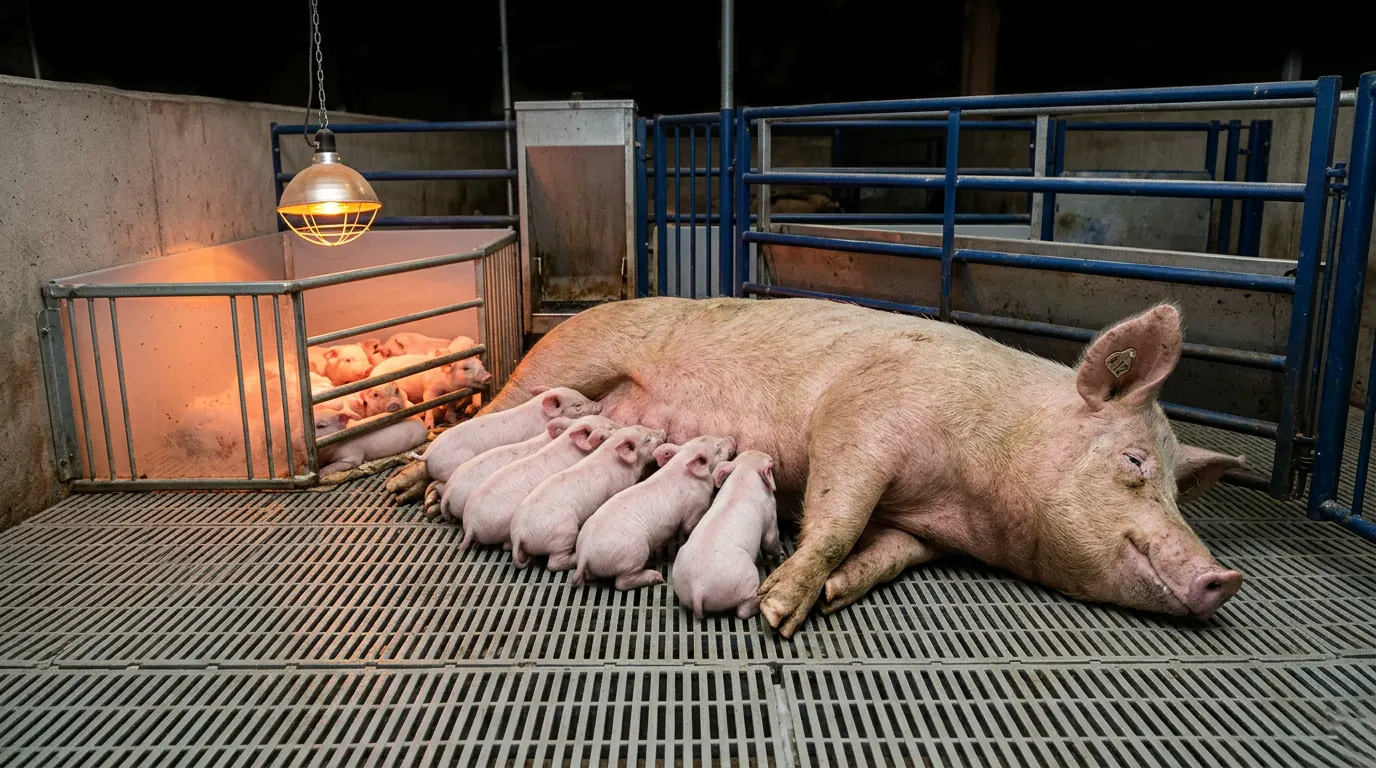
A piglet has no single fixed price. What you pay depends on the animal's weight and age, its condition and origin, and demand in your region. In practice, a prosiak is a weaned piglet bought for further rearing and fattening. A świniak is a slightly older animal that has finished the first rearing stage and is bought closer to the start of fattening. These names are used differently from region to region, so when you buy, always agree the weight and the age in days.
Why there is no single price list
Piglets have no public, official price list. Poland's Ministry of Agriculture and Rural Development (MRiRW) records purchase data, but it covers slaughter pigs, not piglets. You usually agree a piglet price directly with the breeder or through a dealer, comparing offers. Write down every offer with its weight, date and delivery terms, because without them the comparison means nothing. Match your purchase date to the schedule in batch and cycle planning, so you do not buy in a hurry when the market is tightest.
What the price of a piglet depends on
Weight and age
Weight and age are the basis of the price. A lighter, younger piglet is cheaper, but it needs more work and carries a higher risk of losses during rearing. A heavier animal costs more, but its growth is often more predictable. When you buy, ask for the age in days and the weight on the day of pickup, not for vague answers such as "roughly". A difference of a few days of age at this stage can clearly change the animal's condition.
Condition, health and origin
Piglets from a well-run farm, from an even litter and without signs of disease usually do better during rearing. Buyers often pay more for them because they expect smaller losses. Ask the breeder about the herd's health status, the vaccination program and any recent treatment. A vet always chooses the medicine and the dose, but the records show whether the batch is clear of withdrawal periods.
Demand and season
Demand for piglets rises and falls in cycles. When many farmers look for animals at the same time, prices go up, and in periods of lower demand offers can be better. A study by KPODR Minikowo (an agricultural advisory center in Poland) stresses that prices are an external factor and a farmer has little influence on them. That is why cutting your own production costs often works better than waiting for good quotes.
Weaner or feeder pig: differences in pricing
Weaner right after weaning
A piglet bought right after weaning has a lower unit price, but it needs the most careful feeding and heating. The first period after weaning is the hardest for the animal: a change of feed, a new place and new pen mates. Weaker piglets get sick more often or lose growth in this time, which raises the cost of the whole rearing. A cheap piglet therefore does not always mean a cheap kilogram of live weight.
Feeder pig closer to fattening
A świniak is an animal after rearing, usually closer to fattening weight. The higher price comes from the fact that part of the feed cost and time has already been spent by the seller. When you compare offers, convert the price to a kilogram of live weight, not per head. Otherwise it is easy to pick a dearer offer that is actually cheaper. For the conversion use the cost of 1 kg live weight calculator.
Where to check quotes
Recorded purchase prices of slaughter pigs
MRiRW records market data under the ZSRIR methodology (Poland's agricultural market information system). In this methodology the purchase price is the average price a buyer pays a supplier of slaughter pigs. It is counted in PLN per tonne of pig carcasses, excluding VAT, with bonuses and deductions included. It applies to carcasses with a hot weight of 60 to 120 kg, split into meat content classes. It is a good reference for fattening, but it is not a piglet quote.
Piglet offers
You will find piglet offers at breeders, in breeders' organizations, in classified ads and with dealers. Quotes change often, so this guide gives no amounts. Record the price, weight, date, pickup place and transport terms. After a few purchases you will have your own price history, which is more reliable than a single ad. You can keep offers and purchases in the app for pig farmers.
What a piglet costs in your calculation
Purchased piglet as a separate item
In a sample farm income calculation for pork live weight, prepared by ODR Lubań (a regional agricultural advisory center in Poland), the purchased piglet is a separate cost item. The result depends on the intensity level of fattening. You can use the same logic on your own farm: enter the piglet price, the cost of feed, treatment, energy and transport, then divide the total by the expected weight gain. You get the cost of 1 kg of live weight, which is easy to compare with the selling price.
What the KPODR results show
The KPODR Minikowo study on a pork quality system compared several farms. One of them sold fattened pigs at a price that did not even cover the cost of bought-in feed. The authors recommend judging economic results over a longer period and looking for savings in production costs. Such an analysis starts with entering the cost of piglets into the calculation correctly.
Disease, ASF and regulations and the price of piglets
African swine fever
The disease situation affects trade in live pigs. The MRiRW regulation of 12.03.2026 on measures to control African swine fever (Dz.U. 2026 poz. 344, Poland's Journal of Laws) sets rules that can limit animal movement in designated areas. Legal state as of 22.11.2026. Before you buy, check the current text in ISAP (Poland's online legal database) and confirm with the county veterinarian whether a batch from a given area can be moved freely.
Biosecurity when buying
Every new piglet is a risk of bringing disease into the herd. Before you bring in a batch, set up quarantine, an isolated pen and rules for entering the barn. Draft the rules in the biosecurity plan generator, then go through them with your vet. Biosecurity does not change the purchase price. It does protect you from losses that usually exceed the difference in price per head.
Withdrawal periods and records
If the piglets were treated before sale, ask the breeder for the withdrawal dates and write them in your records. A vet always chooses the medicine and the dose. Keep treatment and withdrawal records in the treatment and withdrawal module, so you have proof at the time of sale or an inspection.
Frequently asked questions
How much does a piglet cost?add
The price depends on weight, age, origin and the market that week, so we give no single amount. The most reliable way is to compare breeders' offers on the same basis: per kilogram of live weight, with the same date and delivery terms.
What is the difference between a weaner and a feeder pig?add
A prosiak is usually a weaned piglet, and a świniak is an animal after rearing, closer to fattening weight. The names are used differently in different regions, so always agree the weight and the age in days.
Where can I check piglet prices?add
The recorded MRiRW data covers slaughter pigs and is given per tonne of carcass, so it does not replace piglet quotes. Compare offers directly with breeders and dealers. Record each offer with its date to build your own price history.
Does ASF affect piglet prices?add
Yes. Restrictions on moving pigs in areas under disease control can change supply and prices in a region. The current rules are in the regulation Dz.U. 2026 poz. 344, and you should confirm details with your vet.
Are cheaper, lighter piglets worth buying?add
A cheaper animal can end up costing more if it needs longer rearing, gets sick more often or grows more slowly. Judge the cost per 1 kg of live weight, including feed, treatment and the risk of deaths.
How do I calculate the cost of a piglet?add
Enter the purchase price as a separate item, then add the cost of feed, treatment, energy and transport. Divide the total by the expected weight gain to get the cost of 1 kg of live weight. The cost of 1 kg live weight calculator does this for you.
Sources & resources
- linkMRiRW (ZSRIR) — Methodology for recording market data on purchases of slaughter pigs on the pork market
- linkKPODR Minikowo (PROW 16 Cooperation) — A quality system as a guarantee of good pork
- linkODR Lubań (PODR publication) — Sample farm income calculation for pork live weight production (purchased piglet, different intensity levels)
- linkMRiRW / Journal of Laws — MRiRW regulation of 12.03.2026 on measures to control African swine fever (Dz.U. 2026 poz. 344)
- linkGłówny Inspektorat Weterynarii (Chief Veterinary Inspectorate) — gov.pl/web/wetgiw
Prepared by: DlaFerm Team based on data from the sources listed · Publisher: INSTA-TECH sp. z o.o.
Counting the cost of piglets on your farm?
The DlaFerm.pl app for pig farmers helps you keep purchases, batch dates and treatment records in one place. Create a free farm account and see how it works with your own herd, or get in touch with us.
Phone
+48 796 258 151