Pecking block for chickens: how to make one
A pecking block is a block or beam your birds can peck instead of pecking their flockmates. You can make it from simple, safe materials, hang it at a height the hens can reach and clean it regularly. Below we describe the build step by step and how to check that it works.
verifiedFrom the team that has organised work on poultry farms for years.
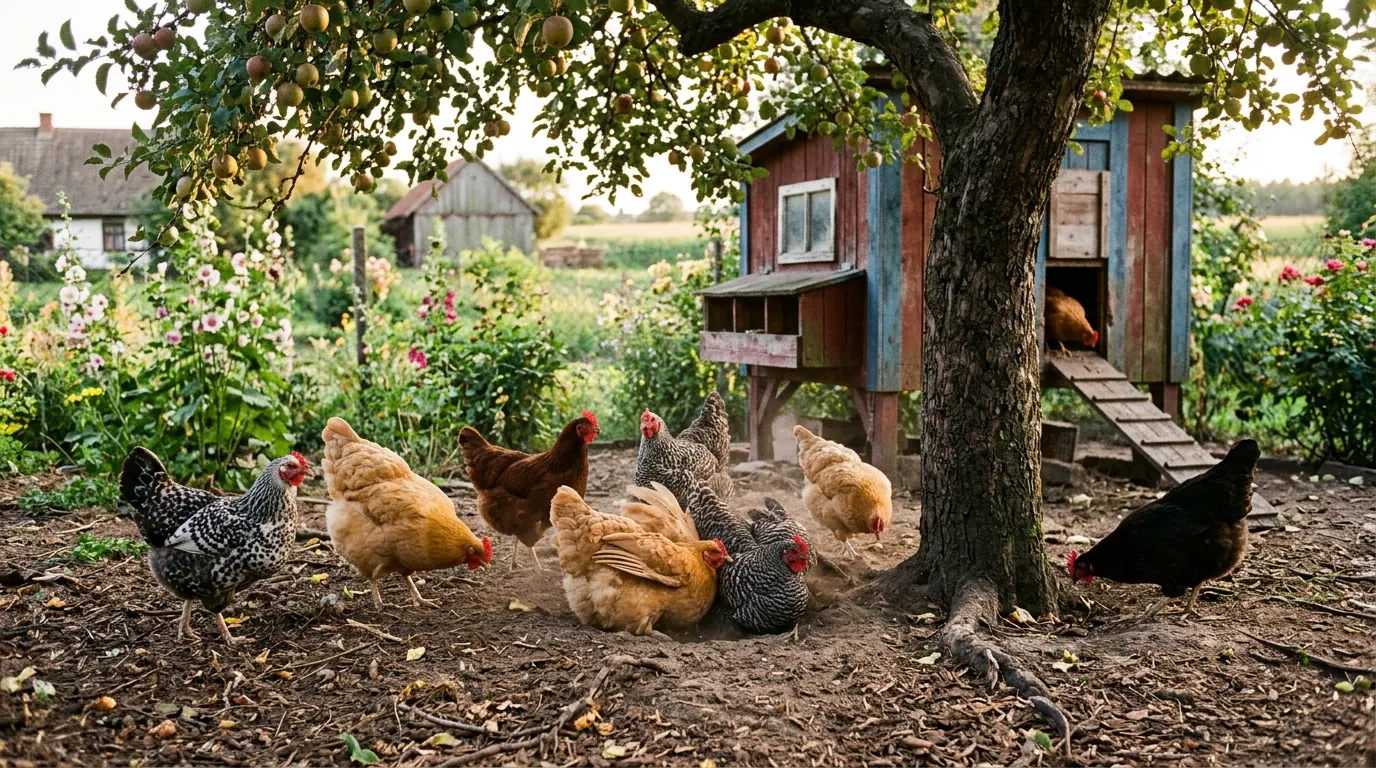
A pecking block is a block, beam or other object hung in the coop or on the run, which hens can peck instead of pecking each other. You can make one from simple materials in a day, and the cost depends on what you already have on the farm. Safety and constant availability matter more than looks. Before you start, keep one thing in mind: the block should draw the birds' attention away from their flockmates' feathers. It does not replace good feeding, room to forage or the right stocking density. If feather pecking has already started, the object alone rarely solves it, so we also describe what else to check in the flock.
Why it works
Hens peck naturally as they look for food and explore their surroundings. When they have too little to do, pecking turns toward other birds' feathers, which leads to skin damage and losses in the flock. A pecking block gives them an outlet that does not hurt their neighbors: the birds peck, pick at and pull the object, and a well-made block does not injure them. It works best together with other activities, such as litter and grit.
The short answer: make the block from wood, rope or a ready-made block, and hang it at a height the hens reach easily. Below we cover materials, mounting, placement in the coop and on the run, and how to check that it works.
Feather pecking and activity for the flock
Feather pecking as behavior
Feather pecking appears more often in flocks that are overcrowded, bored or short of space to scratch and forage. It usually starts with one bird picking at a neighbor, and then the whole group joins in. The skin under the feathers is exposed and wounds can become infected. Not every case of pecking means disease, but every case needs a response, because it spreads quickly to other birds. Watch the flock every day and look for birds losing feathers on the back or neck.
How a pecking block draws attention away
A pecking block gives hens something to do in a place where nothing gets hurt. The birds peck, turn and pick at the object, which satisfies their urge to search. The more varied activities in the coop, the lower the risk that attention fixes on neighbors' feathers. A block does not replace litter, perches or a run; it only adds to them. If the birds keep pecking each other even with a block available, look for the cause in stocking density, feeding or coop conditions.
Welfare and regulations
Hen welfare is regulated by law, and you can find the current text in Poland's Internetowy System Aktów Prawnych (Online System of Legal Acts). Legal state as of 22.11.2026: check the current regulations on keeping poultry, because the scope of requirements is sometimes changed. The Veterinary Inspection (Inspekcja Weterynaryjna) assesses conditions on the farm during inspections, and in practice looks at whether birds have access to materials to occupy them. We describe the coop requirements in a separate guide: coop requirements for laying hens.
How to make a pecking block step by step
Materials
The simplest pecking block is a piece of thick, untreated board, a log or a thick beam, with a few pecking elements screwed or tied to it. You can also use a plastic block without sharp edges or a ready-made poultry toy. For tying, choose rope or chain with no loose ends. The parts must not have small pieces that a bird can pull off and swallow. Before mounting, measure the space in the coop so the object does not block the way through.
Mounting
Hang the block at a height the hens reach without climbing, usually at the level of the bird's back or slightly lower. Fix it firmly to the structure, because a loose object swings and may fall on the birds. Place it away from the drinker and feeder so the hens do not foul the feed and water. It helps to hang two or three objects in different parts of the coop to reduce competition for one spot. Finally, check all joints and sharp edges, because birds peck exactly where something looks interesting.
Order of work
First choose the material and check that it has no paint, wood preservative or chemicals that could reach the bird. Then prepare the parts: smooth the wood with sandpaper and remove splinters. Next, attach the object to a beam or the coop ceiling and check its stability by fixing it at two points instead of one. The last step is watching the first few days. If the hens ignore it, move it closer to where the birds gather.
Materials and hygiene: what to avoid
What not to use
Do not use painted wood, old tires with chemical residues, plastic that cracks into sharp pieces or objects with small parts. Also avoid materials a hen can peck off and swallow, because they can block the digestive tract. Rubber parts should be clean and free of any chemical smell. If you are not sure what a material contains, check the manufacturer's product data sheet or ask a vet before the object goes into the coop.
Hygiene
A pecking block needs cleaning, because dust, droppings and moisture build up on the surface quickly. From time to time take it down, wash it with water and a mild cleaner made for animal housing and rinse it well. Dry it before hanging it again. A dirty block can pass germs between birds, so replace it with a clean one when the flock changes. Write down cleaning dates; it helps you not to forget.
Where to hang a pecking block in the coop and on the run
In the coop
In the coop, hang the block in a bright spot near the perches or in an area where birds spend a lot of time during the day. Do not hang it in a dark corner, because hens rarely go there to play. Keep ventilation in mind, and make sure the object does not block walkways or doors. If you have several pens or sections, put one object in each to avoid queues and competition. When planning the whole fit-out, also see coop design and equipment.
On the run
On the run, you can tie the block to the fence or a sturdy post, at a height the birds can reach. Make sure the ground under it is not muddy, or the hens will stand in dirt all the time. With a large flock it is better to spread several objects around the run. We describe run conditions, including area and roofing, in the guide chicken run. Treat the block as a supplement to their living space, not a replacement for it.
How to check that the pecking block works
What to watch
After hanging the block, note how many birds gather at it and how long they play with it. Check whether the number of birds with damaged feathers falls over the following days. If the hens do not approach it at all, move it or change to a less slippery material. A good result is calm, spread-out activity, not constant jostling at one spot. Judge the effect after several days of observation, not after one visit to the coop.
When pecking does not stop
If feather damage gets worse despite the block, look for causes more widely. Most often it is too high a stocking density, too little perch space, light that is too bright, an uneven diet or no grit and activities. Check the ration with a vet or a feeding adviser and compare it with the recommendations for laying hens that we describe in the guide feeding laying hens. Pecking with wounds is a signal to consult a vet, not to add more objects.
Records of activities and flock checks in DlaFerm.pl
Coop records
The coop records module lets you log the date you mounted the block, cleaning dates and observations from flock checks. After a few weeks you can see whether the change made a difference. Entries are assigned to a specific coop or group, so it is easy to compare several buildings. The log also helps when you talk to your vet, because it shows what you did and when. Go to coop records.
Plan and routine
If you keep several flocks at different stages, set a fixed schedule for checking and cleaning the toys. Record it in one place so you do not depend on memory. Comparing entries from successive weeks shows trends instead of single impressions. Treatment decisions are always made by a vet, and the record in the system serves as documentation.
Frequently asked questions
Will a pecking block stop feather pecking in chickens?add
A pecking block reduces pecking because it gives the birds something to do, but on its own it rarely stops it completely. It works best together with enough space, litter and a suitable diet. If feather damage gets worse, look for the cause in the flock and talk to a vet.
What is the best material for a chicken pecking block?add
Hard, smooth material with no chemicals works best, for example a clean, untreated board or a plastic block without sharp edges. Avoid painted wood, small parts and rubber of unknown composition. Check for splinters before you hang it.
How high should I hang a pecking block?add
Hang it so the hens reach it without climbing, usually at the level of the bird's back or slightly lower. Too high and the birds will not notice it; too low and they will foul it. Move it if the hens ignore it.
How often should I clean a pecking block?add
Clean it regularly, especially when you see dust, droppings or moisture on the surface. Wash it with water and a mild cleaner made for animal housing, rinse it well and let it dry. Write down cleaning dates so you do not forget.
Is a pecking block enough instead of changing the diet?add
No, a pecking block does not replace balanced feed. If you suspect feeding mistakes, check the ration with a vet or a feeding adviser. Make diet changes gradually and watch the flock.
Do I have to follow welfare regulations?add
Yes, conditions for keeping poultry are regulated by law, and you can find the current text in Poland's Internetowy System Aktów Prawnych (Online System of Legal Acts). It is worth checking the legal state as of 22.11.2026 before making changes in the coop. The Veterinary Inspection (Inspekcja Weterynaryjna) checks conditions.
Sources & resources
- linkChief Veterinary Inspectorate (Główny Inspektorat Weterynarii) — gov.pl/web/wetgiw
- linkMinistry of Agriculture and Rural Development (Ministerstwo Rolnictwa i Rozwoju Wsi) — gov.pl/web/rolnictwo
- linkOnline System of Legal Acts (Internetowy System Aktów Prawnych) — isap.sejm.gov.pl
- linkNational Research Institute of Animal Production (Instytut Zootechniki PIB) — izoo.krakow.pl
Prepared by: DlaFerm Team based on data from the sources listed · Publisher: INSTA-TECH sp. z o.o.
Do you keep a flock of laying hens?
Log activities, cleaning and flock observations in one place in DlaFerm.pl. Create a free farm account and see how it works in practice, or get in touch with us.
Phone
+48 796 258 151