Naked Neck chickens: the breed with a bare neck
In the Naked Neck (Polish: gołoszyjka), the Na gene reduces feathers on the neck and often on the breast. Bare skin loses heat more easily, so these birds usually cope better with heat and worse with cold and damp. Below we describe how they look, what they give you and what they need.
verifiedFrom the team that has organised work on poultry farms for years.
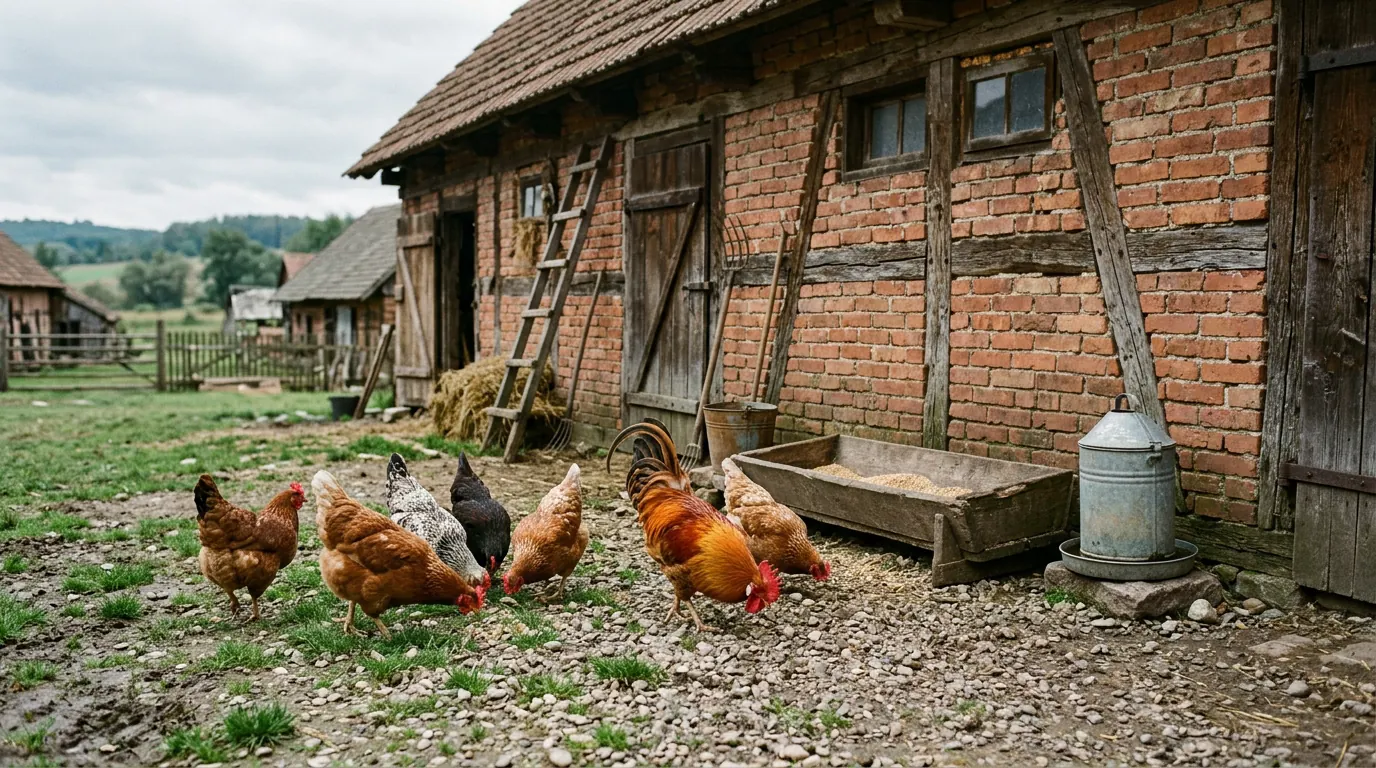
The Naked Neck (Polish: kura gołoszyjka) has few feathers on the neck and sometimes on the front of the breast. One gene causes the trait, so you can spot it even in chicks. For a keeper, the key point is that bare skin loses heat more easily. Naked Necks usually tolerate heat better than fully feathered birds, but they handle frost and wet worse. That shapes everything from the choice of coop to how you run the flock.
Where the bare neck comes from
The Na gene is dominant: one copy is enough for a bird to have clearly thinned feathering on the neck. When you pair two birds that carry the gene, some of the offspring may have even fewer feathers, so take this into account when you choose breeding pairs. When you buy, ask the seller about pedigree and how the birds were mated. The trait also appears in crossbreds, so you can mistake a Naked Neck for another bird if you only look at the neck. Judge the whole build, color and skin condition.
How to recognize a Naked Neck chicken
Neck and breast
The neck is the most visible part: the skin is exposed, pale and often pinkish, with only a few feathers. Some birds also have a bare patch on the breast. When you assess a bird, look at the skin under the feathers. Healthy skin is an even color, with no scabs or redness. Parasites are most often visible in exactly these featherless areas.
Comb and color
Comb, wattles and coloring depend on the breeding line, not on the Na gene itself. If a hen gets a bluish-purple comb, that is not a breed trait. It is a signal to check her health. We write more about it in blue comb in hens. Leave the treatment decision to a vet.
Close-up assessment
Judging looks only makes sense with several birds of the same age group. Compare build, behavior and the state of the feathers on the rest of the body. A single bird can be an exception, so do not base your choice on one hen.
Laying and meat
Laying
Naked Necks are not a laying breed in the sense of industrial hybrids. Laying depends on the line, the age of the bird and housing conditions. If you need a steady layer, compare them with laying breeds such as Rosa laying hybrids. We describe a general plan for a laying flock in how to keep hens for eggs.
Meat
A body with a bare neck can be lighter in relation to the feathering, and yield depends on build and age at slaughter. We give no weights or yields here, because they differ between lines and we have no reliable data for this breed. Before you decide to raise birds for meat, agree the weight and age requirements with your buyer.
Two purposes in one flock
Some keepers hold Naked Necks next to ornamental breeds, for example those in popular ornamental breeds. In that case keep a separate record for each group before you start breeding.
Management: heat, cold and the run
Heat and sun
A bare neck is sensitive to the sun. Provide shade and constant access to water in the run, and good ventilation in the coop. Heat puts more strain on lightly feathered birds, so on hot days limit long periods outside in full sun and keep an eye on the drinker.
Cold and drafts
In winter, bare skin loses heat faster. The coop must be dry and free of drafts, and the birds should be able to stay indoors during frosts. We describe how to plan outdoor time in the cold months in should you let hens out in winter.
Feeding
Naked Necks eat much like other hens of similar weight, but in the cold their energy needs rise. A well-balanced feed and constant access to water are the basics. We cover how to choose feed in what to feed hens. Agree the exact feed composition with a nutrition adviser.
Parasites and skin health
Exposed skin is easier to inspect, but external parasites also settle on it more easily. Check your birds regularly, especially after you buy new ones, and see a vet if you notice skin changes. The vet chooses the medicine and dose. Write down the withdrawal period if the treated birds produce eggs or meat.
Buying Naked Necks: what to check
Where to buy
It is best to buy from breeders who know their line and can describe its pedigree. Ask about the health of the flock, how the birds were reared and whether they all come from one place. If the seller issues health documents, ask for them and write down the delivery date, which makes later record keeping easier.
Price
Prices of Naked Necks depend on age, sex, line and region. We give no amounts, because prices change and we have no current market data. Compare offers from several breeders and ask exactly what the price covers: a chick, a young hen or an adult bird.
Related breeds
When choosing, it helps to know other birds with similar needs, for example ornamental Sebright hens. Differences in build and behavior affect how you set up the coop and run.
Records for a small Naked Neck flock
What to record
For each bird, note the purchase date, origin, age and health events. Also record vet visits and any medicines given, with their withdrawal periods. That lets you quickly answer whether a bird's eggs or meat can go to market.
How to keep records
In practice it is easier to keep coop records in one place than on slips of paper by the door. The coop records module in DlaFerm.pl lets you log groups of birds and their events, and your data stays in one place when you add new birds.
Frequently asked questions
What is the difference between a Naked Neck and a regular chicken?add
A Naked Neck has few feathers on the neck and sometimes on the breast, caused by the Na gene. For feeding and basic care it does not differ much from other hens. Most of your attention goes to protecting the exposed skin from sun and cold.
Are Naked Neck chickens good in hot weather?add
Usually better than fully feathered birds, because bare skin loses heat more easily. They still need shade, fresh water and good coop ventilation. In hot spells, limit time outside in full sun.
Do Naked Neck chickens need a heated coop in winter?add
In winter bare skin loses heat faster, so the coop must be dry and free of drafts. We give no specific temperature, because it depends on the bird's age and the building. Watch your birds' behavior, as it shows whether they are cold.
How many eggs do Naked Neck hens lay?add
We give no figure, because laying depends on the line, age and housing conditions. It is best to record eggs for several weeks and compare the results with your expectations. We describe a plan for a laying flock in our guide on how to keep hens for eggs.
Can you keep Naked Necks with other chickens?add
Yes, but make sure parasites and diseases do not pass between groups. Keep new birds apart for a while and watch them. In a shared run, make sure every bird can reach the feeder and drinker.
Do Naked Neck chickens need treatment and withdrawal periods?add
A vet always chooses the treatment, picking the medicine and dose for the situation. After a medicine is given, you must observe the withdrawal period before using eggs or meat. Record treatments so you do not mix up the dates.
Sources & resources
- linkChief Veterinary Inspectorate (Główny Inspektorat Weterynarii) — gov.pl/web/wetgiw
- linkNational Research Institute of Animal Production (Instytut Zootechniki PIB) — izoo.krakow.pl
- linkMinistry of Agriculture and Rural Development (Ministerstwo Rolnictwa i Rozwoju Wsi) — gov.pl/web/rolnictwo
- linkEFSA — efsa.europa.eu
Prepared by: DlaFerm Team based on data from the sources listed · Publisher: INSTA-TECH sp. z o.o.
Keeping Naked Necks alongside other breeds?
The coop records module in DlaFerm.pl keeps purchase dates, health events and withdrawal periods for each group of birds in one place. Create a free farm account and see how it works in practice.
Phone
+48 796 258 151