Montbeliarde cattle: traits, breeding and finishing
Montbeliarde is a dual-purpose dairy and beef breed from France. We describe its traits, how to manage it in a suckler herd and how to finish young cattle. Figures come only from cited sources, with the year of the data.
verifiedFrom the team that has organised work on poultry farms for years.
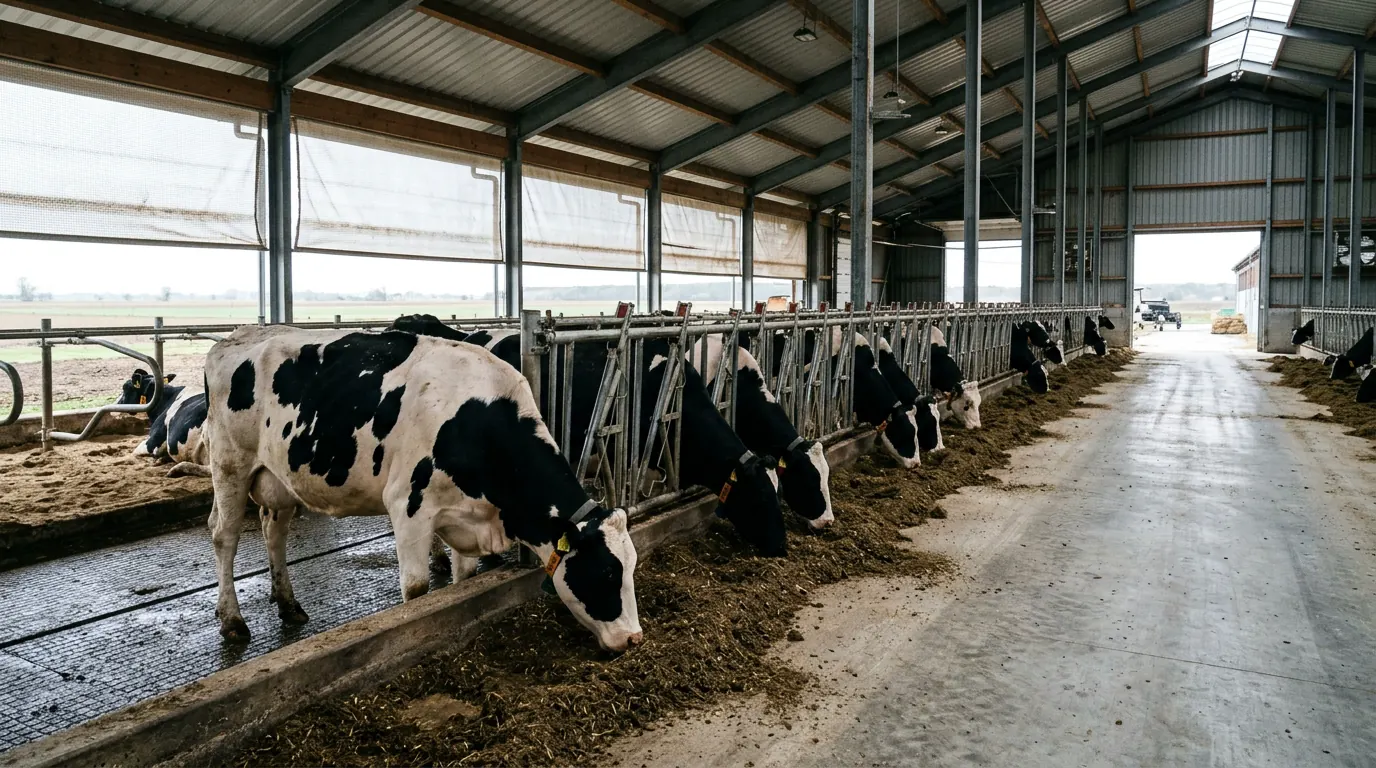
Montbeliarde comes from the Franche-Comté region in eastern France. It is a dual-purpose breed, giving both milk and meat, so farmers consider it mainly as a source of calves for finishing in dairy-beef herds. When you choose a breed, looks matter less than how the animals grow, calve and use feed on your farm.
Breed code in your records
In the list of letter codes that Poland's ARiMR (Agency for Restructuring and Modernisation of Agriculture) uses to mark cattle breeds, montbeliarde has the code MO. Enter the code from the list, not from the trade name, because the code goes into the herd documents. Move animal data through the IRZplus integrations (IRZplus is ARiMR's online animal register) so you do not enter the same data twice. Check the recording rules in the legal acts in ISAP (Poland's legal acts database), as of 22.11.2026.
Why this breed needs a plan
You cannot just buy montbeliarde and wait for results. The outcome depends on the choice of bull, herd health, feeding and slaughter date. Before you start, decide whether you want to sell calves or rear your own finishers, because the whole work system follows from that.
Montbeliarde: conformation, performance and color
Color and conformation
Montbeliarde has a typical red-and-white coat, most often with a pale head. The animals have a balanced build and a well-developed body. Do not judge conformation only by the first impression at the pen. Record your scores in the herd records, so that after a few seasons you can compare animals from different lines.
Dual-purpose performance
The breed combines dairy and beef traits. For a beef farmer this means the cows can raise calves, and finishing gives meat whose value depends on age, weight and carcass finish. The Teagasc Beef Manual describes beef production systems in which dairy-beef breeds work as dams of the offspring. Choose your system to fit your farm, not fashion.
Suckler herd and breeding work
Bull selection and calving ease
When you choose a bull, look at calving ease and birth weight of the calves. Calves that are too heavy make birth harder and raise the risk of problems at calving, especially in young cows. The Teagasc manual (Section 4: Breeding) describes selection rules for beef herds. The rule is simple: pick a bull that improves your herd, not one that only looks good in a catalog.
Reproduction and records
Record mating dates, pregnancies and births as they happen. You will spot cows with a long calving interval and can decide sooner to replace them. To keep this data you can use the farm management software, which holds the history of each animal in one place.
Finishing young montbeliarde cattle
Age at slaughter
A 2011 publication from IZ PIB (Poland's National Research Institute of Animal Production) compared finishing of crossbreds from Black-and-White cows and beef-breed bulls, slaughtered at 12 and 15 months of age. Longer finishing raised meat output against the control group, for example in bull crossbreds with piemontese to 133.7% against 100% in the control group. Montbeliarde was not studied in this comparison, so base your slaughter date on your own calculation and a talk with the abattoir.
Dressing percentage
In the same IZ PIB comparison, dressing percentage ranged from 57.19% to 61.98%. The highest result was for crossbreds with piemontese. The figures are for crossbreds, not pure montbeliarde, but they show how much the sire breed and slaughter age affect the result. Record the result on your farm for every batch, so you can compare successive groups.
Feeding finishers
The Teagasc manual (Section 6: Nutrition) and the AHDB Beef & Lamb guide on feeding suckler cows and calves describe how to build a ration. In the final phase the balance between forage and concentrate matters, but a nutrition adviser sets the exact ration based on feed analysis. Compare feed costs in the calculators for farmers.
Health, treatment and withdrawal
Animal welfare
EFSA opinions on the welfare of beef cattle, calves and transport point to a few basic needs: clean water, dry bedding, space to lie down and calm handling. For transport, plan short routes and check the condition of the animals before loading. Good welfare also means less stress, and stress lowers finishing results.
Notifiable diseases
Lumpy skin disease (LSD) is described in a leaflet from PODR Szepietowo (a regional agricultural advisory center in Poland). Call a vet at once if you suspect any disease, and do not wait for improvement. Do not diagnose or treat animals yourself, because only a vet assesses the symptoms and decides what to do.
Treatment and withdrawal
A vet always chooses the medicine and dose. You record each treatment, the date given and the date the withdrawal period ends, because without that you cannot sell the animal or carcass on time. Keep these records in the treatment and withdrawal module, which reminds you of dates before animals ship.
Profitability and sales
What drives the result
The result depends on feed cost, slaughter age, dressing percentage and purchase price, not on the breed alone. ODR Lubań (a regional agricultural advisory center in Poland) prepared a sample calculation of farm income from beef production at different intensity levels. Rework it with your own data instead of taking other people's results. Check current prices with buyers and the abattoir, because they change every week.
Documents at sale
When you sell animals, have the identification documents and treatment data ready. Buyers and abattoirs most often ask for the ID number, date of birth and a finished withdrawal period. If everything is recorded in one place, preparing a batch takes less time and mistakes are rarer.
Frequently asked questions
What is the montbeliarde cattle breed?add
Montbeliarde is a cattle breed from the Franche-Comté region of France. It is dual-purpose, giving milk and meat, so it is considered a source of calves for finishing. Before you buy, check the pedigree and the animal's documents.
What is the montbeliarde breed code in ARiMR?add
In ARiMR's list of letter codes for cattle breeds, montbeliarde has the code MO. Use the code from the list, because it goes into the herd documents. Check current rules in ISAP as of 22.11.2026.
Is montbeliarde good for beef finishing?add
The breed gives calves that can be reared to slaughter, but the finishing result depends on feeding, slaughter age and dressing percentage. The 2011 IZ PIB data cover crossbreds, not pure montbeliarde, so compare results within your own herd.
At what age should finishing cattle go to slaughter?add
Set the date from weight, carcass finish and feed cost. IZ PIB studies compared slaughter at 12 and 15 months of age, with different results for each group. Talking to the abattoir before you decide helps you avoid losses.
How much does a montbeliarde calf cost?add
The price depends on origin, pedigree, age and whether you buy a calf, a heifer or a breeding animal. We give no figure because prices change often. Agree it directly with the breeder and check current market prices.
How do you manage the withdrawal period after treating cattle?add
A vet chooses the medicine and dose, and you record each treatment, the date given and the end of the withdrawal period. Without these records mistakes at sale are easy. Always check the withdrawal period in the medicine's documents and with your vet.
Sources & resources
- linkARiMR: List of letter codes for marking cattle breeds
- linkIZ PIB: Wiadomości Zootechniczne, 60 years of IZ work on beef cattle (J. Trela et al.), WZ XLIX(2011)4:11–56
- linkTeagasc: Teagasc Beef Manual, Section 4: Breeding
- linkTeagasc: Teagasc Beef Manual, Section 6: Nutrition
- linkAHDB Beef & Lamb (UK): Beef BRP Manual 5: Feeding suckler cows and calves for Better Returns
- linkPODR Szepietowo: Lumpy skin disease (LSD) leaflet (Z. Marciniak)
Prepared by: DlaFerm Team based on data from the sources listed · Publisher: INSTA-TECH sp. z o.o.
Do you run a beef herd or plan to finish cattle?
The treatment and withdrawal module helps you keep track of dates before you sell each batch of animals. Create a free DlaFerm.pl farm account or get in touch, and we will show you how it looks with your own data.
Phone
+48 796 258 151