Miniature cows: breeds, size, price
Miniature cows are clearly smaller than typical beef cattle, but "mini" is not one breed. Size depends on genetics and paperwork, and price depends on origin, age and health. Here is what to check before you buy and how to run the herd.
verifiedFrom the team that has organised work on poultry farms for years.
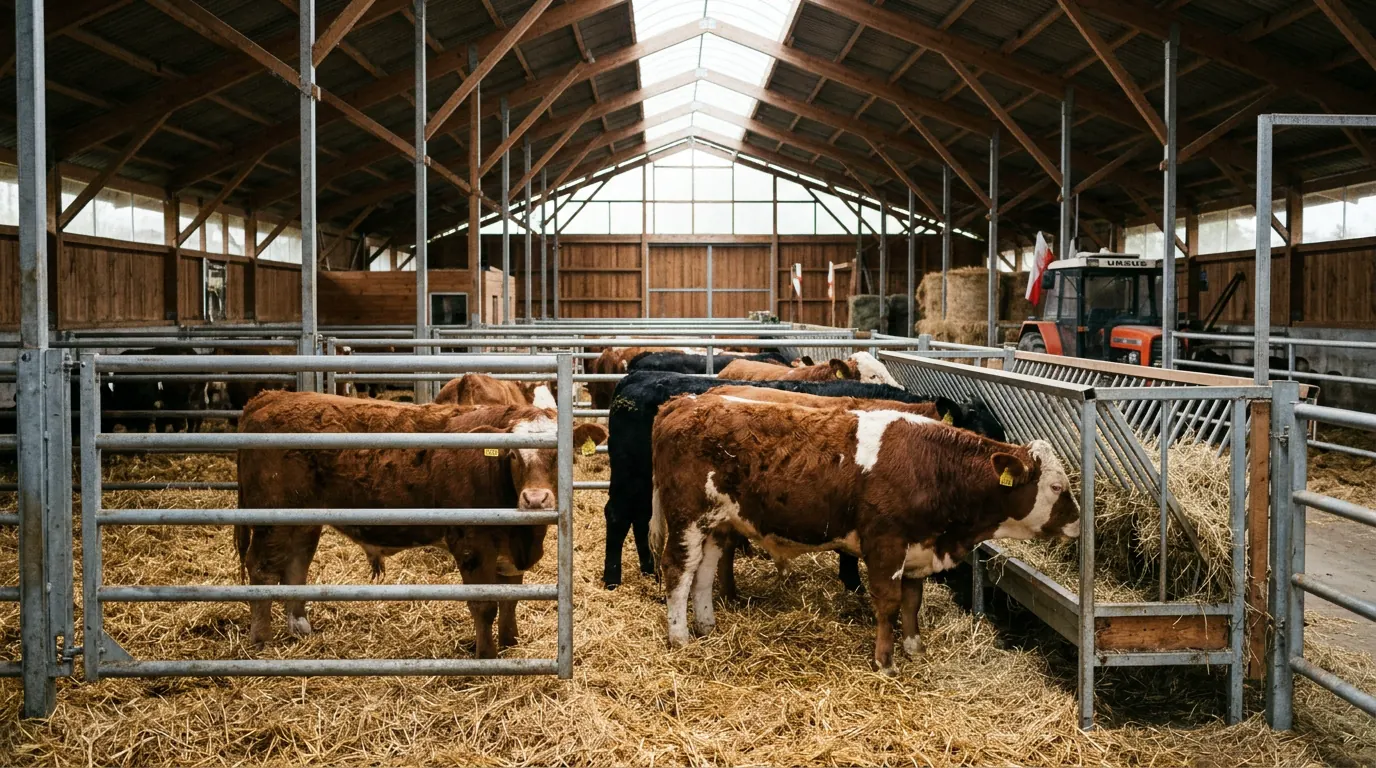
Miniature cows are clearly smaller than typical beef cattle. There is no separate breed called a "miniature cow". Under that label sellers offer different animals: from breeds that are naturally small, or from selection for low height. You can only judge size, price and suitability after checking the specific animal and its papers.
Where small size comes from
Cattle size depends mainly on genetics: breed, line and parents. Poland's Institute of Animal Science (IZ PIB) describes in a monograph on livestock farming how crossing cows with Simmental (simentalska) bulls changed the performance of the crossbreds. So selection and crossing are the tools a breeder uses to shape a herd. Small size fixed in a line is the result of many generations of selection, not one decision. Ask the breeder about the animal's parents and grandparents, not only its weight in kilograms.
How to check size before you buy
A name in an advert guarantees nothing. Ask for withers height and body weight recorded in documents or measured at a known age, then compare them with the breed standard published by the breed association. Check that the animal has a pedigree and registered data in IRZ, Poland's animal register. If a cow is small because it was underfed when young, its adult size is hard to predict, so ask about feeding history.
A truly small type versus a small individual
Breed or selection
Small size in a dwarf breed is a trait that passes to offspring. An animal selected for low height may come from a line where size is still being fixed. Ask whether the line has been fixed over several generations. If the seller cannot show this, treat the price as the price of one animal, not of a genetic trait.
Age, weight and condition
Judge the size of an adult cow only after growth has finished, because a young animal looks smaller than it will be. Compare body weight with age and condition, not with how it looks in a photo. Photos taken from ground level or at an angle can change the impression of height, so ask for a measurement on site.
What decides the price of a miniature cow
What raises and lowers the price
Price depends on origin and pedigree, breeding line, age, sex and health. It also matters whether you buy a calf, a pregnant heifer or a cow with a calf. An animal with documented origin and test results usually costs more than one without papers, but carries less risk. Add transport and collection costs to the price.
Where to check current prices
Cattle prices change within weeks, so compare offers from several breeders and adverts. Ask whether the price includes vaccinations, tests and documents. Record purchases from day one, which makes later settlements and rearing cost control easier.
Feed and grazing for a small cow
Feed requirement
Requirement depends on body weight, milk yield and life stage. In a paper on feeding beef cattle in organic systems, IZ PIB reports that in summer the total daily requirement for pasture forage for a suckler cow with calf is about 10–12 milk production feed units (JPM). That figure is for Limousine cows, so for a smaller animal, work it out with an adviser rather than copying it.
Winter and condition checks
In winter the feed must cover the requirement without pasture. The sources give sample rations for suckler cow herds, but the ration for your herd is set by an animal nutritionist or an ODR adviser (Poland's agricultural advisory center) based on feed analysis and animal condition. Score condition regularly, because it is the fastest sign that a ration does not fit. You can pass results and tasks to people who look after the cattle in the staff app.
Calving and calves in small cows
Risk of difficult calving
Difficult calving (dystocia) can seriously affect the health of cow and calf, and in some cases threaten their lives. The European Food Safety Authority (EFSA) points out that a caesarean saves animals but is itself a burden on the cow, especially when done as an emergency. For any cow, and even more for a small one, agree a calving plan with your vet before the due date.
Calves and growth rate
The Teagasc manual for Irish farmers says male calves are heavier at birth and grow faster before weaning, by about 0.1 kg a day more than females. The calf's limited ability to catch up after weaning means weight differences at weaning often last until slaughter. For calves in Poland, follow the calf protection rules in Directive 2008/119/EC, legal state as of 22.11.2026.
Herd health, medicines and registration
Medicines and withdrawal periods
A vet chooses the medicine and dose for a cow, not the keeper and not the seller. Record every treatment, its date and the withdrawal period, because that decides when the animal or its milk can be sold. Keep the entries in the treatment and withdrawal module.
Reporting suspected disease
If you suspect an infectious disease, tell your vet at once. Lumpy skin disease is described in a leaflet from PODR Szepietowo (a regional agricultural advisory center), and for reports and supervision contact the district veterinary officer (powiatowy lekarz weterynarii). Do not move animals suspected of disease without his permission.
Registration and sales
Register the cow, heifer and calf in IRZ and carry the data into your farm records. Integration with IRZplus, ARiMR's online animal register, helps keep data consistent in one place. When you sell, prepare an invoice and check the form you issue it in, for example in the KSeF invoicing module (KSeF is Poland's national e-invoicing system).
Frequently asked questions
Are miniature cows a separate breed?add
There is no separate, recognized breed called a miniature cow. Small size can be a trait of a dwarf breed or the result of selection in a line. Check the pedigree and the breed standard with the breed association.
How much does an adult miniature cow weigh?add
We give no weight, because there are no data for this group of animals. The breeder gives weight and measurements in the animal's documents, and the breed standard shows what to expect. Judge the animal after growth has finished, not when it is young.
How much does a miniature cow cost?add
Price depends on breed, line, age, sex, health and documents. Current prices change, so check them with several breeders and in adverts. Add transport and collection costs.
What do you feed a miniature cow?add
An animal nutritionist or ODR adviser sets the ration based on condition and feed analysis. IZ PIB reports that a cow-calf pair in summer needs about 10–12 JPM a day from pasture, but that figure is for Limousine cows. Work it out for your own animal with an adviser.
Can a small cow have calving problems?add
Difficult calving can threaten the health of cow and calf, and EFSA describes a caesarean as a burden on the cow. Agree a calving plan with your vet before the due date, especially for a first calving.
How do you keep records for miniature cows?add
Register the animal in IRZ and keep treatment records with the withdrawal period. You can link IRZplus data with your farm records, which cuts manual re-typing.
Sources & resources
- linkIZ PIB — Livestock farming and breeding over 70 years. Cattle Breeding Department, Sheep and Goat Breeding Department
- linkIZ PIB — WZ — Feeding beef cattle in organic farming (K. Bilik et al.)
- linkTeagasc — Teagasc Beef Manual — Section 6: Nutrition
- linkEFSA AHAW Panel — Welfare of beef cattle (EFSA Journal 23:9518)
- linkEU Publications Office — Council Directive 2008/119/EC laying down minimum standards for the protection of calves
- linkPODR Szepietowo — Lumpy skin disease (LSD) — leaflet (Z. Marciniak)
Prepared by: DlaFerm Team based on data from the sources listed · Publisher: INSTA-TECH sp. z o.o.
Do you keep cattle and want your data in one place?
The IRZplus and sensor integrations module helps keep herd data in one system. Create a free farm account and see how it works in practice.
Phone
+48 796 258 151