Jumbo and broiler quail: raising them for meat
Jumbo and broiler quail are kept for meat, not eggs, so what counts is body weight on slaughter day and how fast the birds grow. We explain how the two groups differ and how to set up the batch start, housing, feed and drug withdrawal periods. Exact weights and rearing times depend on the breeding line, so we give the rules and tell you where to check the figures.
verifiedFrom the team that has organised work on poultry farms for years.
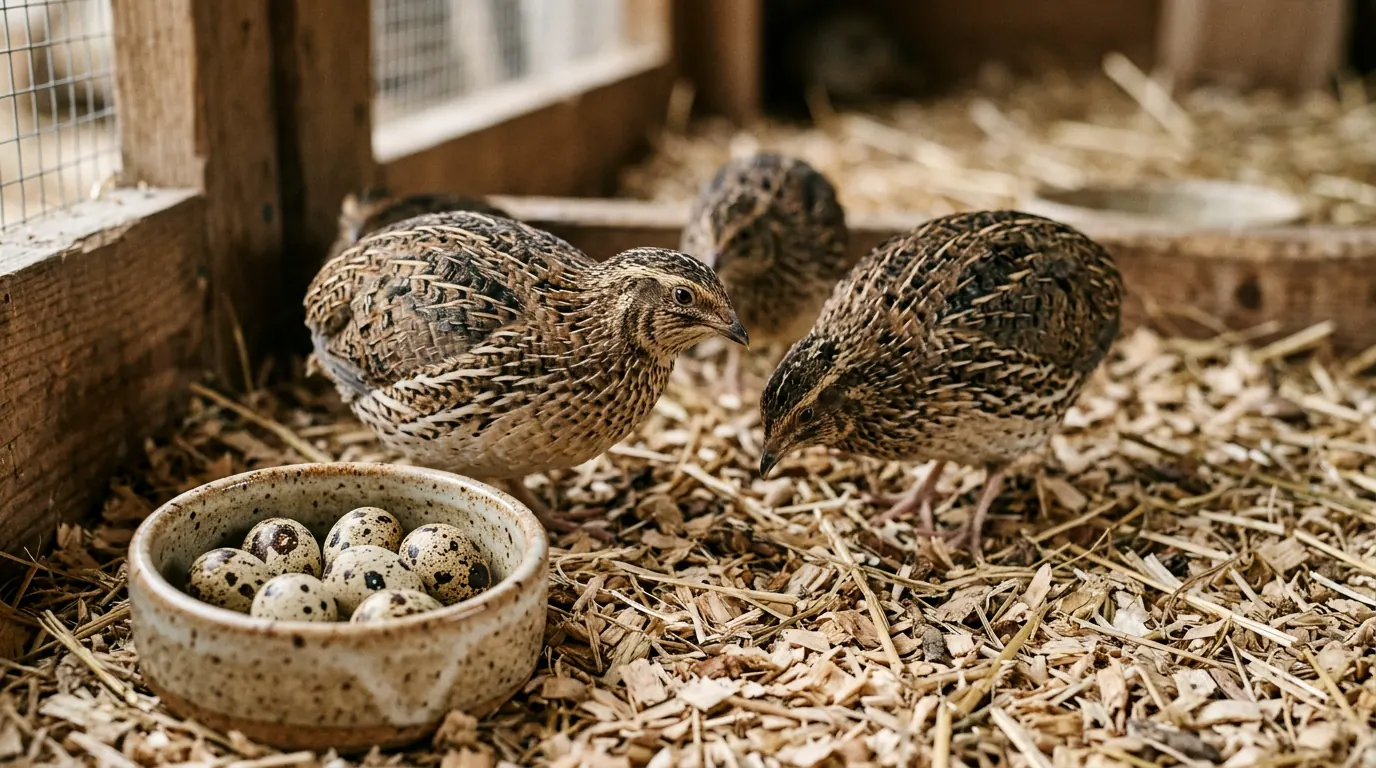
Jumbo quail are larger birds raised for meat. Broiler quail are birds run in a short, intensive cycle aimed at fast weight gain and early slaughter. Both groups need a different plan from laying quail, because you measure the result by batch weight, not by the number of eggs. Exact weights and rearing time depend on the line, so check the data from the producer or breeder before you place a batch. We also cover the basics on our page about rearing quail.
Who this guide is for
This guide is for keepers who want to supply meat from their own farm or run a small production for direct sale. We assume you already have a poultry house or a separate part of a building, and you want to know what to watch from day one. We describe each point from a practical side: what to check, what records to keep and when to ask a specialist. Where our sources lack certain data, we say so and point to where you can find it.
Jumbo and broilers: how they differ on the farm
Jumbo quail
Jumbo is a group of larger utility quail, bred for a higher body weight than egg-laying quail. Their strength is carcass yield, but growth rate and weight at slaughter age depend on the specific line. When you buy chicks, ask for the line data and record batch weight from the first weeks. Without these records you cannot tell whether the batch is growing to plan or starting to fall behind.
Broiler quail
The term broiler means a bird selected for fast weight gain in a short cycle. In practice this means tight control of feed, water and stocking density, because mistakes show up quickly in batch weight. For broiler chickens, producers publish day-by-day gain tables, but we do not carry such standards over to quail without data from the line breeder. Ask your supplier for the recommended weight program and compare your own weighings with it.
Batch start: the first days and weeks
Heating and bird spacing
At the start, birds need the warmth they require and easy access to feed and water. Choose the exact temperature according to the line's recommendations and the birds' age. If you do not have them, ask the breeder or a vet. Watch the flock: birds spread evenly under the heat source are comfortable, while birds huddling in one spot signal a temperature that is too low or a draft. Note these observations in the batch record, because they help explain problems in later weeks.
Water and first feed
Water must always be available. Set drinkers at bird height so that litter does not flood or foul them. Starter feed should be fresh and served in shallow feeders that young birds can reach easily. Before you change feed, check the composition with the producer and write down the date of the change. We describe feeding rules in detail on our page about quail feeding.
Stocking density, ventilation and litter
Stocking density
Set the number of birds based on the line producer's recommendations and the planned weight on slaughter day. The more birds per square meter, the faster litter moisture and ammonia concentration rise, and that increases the risk of health problems. Too low a density is not good either, because it reduces use of floor space and the profitability of the batch. We have collected housing requirements on a separate page: housing requirements for quail.
Ventilation and litter
Ventilation removes moisture and ammonia, but it must not create a draft at bird level. In winter, too strong an airflow chills the flock, and too weak an airflow leaves moisture in the litter. Check litter dryness in several places in the house, and where you find wet patches, improve ventilation or replace the bedding. Dry, loose, even litter is a simple sign that the system works.
Feed by growth stage
Feeding stages
For broiler chickens, according to the Ross Broiler Management Handbook 2025, finisher feed is usually given after day 25 of life, and longer rearing adds further stages. Splitting feeding into stages lets you match protein and energy to the birds' age, which matters for cost and gain. For quail, agree the stages and feed composition with the feed producer and record them in the batch record. You can find the chicken comparison in our description of broiler feeding, but do not carry those values over to quail without confirmation.
Feed conversion ratio
The FCR shows how much feed was used per kilogram of weight gain. You calculate it from the weighed feed supplied and the birds' weight over a given period. Without records you cannot tell whether poorer results come from feed, water, stocking density or health. If you want to calculate the ratios without manual spreadsheets, try the FCR and EPEF online module.
Prevention, treatment and withdrawal period
Prevention and biosecurity
The cheapest way to avoid health problems is to limit the entry of strangers and animals onto the farm. Set up a clean and a dirty zone, require protective clothing and footwear disinfection at the house entrance. Record every entry and every disinfection, because these records help during an inspection. You can prepare a ready plan in the biosecurity plan generator.
Treatment and withdrawal period
The withdrawal period is given by the vet or the medicine leaflet, and we do not give doses or product names here. The rule is simple: you count it from the last administration to the day of slaughter, and you do not slaughter birds before it has passed. Record every administration with the date, batch number and the name of the person who gave it. Keep the records in the treatment and withdrawal module, so dates do not depend on memory.
Transport, records and legal status
Transporting birds to slaughter
Rules on moving poultry change, so before each transport check the current text in ISAP (Poland's Internetowy System Aktów Prawnych, the online legal database) and ask the county veterinary officer (powiatowy lekarz weterynarii). In practice, inspectors check transport documents and records on the flock's health, so carry them with you. We describe the rules for moving poultry on the page poultry transport rules.
Batch records
Good batch records cover the placement date, line, number of birds, feed use, weighings, treatment and slaughter dates. These records make settlement with the buyer easier, help you answer inspection questions and let you analyze results after the cycle ends. Keeping them in one place lowers the risk of missing an entry during a working day. A poultry farm management program collects this data in one system.
Frequently asked questions
What is the difference between jumbo quail and broiler quail?add
Jumbo is a group of larger utility quail, while broilers are birds selected for fast gain in a short cycle. In both cases you measure the result by batch weight on slaughter day. Exact differences in weight and growth rate depend on the line, so compare data from specific producers.
How many weeks does it take to raise quail for meat?add
Rearing time depends on the breeding line and the weight you want to reach. Our sources have no reliable values for quail, so we give no number. Ask the line breeder or chick supplier for the recommended weight program.
Can broiler quail be kept with chickens?add
Differences in size and behavior can lead to competition for feed and water and to stress in the smaller birds. A separate house or a partition makes it easier to monitor health and keep separate records. Make the decision after consulting a vet.
How long after a medicine must you wait before slaughter?add
The vet or the medicine leaflet gives the withdrawal period. You count it from the last administration to the day of slaughter and record it. Do not set a withdrawal period from memory, because a mistake means selling meat with drug residues.
Do I have to keep records for meat quail?add
Requirements depend on the size of production and the type of activity, so check the current rules in ISAP (Poland's online legal database) and with the county veterinary officer. Whatever the rules, good batch records help with every inspection and settlement. Record placements, feed, treatment and slaughter.
What most often ruins quail rearing results?add
Most often it is wet litter, too high a stocking density, drafts and irregular water. Weighing records let you see quickly when a batch starts to fall behind. If you see worrying symptoms, always consult a vet.
Sources & resources
- linkRoss Broiler Management Handbook 2025
- linkChief Veterinary Inspectorate (Główny Inspektorat Weterynarii): gov.pl/web/wetgiw
- linkNational Research Institute of Animal Production (Instytut Zootechniki PIB): izoo.krakow.pl
- linkInternetowy System Aktów Prawnych (Poland's online legal database): isap.sejm.gov.pl
Prepared by: DlaFerm Team based on data from the sources listed · Publisher: INSTA-TECH sp. z o.o.
Raising quail for meat?
The DlaFerm.pl poultry farm management program keeps batches, feeding, treatment and withdrawal periods in one place. Create a free farm account and see how it works in practice.
Phone
+48 796 258 151