Intensive Goose Fattening Step by Step
Intensive goose fattening means matching the feed to the age and stage of the birds and checking body weight all the time. A good result rests on three things: the right feed mix for each phase, regular weighing with records, and respect for drug withdrawal periods. We explain each step, from choosing feed to keeping records.
verifiedFrom the team that has organised work on poultry farms for years.
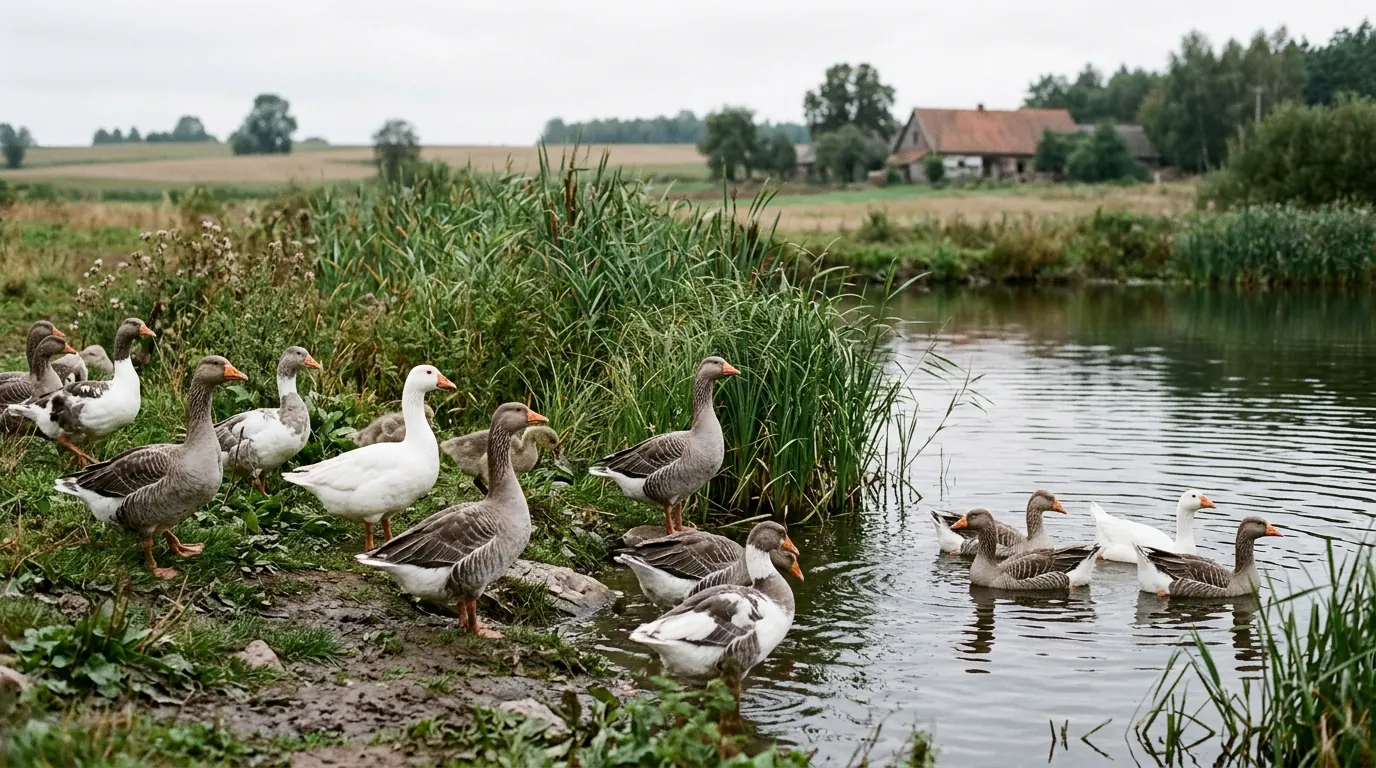
Intensive goose fattening is a short-cycle finishing system. The feed matches the age and growth stage, and you track body weight as you go. A good result comes from three things: a mix with the right nutrition for each phase, regular weighing with written records, and a clean, well-organized flock. Below we go through the steps. For feeding standards for geese and ducks, see our guide Feeding geese and ducks.
Broiler handbook numbers do not carry over directly to geese
The fullest feeding data are for chicken broilers. The Ross Broiler Management Handbook 2025 says finisher feeds are usually used after day 25, and that they account for most of the feed use and feed cost. Geese grow more slowly and have a different cycle and different needs, so we do not apply these numbers to geese. The principle still holds: choose the feed by the age of the birds and the goal of the fattening, not by the calendar. Confirm every figure for geese with your feed supplier, your vet or an adviser.
Matching feed to fattening stages
Feed phases instead of one mix
Split the fattening into stages: starter, grower and finisher. Energy and protein needs change at each stage. The Ross 308 specifications from 2022 are guidance only: the handbook says to adapt them to local conditions, regulations and the market. Use the same approach with geese. Agree with your feed supplier how many phases you plan, which mix you use in each, and from which day you switch. Write these decisions into the cycle plan so every worker knows what to feed that week.
Feed quality and storage
Feed loses value when it gets damp, moldy or sits too long in the silo. Check the stock and the rate of use before the mix for the next phase runs out. A silo with sensors and consumption records helps you spot a problem before weight gain drops. We describe stock monitoring in feed silo monitoring. Label each feed batch with its delivery date and do not mix old feed with new.
Body weight, gain and feed use
Trial weighing
Regularly weigh a sample of the flock taken from several places in the house, not just the liveliest birds. Record the weight with the date and compare it with earlier cycles and with your own target. The Ross 308 Performance Objectives 2022 recommends monitoring live weight and behavior at feeding and drinking so you can keep improving conditions. This works for geese too. Do not estimate: measure.
Indicators and records
Divide the feed used by the weight gained and you get the feed conversion ratio, or FCR. The lower it is, the cheaper each kilogram of live weight. Work it out for each phase separately, because the ratio behaves differently at different stages. You can calculate it in FCR and EPEF online. Keep results from earlier cycles in one place so comparison is easy.
Feeding layout and drinkers
Space at the feeder
Ross guidelines for broilers say the house layout should give easy access to water and feed from placement, with a smooth switch to automatic feeders. For geese, measure the free feeder length per bird and match it to the age of the birds. With too little space, stronger birds take the feeder first and weaker ones clearly lose weight. You will see this in the trial weighing.
Water and drinker hygiene
Water must always be available and clean. Clean drinkers on a schedule, and in heat and frost check that the water does not freeze or overheat. A change in drinking behavior is often the first sign of disease, so watch the flock on every visit to the house. If you see weakness or a drop in appetite, call your vet before the problem spreads.
Drugs, withdrawal periods and biosecurity
Withdrawal feed
The Ross 308 Nutrition Specifications 2022 recommend using a withdrawal feed in line with local rules on drug withdrawal periods. The same order applies when fattening geese: choose the last feed before slaughter so it fits the withdrawal period set for the drug given. The vet sets the withdrawal period and the keeper writes it in the records. Enter every drug with the date given, the dose and the end of the withdrawal period, to avoid mistakes at shipping. We describe this record keeping in the module Treatment and withdrawal.
Biosecurity and suspected disease
Apply biosecurity from day one: separate footwear and clothing at the house entrance, control of visitors and vehicles, and cleaning and disinfection between cycles. The Ross 308 Performance Objectives 2022 lists high hygiene standards as a way to limit infections. If you suspect disease, do not wait to report it: call your vet. What happens next and what duties the keeper has are in our guide Suspected disease and outbreak on the farm.
Fattening records and the cycle plan
What to record every day
Note feed use by phase, deaths with the cause, trial weighings, drugs given and the work of crews. Same-day records are more reliable than rebuilding the week from memory. Data from different records are easier to put together when you keep them in one system. See how to set this up in the farm management software.
Placing the flock and the cycle plan
Before placing the geese, check the required notifications and documents. Then plan the cycle so that slaughter dates do not clash with the cleaning break between flocks or with feed deliveries. Details of the notifications are in our guide Placing a flock: notifications and documents step by step. You can lay out the cycle dates in the module Placement planning.
Frequently asked questions
How long does intensive goose fattening take?add
The length depends on the breed, line, target weight and feeding method, so we give no single figure. Set it from your records of earlier cycles, together with your vet or an adviser. The Ross broiler handbook ties a change of feed to the age of the birds, not to the calendar, and this principle is worth adopting for geese as well.
Can you feed geese one mix for the whole fattening period?add
You can, but it usually gives a weaker economic result, because needs change with age. Split the fattening into phases and choose a mix for each. Plan the switch ahead of time so you do not change feed by chance.
How do you check whether geese get enough feed?add
Most reliably by trial weighing: compare the weight with your own results from earlier cycles. Also watch behavior at the feeder and whether every group of birds can reach the feed. If part of the flock eats less, check the size and placement of the feeders.
Do you need to keep drug records when fattening geese?add
Yes. Every drug should be recorded with the date given and the end of the withdrawal period. The vet sets the withdrawal period and the dose, not the keeper. Records help at inspections and protect you from shipping birds during a withdrawal period.
Where can you check current rules on goose fattening in Poland?add
Most reliably in the Internetowy System Aktów Prawnych (Poland's online legal acts database) and on the website of the Główny Inspektorat Weterynarii (Chief Veterinary Inspectorate). Our text reflects the legal state as of 22.11.2026. Rules can change, so check them before each cycle.
Sources & resources
- linkRoss Broiler Management Handbook 2025
- linkRoss 308 / 308 FF Broiler Nutrition Specifications 2022
- linkChief Veterinary Inspectorate (Główny Inspektorat Weterynarii) — gov.pl/web/wetgiw
- linkNational Research Institute of Animal Production (Instytut Zootechniki PIB) — izoo.krakow.pl
- linkInternetowy System Aktów Prawnych (online legal acts database) — isap.sejm.gov.pl
Prepared by: DlaFerm Team based on data from the sources listed · Publisher: INSTA-TECH sp. z o.o.
Fattening geese and want feed, weights and withdrawal periods in one place?
The DlaFerm farm management software brings flock, feed and treatment records into one system. Create a free farm account and see how it works with your own cycle.
Phone
+48 796 258 151