Inbreeding in Poultry: How to Avoid It in Your Flock
Inbreeding means mating birds that are related to each other. Each such mating raises the share of identical genes in the offspring, which lowers vigor and hatchability. We explain how to keep pedigrees, change bloodlines and spot the first signs of a problem.
verifiedFrom the team that has organised work on poultry farms for years.
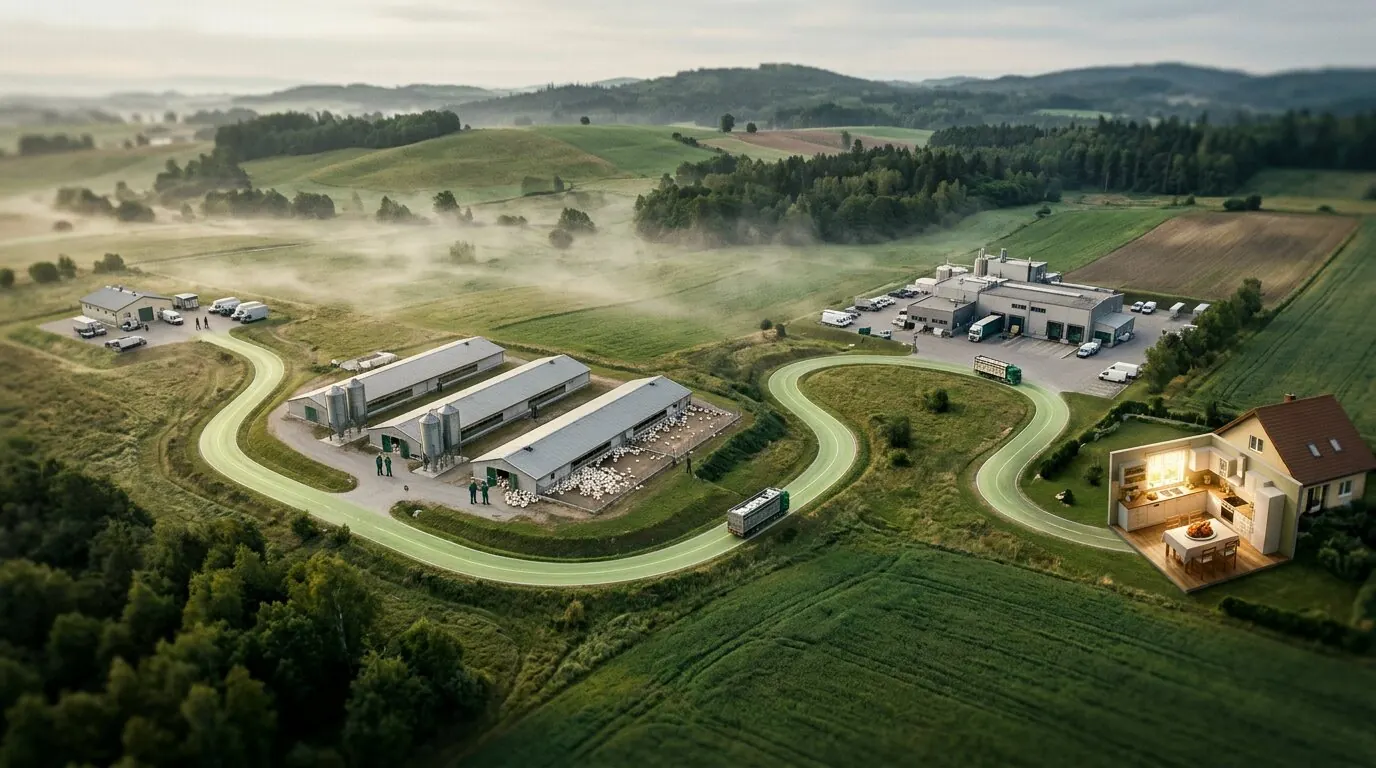
Inbreeding is the mating of closely related birds: father with daughter, brother with sister, or birds that share an ancestor two or three generations back. Each such mating increases the share of identical genes in both parents, so the inbreeding coefficient of the offspring rises. The result can be weaker chicks, poorer hatches and more disease. In a flock, pedigree records and deliberate changes of bloodline prevent this, not chance. For more on breeding hens, see how to keep hens for eggs.
Why small farms are affected too
Inbreeding does not need a large operation or many lines. It is enough for one rooster to mate his daughters for several seasons, or for a flock closed in one coop to have no access to new stock. The problem hits mostly keepers who raise their own replacement birds instead of only buying chicks from a hatchery. If you plan to start breeding, also read how to become a poultry breeder.
Where inbreeding comes from
The inbreeding coefficient
The inbreeding coefficient describes how much of the offspring's genes come from an ancestor shared by both parents. The closer the parents are related, and the more generations in a row mate within the same family, the higher it gets. You do not need to calculate it by hand to understand the principle: every generation of mating in a closed group narrows the gene pool. The Ross Parent Stock Management Handbook 2023 covers management of parent flocks. Inbreeding is not its main topic, but its flock planning rules apply here.
Mating relatives in practice
In a small flock it usually happens by accident. The rooster stays in the coop after the hatch with hens, some of which hatched from his own eggs. After a few seasons all the birds are related, and you have no choice of partners. Swapping roosters between neighboring groups works the same way if they come from the same line. Before you decide on the next mating, check in your flock records who is whose parent.
How to keep the flock's history
A pedigree for every bird
For each hatch group, record the hatch date, where the parents came from and which roosters were in the coop at the time. For ornamental and utility birds, a simple table with the group number and parents' names is enough. Such records let you quickly check that a new mating does not join relatives. A coop record program helps you keep these entries up to date instead of hunting through notes and notebooks. Start keeping records with the first generation you raised yourself.
Flock history in one place
Most problems appear when records are scattered between a notebook, a calendar and your staff's memory. If you keep all dates of placements, hatches and bird changes in one system, you can rebuild a group's history at any time. This applies to laying houses and to meat groups alike, because in both cases the parents and added birds affect the result. Make entries right at each change instead of filling them in later.
How to avoid inbreeding in your flock
Changing lines and buying in new stock
The most effective way to prevent inbreeding is to bring in new stock from outside. Chicks or young birds from another breeder or another line dilute the gene pool of your flock. With few birds this is not always possible, but even replacing one rooster every few seasons changes the situation. When you plan bird replacement, the schedule from placement and cycle planning helps.
A mating plan for several seasons
Instead of deciding season by season, write a plan for several cycles ahead. Record which roosters cover which hens and when you replace breeding birds. Such a plan forces you to pair birds from different families and shows when you will run out of choices without buying in. You do not need a perfect scheme at once. It is enough that every mating decision rests on recorded origin, not on whatever happened to be in the coop.
How to spot the effects of inbreeding
Signs in the hatch and in the coop
Typical signs are poorer hatchability of eggs, weak chicks, more losses in the first days and uneven growth in the group. Each of these also has other causes, such as incubation errors, feeding or disease. A symptom alone is not enough for a conclusion, but regular records show whether the problem repeats. For judging egg quality, also see how to recognize a good laying hen.
Comparing with the growth standard
For broiler flocks, the Ross 308 / 308 FF Broiler Performance Objectives 2022 give reference values. According to it, average body weight is 1012 g at day 21 and 2998 g at day 42, and FCR at day 42 is 1.531. This is a reference point for judging results under the conditions of that handbook, not a guarantee for your flock. If your results keep falling short of the standard, compare them with the pedigree. For day-to-day control, use FCR and EPEF indicators online.
What to do when your flock is already related
Consulting a specialist
When you plan a breeding program and choose lines, get the opinion of an animal scientist or a vet. Research and advice in this area is offered by, among others, the National Research Institute of Animal Production (Instytut Zootechniki PIB). A specialist will judge whether the flock needs new stock or just new roosters, and help decide which birds to remove from breeding. Do not decide based only on opinions from keepers' forums.
Bringing in new stock
Every new bird brings a disease risk, so run through biosecurity procedures before adding it to the flock. A good starting point is the biosecurity plan generator. Check the rules on moving poultry and trading breeding material in official sources: the website of the Chief Veterinary Inspectorate (Główny Inspektorat Weterynarii) and Poland's Internet System of Legal Acts (ISAP). Rules can change, so make sure before buying that you are using the current text.
Frequently asked questions
What is inbreeding in poultry?add
Inbreeding is the mating of closely related birds, for example father with daughter or siblings. The offspring then inherit more of the same genes from a shared ancestor. In practice this means a higher risk of poorer vigor and hatchability.
Does inbreeding always harm a flock?add
It does not always show right away, but the risk of problems with hatching, chick survival and resistance grows. The effects depend on how closely the birds are related and how many generations are in a closed group. So it pays to know the origin of your birds even if there are no symptoms yet.
How do you recognize inbreeding in a flock?add
Most reliably from pedigree records, meaning knowing who is whose parent. Indirectly, poorer hatchability, weak chicks and uneven growth may point to it. The symptoms alone do not prove the cause, because they can have other reasons.
Can I mate a rooster with hens from the same hatch?add
Better avoid it, because such birds are usually closely related. If you have no other rooster, replace him with a bird from another line or another breeder. Before you decide, check the origin records in your flock register.
How long should I keep bird pedigrees?add
Record the pedigree from the first generation you raised yourself, and keep the records as long as the birds are in the flock. For each group, enter the hatch date and parents. That way you can check at any time that a new mating does not join relatives.
Do chicks from a hatchery protect against inbreeding?add
Not by themselves. Hatchery chicks may come from lines that are already related to birds in your flock if you buy from the same source as before. Ask the breeder about the line and check whether earlier birds of the same line were mated on your farm.
Sources & resources
- linkRoss Parent Stock Management Handbook 2023 (Interactive)
- linkRoss 308 / 308 FF Broiler Performance Objectives 2022
- linkNational Research Institute of Animal Production (Instytut Zootechniki PIB) — izoo.krakow.pl
- linkChief Veterinary Inspectorate (Główny Inspektorat Weterynarii) — gov.pl/web/wetgiw
- linkInternet System of Legal Acts (ISAP) — isap.sejm.gov.pl
Prepared by: DlaFerm Team based on data from the sources listed · Publisher: INSTA-TECH sp. z o.o.
Want pedigrees and flock history at your fingertips?
The DlaFerm poultry farm management program lets you keep flock records and the origin of your groups in one place. Create a free farm account or get in touch, and we will show you how it looks with your own data.
Phone
+48 796 258 151