How to tell if an egg is fertile: candling with an egg candler
You can tell a fertile egg by shining a strong light through it in an egg candler. The embryo and a web of blood vessels show up as a darker shape, while an infertile egg looks evenly clear. The water test shows how fresh an egg is, not whether it is fertile, so these are two different checks.
verifiedFrom the team that has organised work on poultry farms for years.
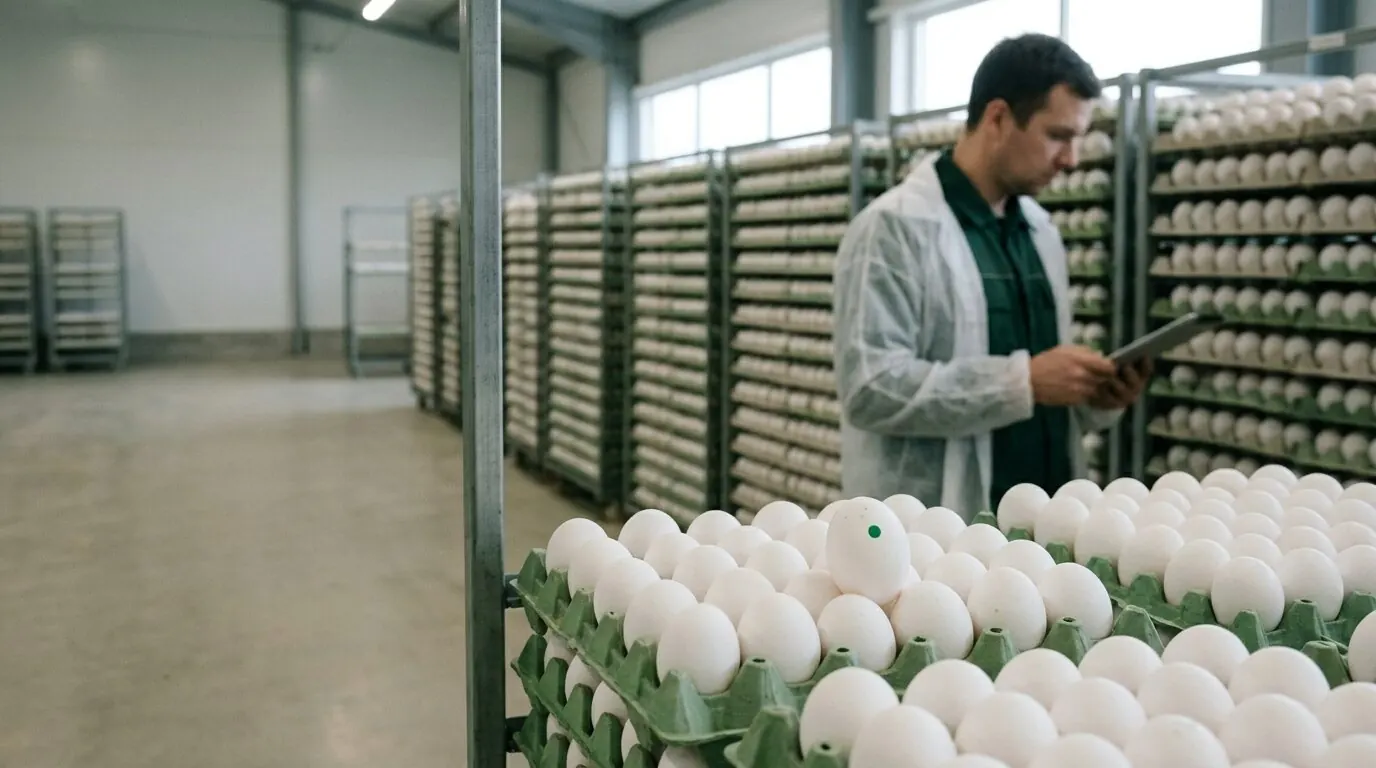
You check a fertile egg by candling it. Hold the egg against a strong light source in an egg candler and look for a darker embryo inside, with fine blood vessels spreading out from it. An infertile egg looks evenly clear and bright. The method is quick and does not damage the eggs, but it takes practice and a darkened room. We describe the device itself in a separate article, and here we focus on how to read the result.
What a fertile egg looks like
In a well-candled egg the embryo appears as a darker spot, with a net of thin reddish or dark vessels reaching out from it. Over time this structure grows and darkens. The air cell at the blunt end of the egg shows clearly as a lighter area. An infertile egg has a clear, even interior, with no dark spot and no network of vessels. A single egg is easy to misread, so compare several eggs from the same batch.
When to candle
The usual check is around day 7 of incubation, when the embryo is clearly visible, and again before you move the eggs to the hatcher. For chickens that is usually around day 18. Exact timing depends on the bird species, the type of incubator and the manufacturer's instructions, so check the device manual and breeding guidelines first. While you are at it, look at the settings described in our guide to an egg incubator, because temperature and humidity affect what you see in the egg.
Candling step by step
Setting up your station
Candle in a darkened room, on a stable table, with a candler that works well. Take eggs out of the incubator only briefly, because a sudden temperature change makes the reading less reliable and can harm the embryo. Wash your hands and hold eggs by the edges of the shell so you do not leave fingerprints. Mark each egg so that after the check you know which results belong to which batch and which spot in the incubator the egg came from.
Reading an egg
Place the egg on the candler opening with the blunt end up and turn it slowly. Judge three things: whether there is a dark embryo spot, whether you can see a network of vessels, and how large the air cell is. If an egg is dirty or cracked, do not candle it right away. Set it aside. Dirt and cracks make reading harder, and a cracked shell lets bacteria into the egg. If humidity in your incubator is off the recommended values, see how to set humidity in an incubator, because it affects embryo development and what you see in the candler.
The water test: what it shows and what it does not
For the water test you put an egg in a container of water. A fresh egg usually sinks and lies flat, while an older egg floats higher because the air cell at the blunt end grows. So this method checks freshness, not fertility. Both fertilized and infertile eggs can behave the same way. We cover freshness in our article on how to check whether an egg is fresh, and you will find storage rules in the text on storing hatching eggs.
Combining both checks
If the water test disagrees with what you see in the candler, do not trust the water test alone. Candling tells you about the embryo and the water test tells you about freshness, so each answers a different question. In practice keepers combine both when judging eggs for hatching, but candling always decides fertility. Record which method you used for each batch.
What spoils a candling result
Weak light and dirty shells
The most common mistake is light that is too weak, or dirty eggs. Dust, residue and droppings on the shell scatter the light, so the embryo is hard to tell from the background and dark spots can look like an embryo. Before the check, gently clean eggs with a dry cloth, but do not scrub them with a wet sponge, because moisture can get in through the shell pores. Clean the candler regularly so residue on the lens does not blur the image.
Rushing and keeping eggs out too long
Keeping eggs out of the incubator too long during a check can chill the embryo. Take out only as many eggs as you can check in one pass and keep the rest in a warm place. Rushing leads to accidental breakage and to readings based on one glance instead of turning the egg. Write down the result right away, before you forget which egg was which.
Infertile eggs and dead embryos
Infertile eggs
Infertile eggs are usually removed from the hatching batch before the move to the hatcher, because they will not hatch and can burst in the hatcher and contaminate the other eggs. Record the number of such eggs for each batch. A steady drop in the number of fertile eggs in the same flock is a signal worth discussing with a veterinarian. The causes may lie in feeding, flock condition or egg storage conditions.
Dead embryos and disposal
Eggs with a dead embryo need careful handling, because they may contain bacteria. Do not throw them out with household waste or onto a field. Agree on the method of disposal with a veterinarian and follow the requirements published by Poland's Chief Veterinary Inspectorate (Główny Inspektorat Weterynarii). Also record how many eggs were lost, because this helps when you analyze batch results.
How to keep egg check records
What to record
For each batch record the date of setting in the incubator, the day of the check, the number of fertile eggs, infertile eggs and eggs with a dead embryo, and the conditions in the incubator. This overview shows whether a problem keeps coming back in particular batches, or after you changed your hatching egg supplier. Keep records in one place, not on notes stuck to the incubator.
Why records matter
Without records it is hard to compare whether hatching improved after a settings change, and with several batches mistakes are easy. Comparing a few batches shows a trend you cannot see in a single day. The flock placement and cycle planning module helps you line up setting dates with checks, so you know when the next batch needs to be checked.
Frequently asked questions
How can you tell if an egg is fertile?add
When you candle a fertile egg, you see a darker embryo with blood vessels spreading from it. An infertile egg looks evenly bright and clear. Reading it needs good light and turning the egg.
When is the best time to candle eggs in an incubator?add
The usual check is around day 7 of incubation, and again before the move to the hatcher, which for chickens is usually around day 18. Exact timing depends on the bird species and the incubator instructions, so check the device manual and ask a veterinarian.
Does the water test show whether an egg is fertile?add
No. The water test shows freshness, because the air cell grows with age and the egg starts to float. To judge fertility you need to candle the egg.
Does candling harm the embryo?add
A short, efficient check is usually not a problem, but taking eggs out of the incubator for long and letting them cool can harm the embryo. Work fast, keep eggs in a warm place and put them back without delay.
How many eggs should you check to judge a batch?add
It depends on batch size and what you are looking for. It is best to check a sample from different places in the incubator, not just one tray, because temperature inside the device can be uneven. Record the results for each batch so you can compare them over time.
What should you do with eggs that have a dead embryo?add
Do not throw them out with household waste. Agree on disposal with a veterinarian and check the requirements for animal by-products on the website of Poland's Chief Veterinary Inspectorate. Record the number of such eggs in the batch records.
Sources & resources
- linkChief Veterinary Inspectorate (Główny Inspektorat Weterynarii) — gov.pl/web/wetgiw
- linkNational Research Institute of Animal Production (Instytut Zootechniki PIB) — izoo.krakow.pl
- linkMinistry of Agriculture and Rural Development (Ministerstwo Rolnictwa i Rozwoju Wsi) — gov.pl/web/rolnictwo
Prepared by: DlaFerm Team based on data from the sources listed · Publisher: INSTA-TECH sp. z o.o.
Planning a hatch on your own farm?
The flock placement and cycle planning module helps you set dates for setting eggs, egg checks and hatching in one place. Create a free farm account on DlaFerm.pl or get in touch, and we will show you how it works in practice.
Phone
+48 796 258 151