How long do cows and bulls live? On the farm and in the wild
A cow or bull has no fixed length of life on a farm. In beef production, fertility, health and your culling decisions set how long an animal stays in the herd. Here is what shortens or extends its time there.
verifiedFrom the team that has organised work on poultry farms for years.
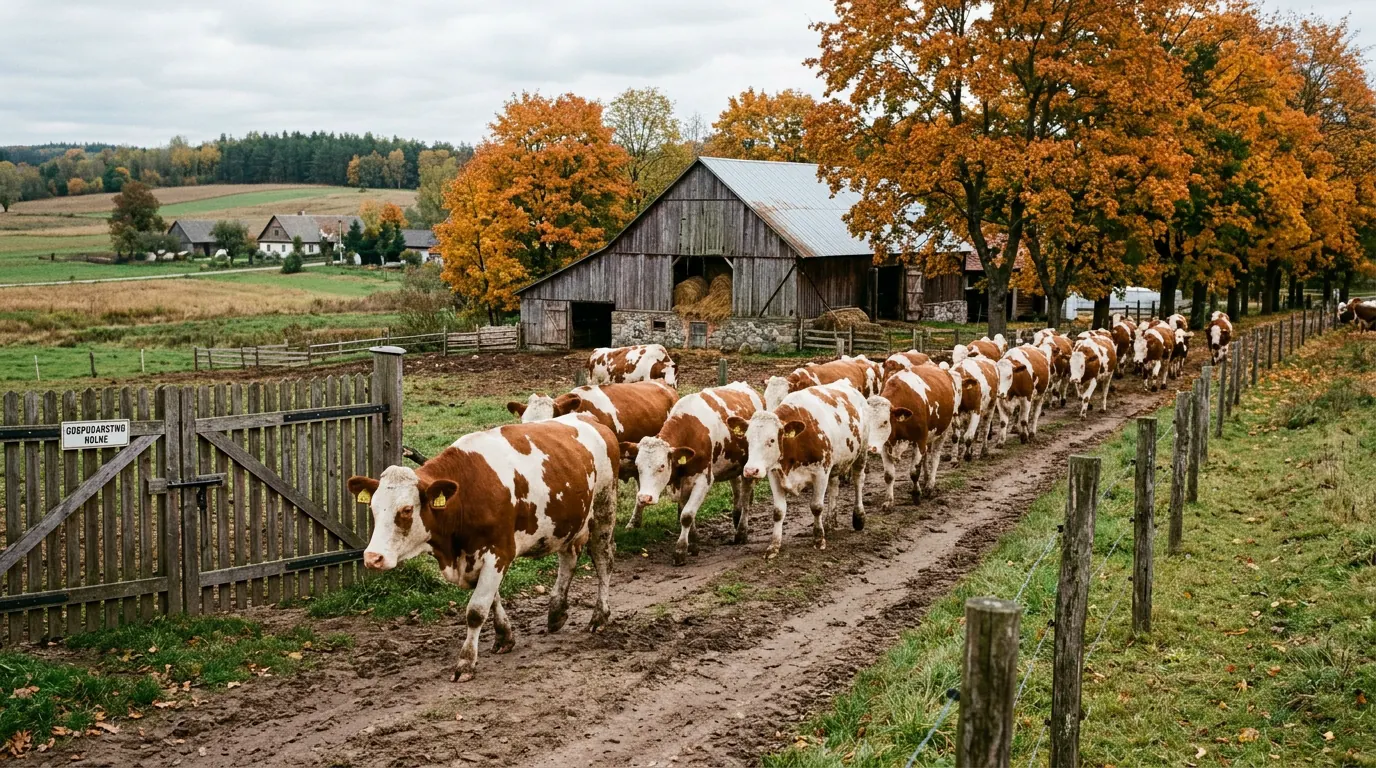
A beef cow stays in the herd as long as she calves regularly and rears her calves. A bull stays as long as he is fertile and healthy. We do not give a set number of years, because it depends on breed, housing system and farm conditions. Birds have a different production pace, which you can compare in how long a chicken lives.
The short answer for farmers
In practice, age is rarely the reason an animal leaves the herd. Most often a cow is culled because she stops calving on the herd's schedule, has low body condition or has health problems. A bull is replaced when his fertility drops or when some cows may go unserved. Every gap in calving cuts the number of calves per cow per year. If you keep records, you see these drops early and can replace the animal before the loss grows.
What decides how long a cow lives
Fertility and return to heat
In its guidance for beef herds, Teagasc says about 85% of cows show a fertile heat by day 50 after calving. Cows that show no heat by 60–70 days after calving need attention, especially with artificial insemination. In herds with late calvers, Teagasc advises limiting the breeding period to 12 weeks. Cows that calve late, have low body condition (BCS below 2.0) or have calved twins usually need a quicker response. Do not wait for the next season. You can plan calving dates and the herd cycle in the planning module, and record days from calving to heat in each cow's file.
Weaning and return to cycling
According to Teagasc, the bond between cow and calf is the main factor delaying the return to cycling after calving. For late-calving cows, separating cow and calf starts when the cow is 30 days after calving and lasts 2–3 weeks, with the calf suckling only morning and evening. The method affects the welfare of both animals, so discuss it with your vet or an adviser. The rule is simple: the longer a cow goes without heat, the longer the gap between calvings, and the fewer calves she produces during her time in the herd.
How long a breeding bull works
Bull fertility
Teagasc warns against assuming a bull is fertile. With natural service, check his fertility, because infertility is often found only later. In its analysis of the weanling-to-store system, Teagasc says an infertile bull can cut income significantly before anyone notices the problem. Good management, meaning regular assessment of animals and checks on mating results, helps prevent this. Record mating results in your herd records so you can see which cows were not served.
Age and working life
A bull works as long as he is healthy and fertile. His working life depends on the number of cows in the herd, his assessment results and his condition. We give no number of years, because it differs between farms and breeds. Before each breeding season, do a check: look at his legs and general condition, and have your vet assess his semen. Replace a bull who is failing early rather than sit out the season, because one weak breeding season means no calves from some cows for a whole year.
Diseases that shorten time in the herd
Hypomagnesaemia after calving
AHDB describes suckler cows as at risk of hypomagnesaemia, also called grass staggers. The disease occurs when animals graze lush grass, especially grass rich in nitrogen and potassium, in cold, wet weather. It most often affects cows in the first 1–3 months after calving. Magnesium can be supplemented in several ways, but your vet chooses the product and the dose. We cover alternatives to antibiotics and feed additives separately in natural feed additives instead of antibiotics.
Welfare at pasture
The EFSA review of beef cattle welfare looks at pasture conditions, shelter from weather and animal behavior, among other things. For you, the rule is simple: cows should have access to shelter and a dry place to lie, especially in winter. Report any suspected infectious disease to your vet and do not wait for symptoms to spread through the whole herd.
When to cull a cow or bull
Most common reasons for culling
Typical causes include: no calving on the expected schedule, low body condition despite good feeding, udder problems, chronic disease and falling bull fertility. For every decision, record the reason, the date and the test result. After a year, this data shows a pattern, for example a particular line of animals that drops out of breeding more often. That way you base herd replacement on numbers, not memory.
Withdrawal periods when culling
After a medicine is given, you must wait out the withdrawal period set by your vet or in the product's data sheet before the animal goes to slaughter. We give no doses or times here, because they depend on the product and your vet chooses them. With beef cattle this matters most when culling, because a cow leaving the herd can go to slaughter too early. Record medicines and withdrawal periods in the treatment and withdrawal module, which helps you keep to dates before sale.
How long cattle live in natural conditions
Age and housing system
In natural conditions, without early culling, cattle live many years longer than in a production system. Animals kept with their calves on pasture can stay in breeding for a long time, as long as they keep their condition and stay healthy. In production herds, cows are usually culled earlier, because herd economics need a steady output of calves. In describing weanling-to-store systems, Teagasc notes that systems with a high share of young animals need more attention to herd health, because disease in a group spreads quickly through the herd.
Pasture and season
Pasture gives animals exercise and fresh feed, but it changes disease risk. Lush grass in winter and damp conditions raise the risk of hypomagnesaemia in cows after calving. When planning grazing, consider the weather, access to shelter and mineral supplementation agreed with your vet or an adviser. A herd that handles winter well at pasture usually stays in breeding longer without early culling.
Frequently asked questions
How long does a beef cow live?add
There is no single number, because a cow's lifespan depends on the system, her health and culling decisions. In production herds, cows are usually culled earlier, once they stop calving regularly. Your vet and a regional adviser can give you a guide for your own herd.
How long does a breeding bull live?add
A bull works as long as he is healthy and fertile. Check his fertility, because an infertile bull can lower herd results before the problem is found. Before the breeding season, do a check and discuss the result with your vet.
How many days after calving does a cow return to heat?add
Teagasc says about 85% of cows show a fertile heat by day 50 after calving. Cows that show no heat by 60–70 days need attention and a note in your records. With artificial insemination, watch for heat closely.
Can a cow stay in the herd longer without calving?add
A cow can stay longer, but without calves she brings no rearing income. Base the decision to keep her on her condition, health and profitability, not only on her age.
What most often shortens a cow's life in the herd?add
Most often it is fertility problems, low body condition and disease. Hypomagnesaemia affects cows in the first 1–3 months after calving, especially on lush pasture in cold weather. Discuss every case with your vet.
Sources & resources
- linkTeagasc (Ireland) — Teagasc Beef Manual — Section 3: Beef Systems
- linkTeagasc — Teagasc Beef Manual — Section 4: Breeding
- linkAHDB Beef & Lamb (UK) — Beef BRP Manual 5: Feeding suckler cows and calves for Better Returns
- linkEFSA AHAW Panel — Welfare of beef cattle (EFSA Journal 23:9518)
Prepared by: DlaFerm Team based on data from the sources listed · Publisher: INSTA-TECH sp. z o.o.
Planning mating and calving in your herd?
The DlaFerm planning module helps you set mating and calving dates in one place. Create a free farm account and start with your own herd.
Phone
+48 796 258 151