Flies in cattle barns and poultry houses: controlling larvae and adult flies
Flies in barns and poultry houses breed mainly in wet manure, damp bedding and spilled feed. Control starts with removing breeding sites. Only then is it worth reaching for insecticides. Below we show where to look for larvae and how to build a plan.
verifiedFrom the team that has organised work on poultry farms for years.
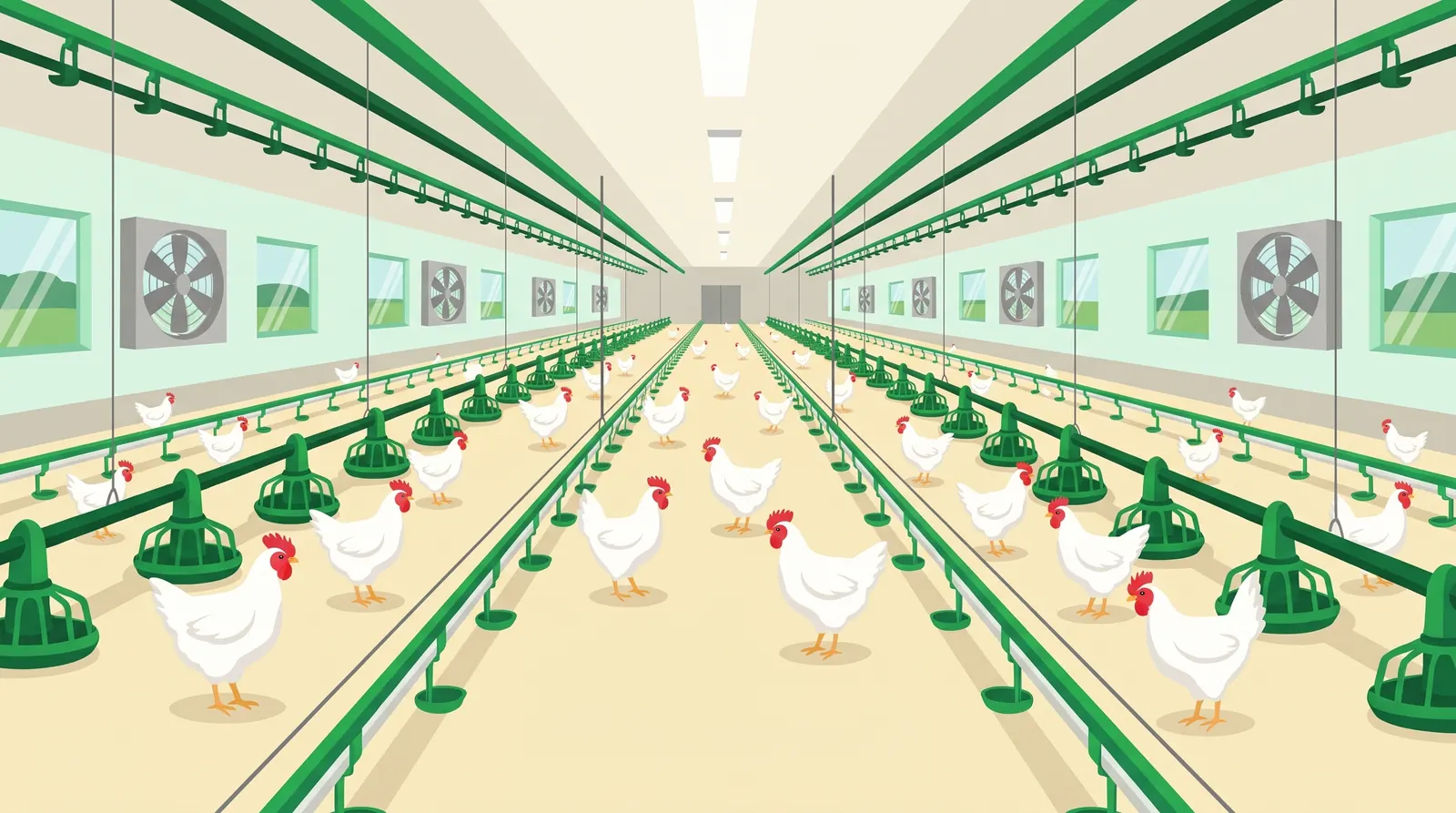
Flies in barns and poultry houses breed in organic material that is wet and warm: manure, damp bedding, droppings and water spilled from drinkers. Larvae develop in this material, and the adult flies leave it and spread through the building. Effective control needs two things: fewer breeding sites and control of adult flies. Spraying adult flies alone will not solve the problem while larvae still have wet material to grow in.
Why larvae matter more than adult flies
The female lays eggs close to a food source, and the eggs hatch into larvae that live in the organic material. So most of the work happens on the floor, in the channels behind the cubicles and under the drinkers, not in the air. Farmers often see swarms at the building exit, but the source is usually a neglected spot a few meters from the animals. Start with a simple walk-through: check where wet manure sits, where water spills onto the bedding and where feed leftovers collect. Write these spots down so you know what was checked and when.
Where flies find food in the barn
Manure and bedding
Wet, compacted bedding and manure left in one place make ideal ground for larvae. Take a handful of material from several spots and check by hand whether it is damp and sticky. Remove such a layer regularly, not only once swarms appear. Add fresh bedding to dry areas, not to wet patches. Place manure heaps away from building entrances and from the places where animals spend most of their time.
Drinkers and feed
Leaking drinkers, spilled water and feed leftovers on the floor are a common source of moisture. In its beef manual (section 7), Teagasc lists wet and dirty bedding, overcrowding, poorly ventilated sheds and dirty feed and water troughs among the risk factors for health problems. The same conditions help flies develop. Clean troughs after each feeding and check drinkers for leaks on every walk-through.
Ventilation and humidity as risk factors
Ventilation and humidity
A poorly ventilated barn holds the moisture from manure and from the animals' breath. Bedding then stays wet and ferments instead of drying. In its opinion on the welfare of beef cattle, EFSA looks at housing conditions, including flooring, water, feeding and high environmental temperatures. Good ventilation and suitable humidity limit larval development. You can check conditions using the rules in our articles on temperature and humidity in the poultry house and on poultry house ventilation, which also apply to buildings for poultry.
Poultry house: litter and droppings
In a poultry house the main source of flies is the litter, meaning droppings mixed with bedding. If the litter is wet and stays for a long time, larvae develop fast. We describe removing and drying litter in our guide to removing and drying poultry litter. Remember also that rodents and other pests are drawn by feed leftovers and moisture, so controlling them belongs to the same hygiene plan, as we explain in the article on rats in the poultry house.
Controlling larvae step by step
Removing breeding sites
The first step is to remove wet material from the places where larvae develop. Clean the channels behind the cubicles, under the drinkers and along the walls, and haul manure away from the building. Pay attention to hard-to-reach spots, such as behind the feed rack or under a platform, because leftovers usually stay there. After cleaning, let the floor dry, and only then add fresh bedding. Note in your schedule when and where the cleaning was done.
Traps and control of adult flies
Hang traps for adult flies where animals cannot touch them, for example near entrances and windows. Record the number of flies caught on every walk-through so you see a trend, not just a snapshot. Traps do not replace removing larvae, but they show whether your work on the floor is paying off. If the count rises despite cleaning, check humidity and breeding sites again instead of simply adding more traps.
Products, withdrawal periods and treatment records
Choosing a product
Use only products intended for the given purpose and follow the label. Agree the dose and method of use with a vet or adviser. Products used directly on animals may have a withdrawal period, and you must not shorten it. We do not give product names or doses here, because they depend on the type of product and the situation in the herd. If in doubt, ask before you buy, not after treatment. Poland's Chief Veterinary Inspectorate (Główny Inspektorat Weterynarii) oversees the rules and notifications, so its website is a good place to check them.
Treatment records and withdrawal periods
Record every treatment with the date, place, product name and the person who did it. If a product has a withdrawal period, the record lets you prove it was observed before animals were shipped. Our treatment and withdrawal period module helps with this and tracks the deadlines for every entry. You then know when animals can be shipped, and a records check does not mean hunting through several notebooks.
How to tell whether your measures work
Walk-through and records
Set a fixed walk-through routine: check manure, drinkers, troughs and traps in the same order. Write down what you found and what you did, so you can compare the state at the next round. Keep a list of spots that need attention, such as corners and exits. A hygiene and biosecurity plan is easier to keep up when the records are in one place. The biosecurity plan generator helps here and lays out the steps based on what you already have on the farm.
When to ask for help
If flies persist despite cleaning and better ventilation, or the animals have skin or eye lesions, talk to a vet. The cause may be something other than the flies, so leave the diagnosis to a specialist. A team from the Instytut Zootechniki (Poland's National Research Institute of Animal Production) and KPODR Minikowo (an agricultural advisory center) has produced material on calf rearing and hygiene that can help when you plan cleanliness in the barn. Records spanning several weeks will help the vet assess the situation faster.
Frequently asked questions
Where do flies in a cattle barn come from?add
Flies develop in wet organic material: manure, damp bedding, feed leftovers and spilled water. Adult flies leave these places and spread through the building. You find the source by checking on your walk-through where material is wet and stays in place.
Can flies in a barn spread disease?add
Insects can carry germs mechanically, but a vet decides how much this risk matters in a given herd. If you suspect disease, do not wait: contact your vet. Your walk-through records will help the vet assess the situation.
Can I use fly products directly on cattle?add
Only products intended for that use and chosen by a vet or adviser. Follow the label and record the withdrawal period if one is set. Do not use products meant for rooms directly on animals.
How do I reduce fly larvae in manure?add
Remove manure regularly, do not let wet bedding sit, and haul material away from the building. Drying and better ventilation reduce the moisture that larvae need. Always check hard-to-reach spots, because leftovers usually stay there.
Is fly control in a poultry house different from a cattle barn?add
The rules are similar: remove wet litter, keep bedding clean and ventilate. In a poultry house the main source is the litter, so removing and drying it regularly matters most. Building size and the way you work differ, so adapt the plan to the place.
Do I need to keep records of fly treatments?add
Records help you judge whether your measures work and show whether required withdrawal periods were observed. Write down the date, place, product name and who did the work. This makes it easier to prepare for an inspection and to pass information to your vet.
Sources & resources
- linkTeagasc — Teagasc Beef Manual — Section 7: Animal Health
- linkEFSA AHAW Panel — Welfare of beef cattle (EFSA Journal 23:9518)
- linkKPODR Minikowo — Rearing beef calves (guide, authors from SGGW)
- linkGłówny Inspektorat Weterynarii (Chief Veterinary Inspectorate) — gov.pl/web/wetgiw
Prepared by: DlaFerm Team based on data from the sources listed · Publisher: INSTA-TECH sp. z o.o.
Want barn hygiene and treatment records in one place?
The <a href="/generator-planu-bioasekuracji">biosecurity plan generator</a> in DlaFerm.pl helps you set up a routine of walk-throughs and records. Create a free farm account or get in touch, and we will show you how it works in practice.
Phone
+48 796 258 151