Feed acidifier and mycotoxins in feed: what you need to know
A feed acidifier is a formulated additive based on organic acids, used on commercial and semi-commercial poultry farms. It is not the same as the backyard habit of adding vinegar to the water. Here we explain how feed acidifiers work and how to spot and limit mycotoxins in feed, a serious risk when grain is stored badly.
verifiedFrom the team that has organised work on poultry farms for years.
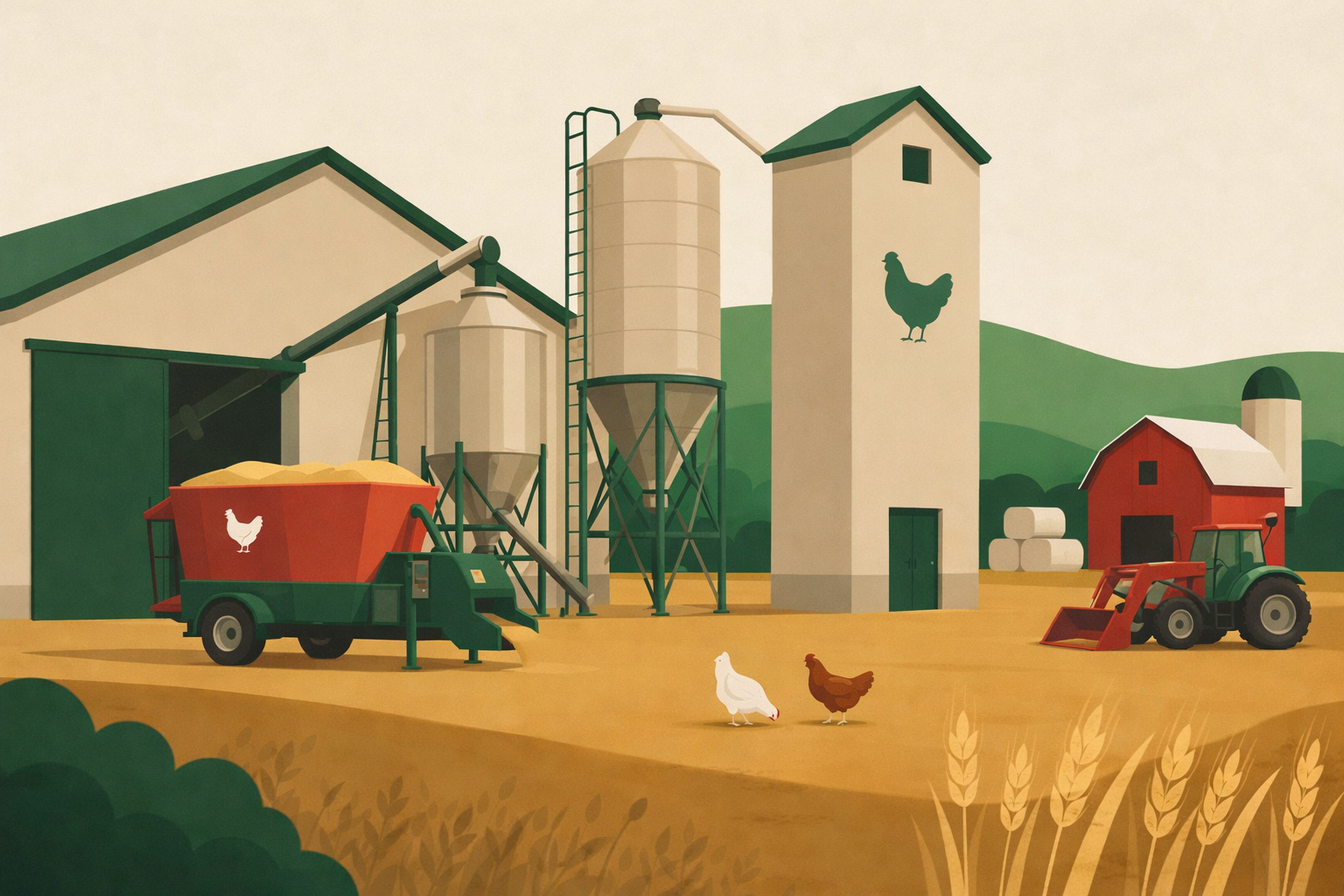
A feed acidifier is a ready-made, formulated feed additive based on organic acids (for example formic, propionic, citric acid or blends of them). It is dosed into feed or water in controlled, precisely defined amounts. This is a different category from pouring apple cider vinegar into a drinker. That traditional practice for backyard keepers has its own article: apple cider vinegar for chickens. Feed acidifiers are used mainly on commercial and semi-commercial farms, where dosing is controlled more tightly than "a spoon per bucket".
Why farmers use them
The main reason is to lower the pH in the bird's digestive tract. That creates an environment less friendly to some disease-causing bacteria (for example Salmonella) and also improves the shelf life and hygiene of the feed itself during storage. This is a practice described in the nutrition literature, not folk tradition, although both methods (feed acidifier and vinegar in water) come from the same general idea of acidifying the digestive environment.
A separate but related problem: mycotoxins in feed
Mycotoxins are toxic compounds produced by molds and fungi. They can contaminate grain-based feed, especially when grain is kept in damp, poorly ventilated conditions that favor mold. This topic deserves its own attention because, unlike acidifiers, it is about the safety of the feed itself, not just improving it. Where feed quality is managed (through acidifiers and good storage, among other things), mycotoxins naturally come up as a related subject.
How feed acidifiers work
Organic acids in feed and water
Feed acidifiers are usually blends of one or more organic acids: formic, propionic, lactic, citric, or acetic acid in purified form. They are added to finished feed or to water, as a liquid or a powder. Unlike homemade apple cider vinegar, the concentration and composition of the product are set in advance by the manufacturer. You dose it according to the label instructions, not by eye.
The effect: harder conditions for some pathogens
A lower pH in the digestive tract and in the feed itself makes it harder for some disease-causing bacteria to multiply. It also slows mold growth while feed is stored. This is one reason acidifiers are often part of a wider feed quality strategy on more commercial farms, alongside proper storage, clean feeders and good husbandry.
Not a replacement for hygiene and good flock management
A feed acidifier does not replace the basics: clean water, hygienic feed storage, good house ventilation, and regular cleaning of feeders and drinkers. It is a supporting additive, not a stand-alone fix for flock health problems. If birds show real signs of disease, talk to a veterinarian.
Mycotoxins in feed: where they come from and how to prevent them
Where mycotoxins come from
Mycotoxins form as a by-product of mold growing on cereal grain. This happens especially when grain goes into storage too damp, or is kept in a room without good ventilation where humidity stays high. Contamination can start in the field (when the weather is poor around harvest) and also later, during storage.
Why it is a serious matter
High levels of mycotoxins in feed can harm the flock. Signs include poorer weight gain, weaker immunity and, in worse cases, damage to internal organs. Do not ignore the problem or wait it out. Prevention therefore focuses on making sure grain never gets the conditions to go moldy in the first place.
The basics: dry, well-ventilated storage
The most important and most effective step is proper grain storage: a dry, cool, well-ventilated room, sealed against moisture from outside and from the ground, with limited access for pests that can damage grain and help mold develop. Check the store regularly (smell, visible mold, grain clumping) to catch a problem before the feed reaches the feeder.
An extra tool: mycotoxin binders
Commercial farms also use additives that bind mycotoxins (called sequestrants or mycotoxin adsorbents). Mixed into feed, they are meant to limit how much mycotoxin the bird's gut absorbs. This is a recognized extra tool for managing risk, but it does not replace good grain storage. Think of it as a second line of defense, not a solution on its own.
Frequently asked questions
What can I use to acidify water for chickens?add
This question usually refers to the homemade practice of acidifying water, not the formulated feed acidifiers described here. You will find a detailed guide with proportions and caveats in apple cider vinegar for chickens. Feed acidifiers are a different, more precisely dosed category of product, used mainly on commercial farms.
What is the best acidifier for poultry?add
There is no single best acidifier. The choice depends on the composition (type and concentration of organic acids), how you give it (feed or water), the size and profile of the flock, and the goal. Talk to a nutrition adviser or the farm's veterinarian about the specific product and dose. We do not recommend particular products.
What can I use to acidify water for pigeons?add
The general principle of acidifying water is similar whatever the bird, but we do not cover pigeon-specific dosing here. The general mechanism and the caveats about homemade water acidifying are in apple cider vinegar for chickens. For breeding pigeons, also consult a veterinarian who specializes in the species.
What can I do about mycotoxins in feed?add
Prevention comes first, not treatment. Dry, cool, well-ventilated grain storage, protected from moisture and pests, is the most effective way to stop mycotoxins forming at all. Commercial farms also use mycotoxin binders (sequestrants) mixed into feed. These add to good storage and do not replace it.
Sources & resources
- linkNational Veterinary Research Institute in Puławy (Państwowy Instytut Weterynaryjny)
- linkWorld Mycotoxin Journal: research on mycotoxins in feed
- linkPoultry Science / Journal of Applied Poultry Research: research on organic acids in poultry nutrition
- linkEFSA (European Food Safety Authority): mycotoxins in feed
Prepared by: DlaFerm Team based on data from the sources listed · Publisher: INSTA-TECH sp. z o.o.
Want feed quality and flock health under control?
The DlaFerm <a href="/program-do-ewidencji-kurnika">house record module</a> lets you keep feeding records and flock notes on a larger farm. Create a free farm account or get in touch and we will show you how it works.
Phone
+48 796 258 151