Pig Ear Tags and Identification: ARiMR Requirements
Every pig in your herd should carry an ID number that matches the herd number of the premises where it was born. You record this number in your documents and report it to ARiMR (Poland's Agency for Restructuring and Modernisation of Agriculture) when pigs move. Below we cover what to enter on form 10, how to keep the registration book and what to watch for during movements.
verifiedFrom the team that has organised work on poultry farms for years.
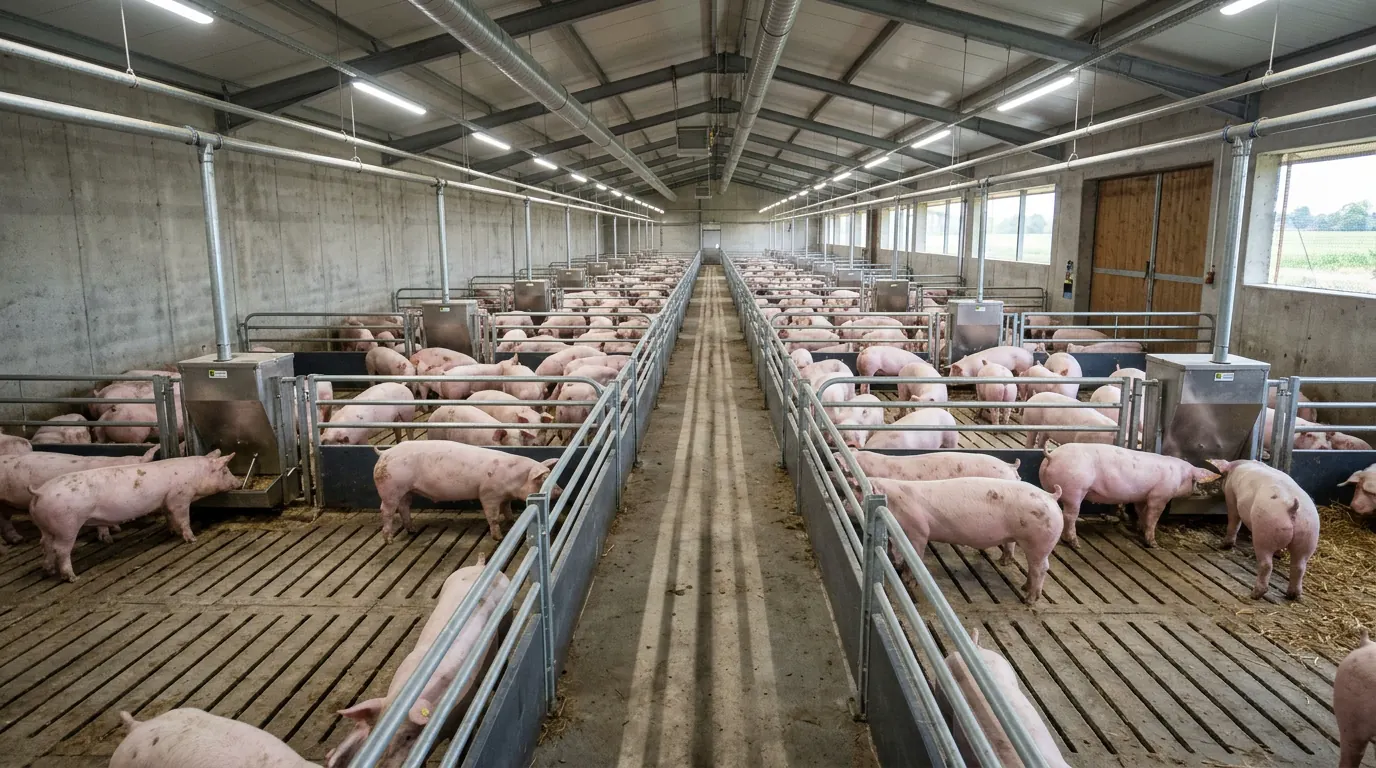
A pig on your farm must be identified, and its ID number links it to the herd premises where it was born. The ear tag is the most common carrier of that number, but matching your documents to the number on the animal matters just as much as the tag itself. We describe the rules as of 22.11.2026. Confirm the exact identification method for your herd with your county ARiMR office, and keep your records in the app for pig farmers.
Why paperwork matters as much as the tag
At an inspection, three things must match: the number on the animal, the entry in the registration book and the movement notification. If one of them differs from the others, it is hard to show where a pig came from and where it went. So record every event in the herd right away: birth, purchase, sale, death and movement. A delay of a few days is the most common cause of errors in documents, and fixing them later takes more time than making the entry on the day.
Reporting pig movements step by step
What to enter on the form
Form 10 starts with the herd premises number the pig is moved from. Next you enter the pig's ID number, which matches the number of the premises where it was born. If the pig moves from that same premises, you enter that number. If the pig was additionally identified in its last herd, you report the number from that last premises. Then you enter the number of pigs marked with that number and the number of the herd premises or slaughterhouse the animals are going to. If you are sending pigs to another country, you enter the premises number or the name of that country here.
The premises number on the form
The herd premises number follows a fixed pattern you can see on the form: the prefix PL, a group of characters, a hyphen and three more characters. The slaughterhouse number uses the same format. Before you write out the notification, compare the number with your herd registration document, because one wrong character means an incorrect notification. Numbers copied from memory are a common reason for corrections at the county office.
How to keep the pig registration book
Columns you fill in
The ARiMR book template has columns for: herd size before the event, event date, event code, number of animals arrived or left, details of the place they came from or went to, herd size after the change, identification date and remarks. A separate part is for inspections or corrections, with the stamp and signature of an ARiMR employee. Before you start, download the current template from the ARiMR website, because the column layout can change.
Keeping the count right
The herd size after each event should match the number of animals you actually see in the pig house. If a difference appears, look for the cause at once, not at the end of the quarter. Keeping the book in electronic form helps catch such differences. Good records also make it easier to prepare documents for inspections and notifications.
Ear tag, ID number and additional identification
Additional identification
Form 10 mentions additional identification, which applies to a pig in its last herd premises under art. 25 sec. 2 of the act. If a pig was additionally identified, its number from the last herd must go into the notification. You agree the method and deadline of identification with your county ARiMR office or the vet looking after your herd, because they depend on the animal category and your farm's situation.
A lost tag
In practice, tags get lost in the pig house, especially on young pigs. Losing a tag does not remove your duty. Report it to the county ARiMR office and record the event in the book, and the new identification number must be consistent with your documents. Do not fit a tag with a different number than the one in your herd records.
Cost of ear tags
Tag prices depend on the manufacturer, type, order size and how the tag is made. Amounts change, so we do not give them. Ask your supplier for a current offer and check that the tags meet the requirements ARiMR accepts for pig identification.
Pig movements and African swine fever restrictions
When to report a movement
You prepare a notification each time a pig leaves the premises: to another herd, to a market, to slaughter or abroad. In practice, inspectorates expect the notification to be complete before the animals leave. Animals without identification or with a mismatched number may be stopped at a checkpoint, so check the tag numbers before loading.
African swine fever
In zones restricted because of African swine fever, movements are subject to extra requirements. The rules are set by the Minister of Agriculture's regulation of 12.03.2026 on measures to control African swine fever (Dz.U. 2026 poz. 344, Poland's Journal of Laws). Before each trip, check the current restricted areas on the website of the Chief Veterinary Inspectorate (Główny Inspektorat Weterynarii) and talk through your transport plan with your vet.
Farm records without double entry
Connection with IRZplus
You can enter herd data and notifications in IRZplus, ARiMR's online animal register, and keep your farm records in DlaFerm. The IRZplus and sensor integrations module describes how this data connects, so you do not have to retype the same information twice.
Farm visitors and biosecurity
Log every visit by an outsider to the pig house, because it helps trace the route of infection if a health problem appears. Keep the records in the QR entry and exit book, and describe hygiene and sanitary-pass rules in the biosecurity plan generator. Documents from these records also help during an inspection.
Medicines and withdrawal periods
A pig after treatment cannot go to slaughter before the withdrawal period ends. Your vet or the medicine leaflet gives the length of the withdrawal period, and the vet always chooses the medicine and dose. Record the date of administration, the product name and the end of the withdrawal period, and check at movement that the animal has passed it. You will find ready-made records in the treatment and withdrawal module.
Frequently asked questions
Does every pig need an ear tag?add
Pigs on your farm must be identified as the rules require, and you agree the method and deadline with your county ARiMR office. Confirm the scope for your herd with the vet looking after it. Do not rely on rules you heard from other farms.
Who fills in form 10?add
The form is filed by a pig keeper who is not a slaughterhouse, poultry establishment, processing plant, market organizer or animal dealer. Those entities have their own reporting rules. At movement you enter the herd premises number and the pig's ID number.
What is the difference between the premises number and the pig's number?add
The herd premises number identifies the farm and has the format PL, a group of characters, a hyphen and three characters. The pig's ID number matches the number of the premises where the animal was born. You enter both numbers on the form and check that they match before sending.
What should I do if an ear tag is lost?add
Report it to your county ARiMR office and record the event in the registration book. The new identification must match the herd documents. Do not fit a tag with a number different from the one in your records.
How do I keep a pig registration book?add
Record every event at once: arrival, departure, change in numbers and identification date. Use the current ARiMR template and make sure the herd size after each event matches the animals in the pig house. Write corrections with a date and a reason.
How much do pig ear tags cost?add
The price depends on the manufacturer, tag type, order size and how it is made. Amounts change, so we do not give them in this guide. Check the current offer with your supplier and make sure the tags meet ARiMR requirements.
Sources & resources
- linkARiMR — Pig movement notification (form 10)
- linkARiMR — Pig registration book (template)
- linkMinistry of Agriculture / Journal of Laws — Regulation of 12.03.2026 on measures to control African swine fever (Dz.U. 2026 poz. 344)
- linkChief Veterinary Inspectorate — gov.pl/web/wetgiw
- linkARiMR — gov.pl/web/arimr
Prepared by: DlaFerm Team based on data from the sources listed · Publisher: INSTA-TECH sp. z o.o.
Keep a pig herd and want your documents in one place?
The DlaFerm IRZplus integration module shows how we connect farm data with the system. Create a free farm account or get in touch, and we will show it using your own herd.
Phone
+48 796 258 151