Dry disinfection of a poultry house: powders and when to use them
Dry disinfection means treating the building with a powder or granules, without pressurized water. You use it after the house is washed and dry, or when wet washing is not possible, for example in freezing weather. Powder does not replace cleaning.
verifiedFrom the team that has organised work on poultry farms for years.
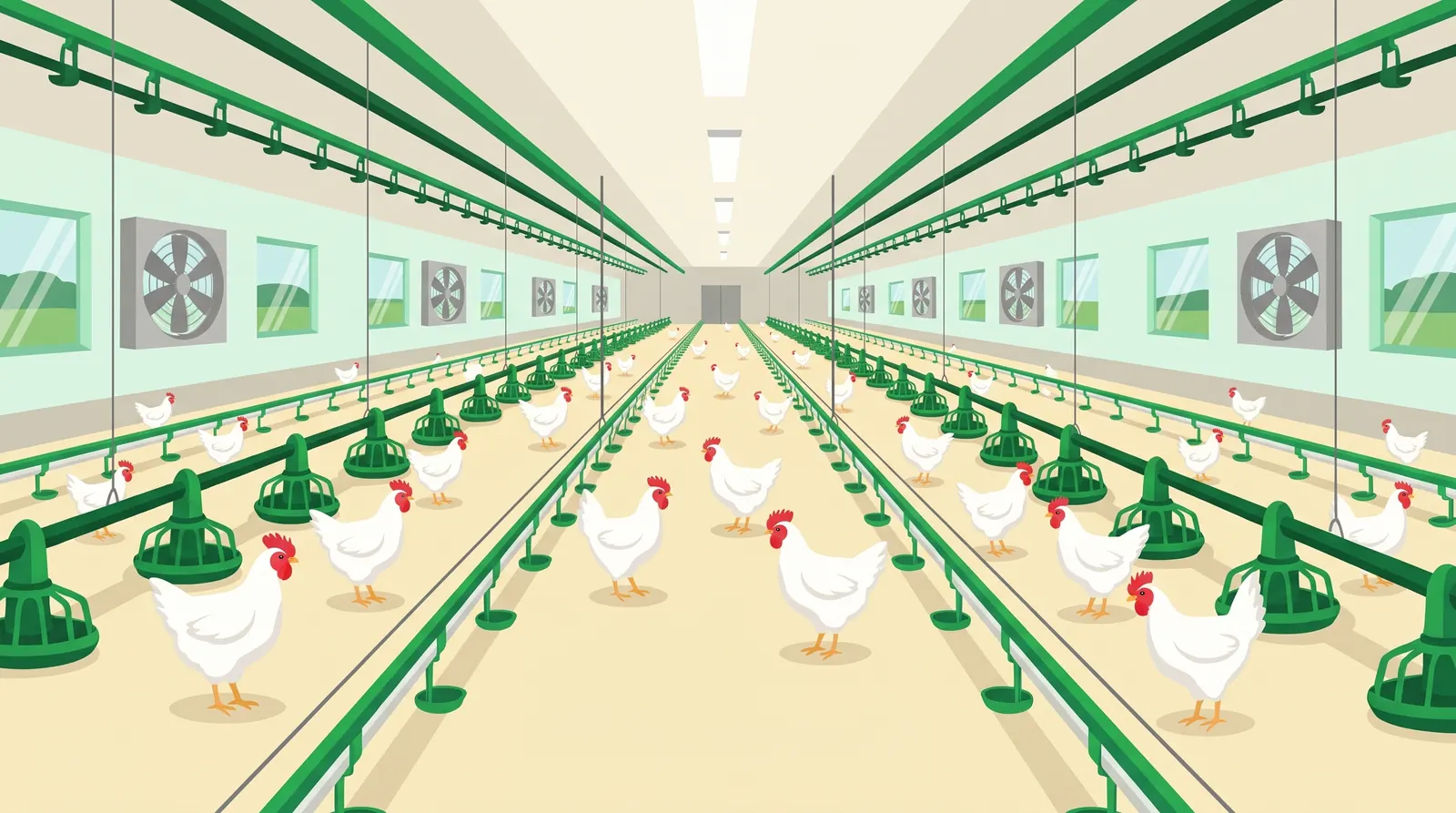
Dry disinfection means treating the house and its surfaces with a powder or granules, without pressurized water. You use it when the house is already cleaned and dry, or when wet washing is not possible, for example in freezing weather. Powder does not replace washing. Organic matter (droppings, feed residue and feathers) shields microbes, so remove litter and dirt first. We describe washing in our guide to washing and disinfecting a poultry house.
Why the order matters
A disinfectant only works on a clean surface. If you apply it on a dirty base, dirt blocks part of the active substance and the effect is weaker than you expect. So the order is always the same: remove litter and droppings, wash, let the house dry, and only then apply the dry product. This sequence applies to every species, although the scale and frequency of treatments differ between broiler houses and laying hen houses.
When to choose dry disinfection
Between flocks
Dry disinfection is most often done between one flock and the next, after the litter is removed and the building is washed. The surfaces are already dry, and the powder helps finish disinfecting corners, cracks and the areas around feeders. Before the new batch arrives, check that the house is completely dry. Moisture on the floor weakens the product and helps microbes grow. Similar rules apply to small buildings, as we explain in our guide to disinfecting a backyard chicken coop.
Winter and no water
When the temperature drops below zero, washing with water can be impossible or risky, because water freezes in the pipes and on the floor. A dry product needs no water supply and does not raise humidity in the house, so it works as a substitute or an addition. It does not mean you can skip cleaning, though. In this case, agree with your vet how to organize washing once conditions allow.
Disinfectant powders for poultry houses: how to choose
Lime
Lime, especially quicklime, has long been used in livestock buildings. It disinfects and helps bind moisture, but it works mainly in a dry environment and on clean surfaces. We cover application and limits in a separate guide to disinfecting a poultry house with lime. Quicklime irritates skin and eyes, so wear gloves and goggles.
Products with active substances
The market offers powders with different compositions, for example based on oxidizing compounds or other active substances. Each has a different range of action: some cover mainly bacteria, others also viruses or fungi. Do not choose a product on price alone. Check the label for which microbes it covers, the application temperature and which products you must not mix it with. Prices change over time and depend on pack size, so compare them in your distributor's current offer.
Dry disinfection step by step
Preparation
Before you spread the product, remove litter, droppings and feed residue, wash the surfaces and let them dry completely. Protect feed, water and equipment you do not want to contaminate. Switch off the fan if you are spreading dust, and close the entrances to animals. Write down each step in your log, because it makes later checks and cycle reviews easier.
Applying the product
Spread the powder evenly, by hand or with spreading equipment. Pay attention to corners, grids, feeders, perches and areas along the walls, where it is easiest to miss a spot. Do not soak the surfaces with water, because that turns dry disinfection into wet disinfection and defeats its purpose. Liquids are applied with other equipment, which we describe in our guide to fogging machines for disinfection.
Safety for people and birds
Dust and airways
Powders create dust that irritates the airways and eyes. While you work, wear a mask with a suitable filter, goggles and gloves, and ventilate the house afterwards. Birds must not be in the building while you spread the product, and you set the time they return according to the label. People with asthma or allergies should avoid this work.
Downtime before restocking
Each product has a set contact time, required ventilation and a downtime before the flock goes in. The manufacturer gives these values on the label and in the safety data sheet. If they are unclear, ask your vet before you start. It is worth recording the disinfection plan for the whole cycle in a tool such as the biosecurity plan generator.
What dry disinfection changes in the air
Moisture and ammonia
Wet litter produces ammonia, and its concentration rises when ventilation is weak. Dry products may bind some moisture from the floor, but they do not replace proper ventilation. If you still smell a sharp odor after disinfection, check airflow and the condition of the litter. We describe ventilation rules for broilers in our guide to poultry house ventilation.
Air after disinfection
Some farmers combine surface disinfection with air disinfection. Methods such as UV or photocatalysis have different uses and limits, so read our guide to air disinfection in a poultry house before you choose. Do not treat them as a replacement for washing or for dry disinfection of the floor.
Frequently asked questions
Does dry disinfection replace washing the poultry house?add
No. Powder works on clean, dry surfaces, and organic matter shields microbes. First remove litter and droppings, wash the building and let it dry, and only then spread the product.
Which powder should I choose to disinfect a poultry house?add
Choose a product whose range of action covers the microbes that matter on your farm. Check the label, the safety data sheet and your vet's advice. Also compare the requirements for temperature, ventilation and downtime before restocking.
Can I do dry disinfection in winter?add
Yes. In winter dry disinfection is often more convenient, because it needs no water that could freeze. Still, dry the surfaces and ventilate after treatment. If washing is not possible, discuss the plan with your vet.
How long after disinfection can I restock a new flock?add
It depends on the product and the manufacturer's requirements, so there is no single value. The label or safety data sheet gives it. If the information is unclear, ask your vet before the birds go in.
Are disinfectant powders safe for people?add
Many products irritate the eyes and airways, so wear a mask, goggles and gloves while you work. Ventilate the house afterwards. Check the safety data sheet for work safety and composition.
Do the regulations require a specific disinfection method?add
Requirements for disinfecting buildings come from veterinary regulations, which change from time to time. For the legal state as of 22.11.2026, check Poland's ISAP legal database (Internetowy System Aktów Prawnych) and the website of the Chief Veterinary Inspectorate (Główny Inspektorat Weterynarii). Agree your disinfection plan with your vet.
Sources & resources
- linkChief Veterinary Inspectorate (Główny Inspektorat Weterynarii) — gov.pl/web/wetgiw
- linkEFSA — efsa.europa.eu
- linkPoland's Internet System of Legal Acts (ISAP) — isap.sejm.gov.pl
- linkNational Research Institute of Animal Production (Instytut Zootechniki PIB) — izoo.krakow.pl
Prepared by: DlaFerm Team based on data from the sources listed · Publisher: INSTA-TECH sp. z o.o.
Want your disinfection plan in one place?
The <a href="/generator-planu-bioasekuracji">biosecurity plan generator</a> in DlaFerm.pl helps you set a disinfection schedule and record what was done and when. Create a free farm account or get in touch, and we will show you how it works in practice.
Phone
+48 796 258 151