Do pigs sweat? Pig facts every farmer should know
Pigs sweat very little, so they cool off in other ways: shade, water and wallowing. This shapes how you set up pens, ventilation and how you avoid tail biting in the herd. We explain what it means for you and where to check current rules.
verifiedFrom the team that has organised work on poultry farms for years.
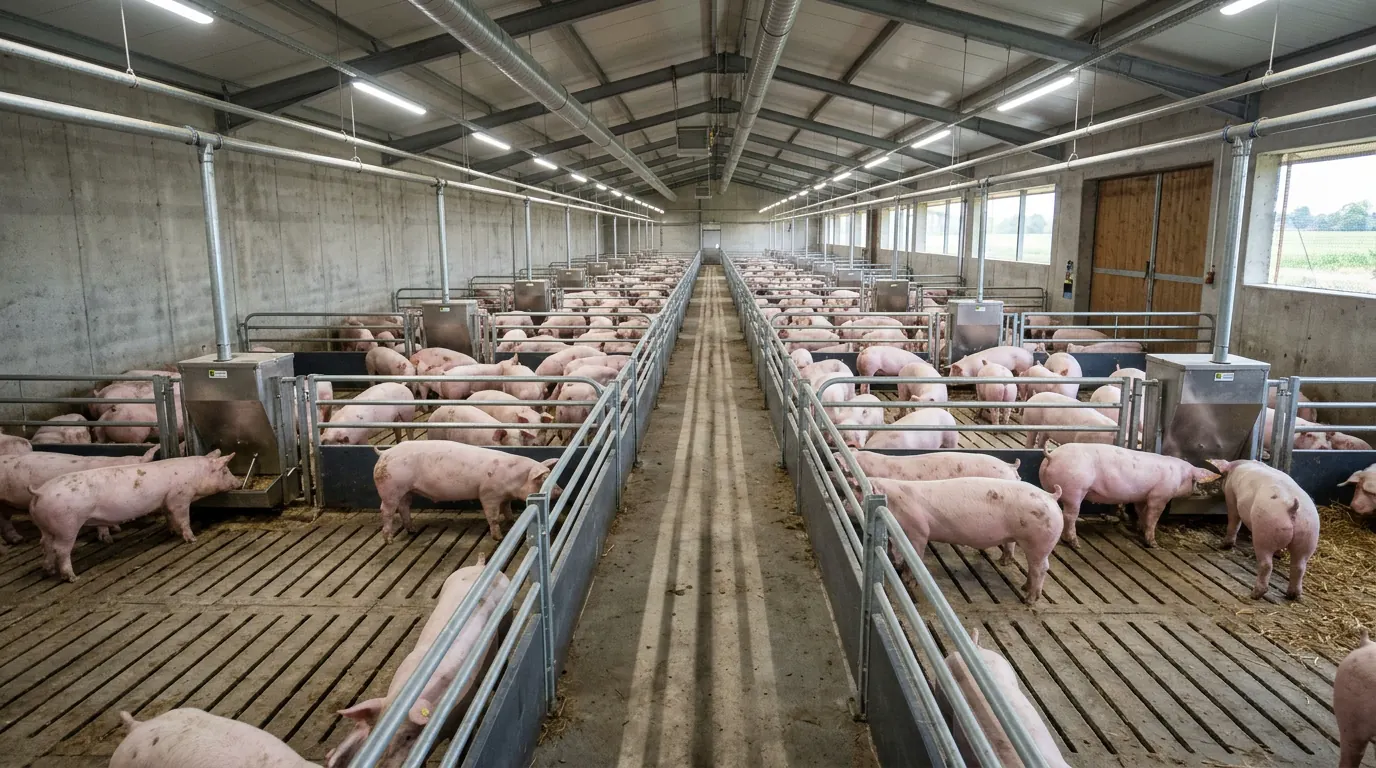
No, pigs do not sweat the way people do. They have very few working sweat glands, and their skin gives off little sweat, so evaporation does not cool them enough. Pigs cool off in other ways: they look for shade, lie on cool bedding, and in hot weather they wallow in mud or water. This matters in practice, because it decides how you set up pens, outdoor runs and drinkers.
Heat and fattening results
A pig that cannot shed heat eats less and gains weight more slowly. Heat stress lowers feed intake, worsens feed conversion and can raise the risk of health problems in the group. Before you change the diet, check ventilation, access to water and whether the animals have somewhere to cool down. Our calculators for farmers help with planning, and you can keep feed and weight gain records in the app for pig farmers.
How pigs cope with heat
Why sweating is not enough
A pig's sweat glands are few and work poorly, so the skin does not carry away much heat by evaporation. As the temperature rises, the pig breathes faster, moves less and keeps away from the group. You can see these signs on any farm, even without special measurements. Watching how the animals behave is the simplest first check.
Wallowing as a way to cool down
Mud or water on the skin works as a cooling layer, and when it evaporates it takes heat away. That is why pigs wallow eagerly in hot weather and less often on cool days. If your farm has no mud wallow, provide shade and keep the bedding cool. Never leave animals without access to water, as that is the fastest route to overheating.
Pig tails: biting, docking and prevention
Why pigs bite tails
Pigs have a strong need to explore their surroundings: rooting, chewing and investigating the floor. According to the KPODR handbook (a Polish agricultural advisory center), these natural behaviors are often held back in intensive farming, which encourages tail biting in the pen. Biting often starts with a single wound that attracts other animals. After the first injury, find the cause quickly instead of only treating the wound.
Tail docking: what the law says
Council Directive 2008/120/EC sets minimum standards for the protection of pigs and does not allow tail docking as a routine procedure. It may be done only after tail injuries have been found and only when other measures have failed. The directive has been implemented in national law, and you should check the legal status as of 22.11.2026 in Poland's Internet System of Legal Acts (Internetowy System Aktów Prawnych) and with your vet.
What to change in the pen
Give pigs material to root in, such as straw, and provide a place to escape from stronger animals. Under Directive 2008/120/EC, if there are signs of severe fighting, the causes must be investigated immediately and animals at risk kept separately. Record every tail injury and the action you took, because that is the only way to see what really works in your herd.
Pig welfare in daily work
The five freedoms in practice
According to KPODR, welfare means meeting five freedoms: freedom from hunger and thirst, from discomfort, from pain and disease, from fear in dealing with people, and freedom to express normal behavior. The last one is the hardest in intensive farming. Check drinkers and bedding every day, and look for any pig lying away from the group, as these are quick indicators of the animals' condition.
Contact with people
Pigs adapt well, and frequent, calm contact with the keeper reduces fear of people. It can be hard when time is short, but even short daily visits to the pen make a difference. Play in the herd can be a good sign that welfare is adequate. Regular visits logged in the farm entry book show who was with the herd and when.
Contact with other pigs and wild boar
Rules for farms placing animals on the market
Guidelines from the Veterinary Inspection in Wągrowiec (PIW Wągrowiec) on Regulation 2021/605 list rules for keeping pigs. They include no direct or indirect contact with other pigs, no contact with wild boar, whether live, carcasses or fallen animals, and a change of clothing and footwear when entering the building. Lending equipment between farms is also restricted, except for equipment that has been cleaned and disinfected.
ASF restricted zones
Commission Implementing Regulation (EU) 2023/594, in its original version, requires reinforced biosecurity measures in restricted zones for African swine fever (ASF). They include no contact with other pigs, a change of clothing and footwear, washing and disinfecting hands, and at least 48 hours without contact with wild pigs after hunting. Rules change, so check the current requirements for your county with your vet and the Chief Veterinary Inspectorate (Główny Inspektorat Weterynarii). Write your own farm plan with the biosecurity plan generator.
Recording events in the herd
What to record
Record the dates and places of tail injuries, changes in behavior, treatments and the medicines given. The vet chooses the medicine and dose, and you are responsible for the record. For every medicine, set the withdrawal period and do not send animals to slaughter before it ends. Keep track of withdrawal periods in the treatment and withdrawal records.
A farm example
A farmer notices that pigs in one pen start biting tails during hot weather. He records when the first wounds appeared and what he changed in the bedding and ventilation, then checks the result after a few days. A record like this lets you decide on facts, not on a hunch.
Frequently asked questions
Do pigs sweat?add
Pigs sweat very little because they have few working sweat glands. They do not rely on sweat to cool the body. Instead they look for shade, water and a place to wallow.
How do pigs cool down in hot weather?add
They wallow in mud or water, lie on cool floors and move less. Some animals also eat less. The farmer should provide shade, water and good ventilation.
Why do pigs bite tails?add
The most common cause is the lack of a chance to explore, meaning rooting and chewing. Biting often starts with one wound that attracts other animals. The key is to find the cause quickly, before the problem spreads.
Can you dock a pig's tail routinely?add
Directive 2008/120/EC does not allow routine tail docking. It may be done only after injuries have been found and only when other measures have failed. Check current national rules in Poland's Internet System of Legal Acts and with your vet.
How do you prevent tail biting in pigs?add
Provide material to root in, such as straw, keep stable groups without frequent mixing, and give animals a place to escape. Watch the pigs daily and separate those with wounds. Record every case to judge whether your changes work.
Does heat affect weight gain in pigs?add
Yes, heat stress lowers feed intake and worsens feed conversion. The pig then spends energy on cooling instead of growth. Provide water, shade and ventilation, and compare fattening results in your herd records.
Can pigs catch disease from wild boar?add
Contact with wild pigs, their carcasses and fallen animals is restricted by the rules. After hunting wild boar, keep at least 48 hours without contact with pigs, and change clothing and footwear when entering the pen. Agree the details with your vet.
Sources & resources
- linkKPODR Minikowo — Pig behavior and welfare (P. Dorszewski et al.)
- linkEU / Publications Office of the EU — Council Directive 2008/120/EC laying down minimum standards for the protection of pigs (PL)
- linkPIW Wągrowiec (Chief Veterinary Inspectorate guidelines) — Guidelines on the practical implementation of biosecurity requirements on farms keeping pigs (annex II to Regulation 2021/605)
- linkEuropean Commission / Publications Office of the EU — Commission Implementing Regulation (EU) 2023/594 laying down special ASF control measures (original version, PL)
- linkIZ PIB — Pig welfare in a sustainable animal production system (eds. A. Rekiel, G. Żak)
Prepared by: DlaFerm Team based on data from the sources listed · Publisher: INSTA-TECH sp. z o.o.
Do you keep pigs and want herd records in one place?
The DlaFerm module for pig farmers helps you keep records of treatments, withdrawal periods and herd events. Create a free farm account and start with your first entry.
Phone
+48 796 258 151