Cow anatomy: stomach, udder, teeth and digestive system
A cow has one udder with four quarters, a stomach with four chambers and usually 32 permanent teeth. The first three chambers are forestomachs, where microbes break down fiber, and the abomasum works like a true stomach. We explain what each part does and what it means for daily herd work.
verifiedFrom the team that has organised work on poultry farms for years.
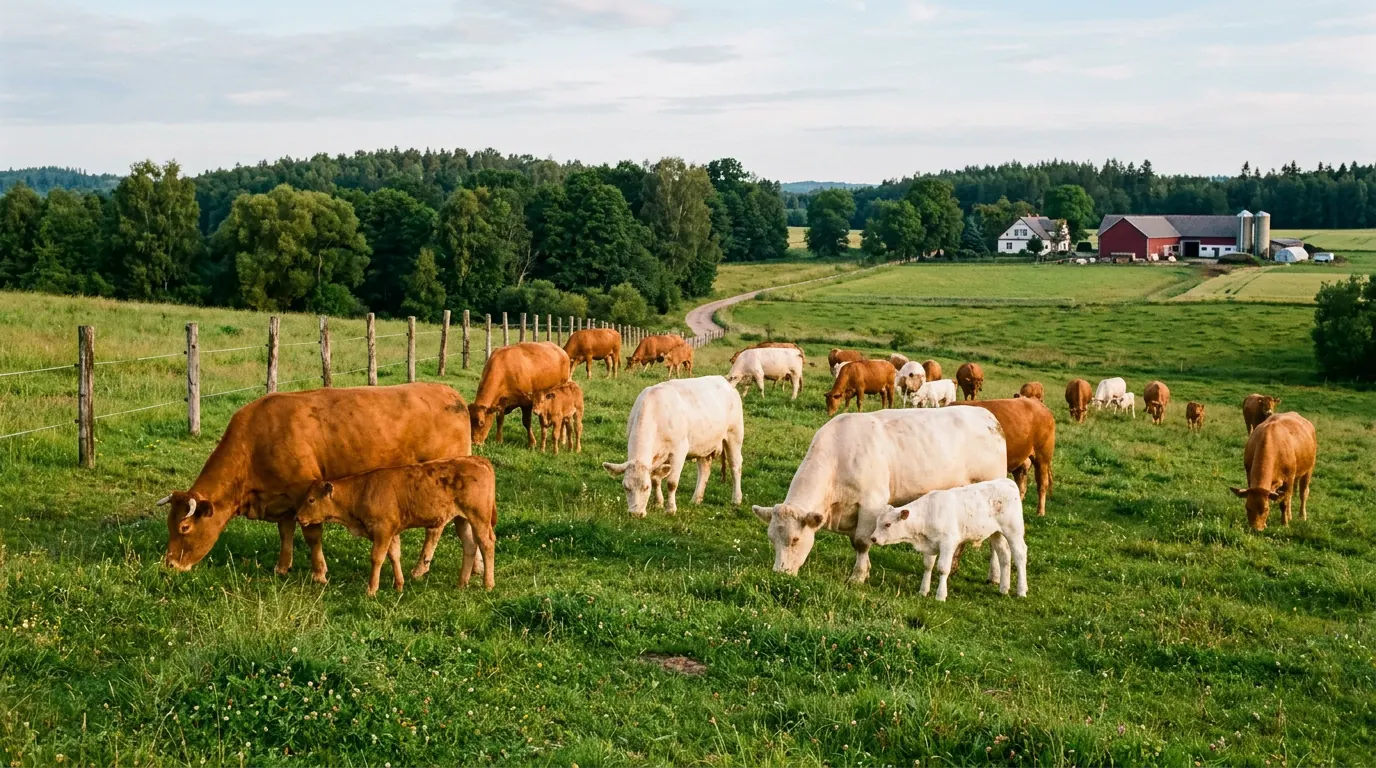
A cow has one udder, but it is made of four independent quarters, each with its own gland and teat. The cow's stomach has four chambers: rumen, reticulum, omasum and abomasum. The first three are forestomachs, home to microbes that break down plant fiber. The abomasum digests with enzymes, much like a single-chambered stomach. The teeth are built to cut and grind grass, and the whole digestive system is set up for rumination. Below we describe each part in turn, with numbers and rules useful for a beef herd.
Why this matters on the farm
Knowing the anatomy helps you spot problems sooner. A change in the udder, a drop in appetite and bloat each call for a different response than general weakness. With suckler cows and calves, most feeding, breeding and health decisions rest on how the forestomachs work and how a young ruminant develops. Record calving dates in stocking and cycle planning so you can see which cows are at which stage. Report symptoms to your vet; we show what to watch for and what to write down.
The four stomachs of a cow: what each chamber does
Rumen and reticulum
The rumen is the largest chamber and works as a fermentation tank. Bacteria, protozoa and fungi live in it and break down cellulose from grass, haylage and straw. The reticulum sits right next to it and helps form balls of feed for chewing the cud. This process needs a regular, steady supply of bulky feed. A sudden change in the ration upsets the microbes and can lead to acidosis. So introduce new feed gradually, over several days, and record the changes.
Omasum and abomasum
The omasum absorbs water and some volatile fatty acids, and its folds work like a sieve. The abomasum, the fourth chamber, is the only section that secretes digestive enzymes, like a single-chambered stomach. In newborn calves it dominates: according to the KPODR Minikowo guide (a regional agricultural advisory center in Poland), the abomasum makes up almost 70% of a calf's digestive tract. That is why young calves depend on milk or milk replacer. With age the proportions change and the rumen becomes the main chamber.
The cow's udder: four quarters and four teats
Udder structure
A cow has one udder made of four quarters: two front and two rear. Each quarter has its own mammary gland, duct and teat. That is why udder inflammation, called mastitis, is often limited to one quarter. Symptoms include changed milk consistency or color, clots in the first strip of milk, and heat and swelling. A calf suckles from the udder, so report any suspicion to your vet. The vet chooses the treatment and dose.
Judging the udder when selecting cows
In selection, look for a sound udder, because it decides whether a suckler cow rears her calf without trouble. According to a publication by IZ PIB (Poland's National Research Institute of Animal Production), crossbred cows with Simmental blood had a sound udder and good muscling. When judging, check the udder attachments, teat length and teat placement. Record the results for each cow so you can compare them at later calvings. You can carry the assessment data into IRZplus integrations (IRZplus is ARiMR's online animal register), if you keep your records in the system.
Cow teeth: 32 teeth and a dental pad instead of upper incisors
Dental arrangement
An adult cow usually has 32 permanent teeth. The lower jaw has eight incisors, and the upper jaw has none. Instead there is a hard dental pad, which the lower incisors press the grass against when cutting. The molars and premolars, 24 teeth in all, grind the feed. When you assess the herd, look for missing teeth and uneven wear, because they make eating harder.
Teeth in daily practice
Check teeth when buying animals and on any suckler cow in poor condition. A missing tooth, drooling or clearly worse feed intake are signs to get advice. Do not treat these problems yourself. Report them to your vet and note the ear tag number and the date of the observation. Such a record lets you compare later whether the condition is changing.
The path of feed through a cow's digestive system
From mouth to abomasum
Feed enters the mouth, where it is taken in and roughly broken up. It then travels down the esophagus to the forestomachs. The cow chews the cud: she brings the contents back up to the mouth, grinds them and swallows again. Only after passing through the rumen, reticulum and omasum do the contents reach the abomasum, where enzymatic digestion begins, and then the intestines. This flow depends on the amount of fiber, water and how fast the feed changes.
Feeding suckler cows in practice
According to IZ PIB data (K. Bilik and J. Strzetelski), the daily pasture forage requirement of a suckler cow with her calf in summer is fairly constant, at about 10–12 milk production feed units (JPM). Winter rations are built differently, so check the components in the tables each season. Record your stocks and keep an eye on them, for example with feed silo monitoring. Compare feed efficiency in production indicators.
What to watch in the herd and what to report to the vet
Warning signs
Lower feed intake, less cud chewing, bloat on the left side of the belly, loose manure or none at all are signs that need attention. Write them in an observation log with the date and the animal's number. Spotting a symptom is not a diagnosis. The vet decides on treatment and chooses the drug and dose.
Withdrawal periods and records
After a drug is given, a withdrawal period applies: the time before the milk or meat may enter the food chain. The vet or the product leaflet gives the period, and the farmer records it. Keeping treatment and withdrawal records in one place lowers the risk of a mistake when you sell animals. You can keep such records in treatment and withdrawal records.
Frequently asked questions
How many udders does a cow have?add
A cow has one udder, divided into four independent quarters, each with its own teat. That is why inflammation usually affects one quarter, and you judge the symptoms in each quarter separately.
How many stomach chambers does a cow have?add
A cow's stomach has four chambers: rumen, reticulum, omasum and abomasum. The first three are forestomachs with microbes, and the fourth works like a true stomach. In young calves the abomasum dominates.
How many teeth does an adult cow have?add
An adult cow usually has 32 permanent teeth: eight incisors in the lower jaw, no incisors in the upper jaw, and 24 molars and premolars. Report missing teeth or uneven wear to your vet.
How does a cow's digestive system work?add
The cow chews the cud: she brings contents from the rumen back to the mouth, grinds them and swallows again. Microbes in the forestomachs digest the fiber, and enzymes work in the abomasum.
Why is it important to change feed gradually?add
A sudden change in the ration alters the microbes in the rumen and the acidity of the contents. This can lead to acidosis. Introduce new feed gradually, over several days, and record the changes.
When should I report an udder problem to the vet?add
If the milk from one quarter looks different and the udder is hot, painful or swollen, report it right away. The vet chooses the treatment, and the farmer keeps a record of observations and withdrawal periods.
Sources & resources
- linkKPODR Minikowo — Raising beef calves (guide, SGGW authors)
- linkIZ PIB — WZ — Feeding beef cattle in organic farming (K. Bilik et al.)
- linkTeagasc — Teagasc Beef Manual — Section 6: Nutrition
- linkIZ PIB — Livestock farming and breeding over 70 years. Cattle Breeding Department, Sheep and Goat Breeding Department
Prepared by: DlaFerm Team based on data from the sources listed · Publisher: INSTA-TECH sp. z o.o.
Running a beef herd and want your records in one place?
DlaFerm.pl keeps treatment and withdrawal records and integrates data with IRZplus. Create a free farm account and see how it works in practice.
Phone
+48 796 258 151