Chickens Wheezing: Causes and What to Do
Wheezing in chickens is a whistling or bubbling sound when they breathe. It often points to a respiratory infection, but dust, ammonia and drafts cause it too. We explain how to tell environmental causes from infectious ones, and what to do in the coop before you call the vet.
verifiedFrom the team that has organised work on poultry farms for years.
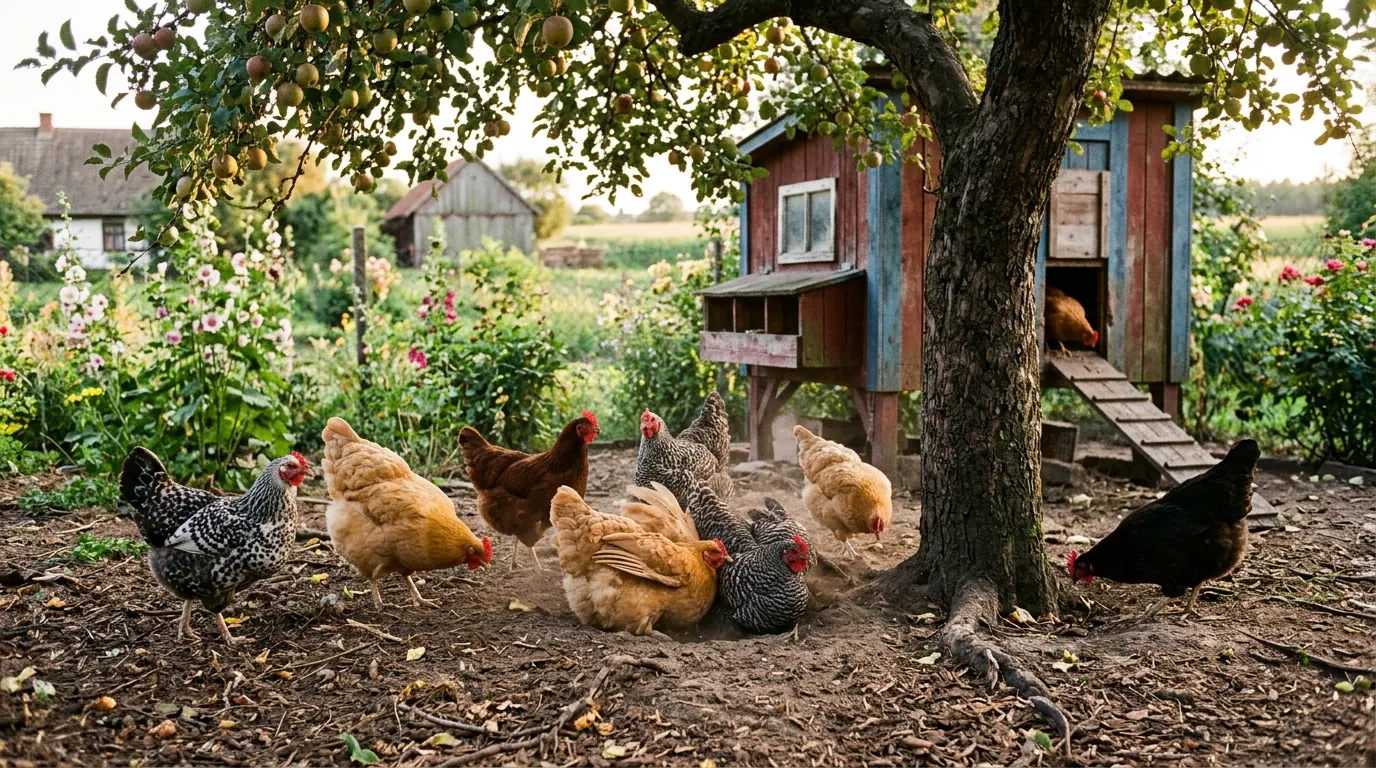
Wheezing in chickens sounds like snoring or whistling breath, and you hear it best at night and in the morning. It most often means a respiratory infection, but dust, high ammonia in the coop and drafts cause the same symptom. Do not diagnose by sound alone. Start by watching the flock, check conditions in the coop and report the problem to your vet, who will choose the tests and treatment.
The main causes
Causes fall into two groups: infectious and environmental. The first includes viral and bacterial diseases, such as infectious bronchitis and mycoplasmosis. They attack the respiratory system and often come with sneezing and discharge from the nostrils. The second is about conditions in the building: dust from bedding and feed, ammonia from wet litter, drafts and sudden temperature swings. The symptom is the same, so the sound alone does not tell you which group is to blame. Check both, because poor ventilation lowers resistance and helps an infection take hold.
How to recognize wheezing in the flock
Wheezing is a whistling, rattling or bubbling sound when a bird breathes. You hear it best in quiet: in the coop after the lights go off, or in the morning before the birds spread out. What goes with the sound matters more. Look for hens stretching their necks to breathe, sneezing, watery or crusted eyes, and nasal discharge drying on the beak. Egg laying drops and birds move away from the rest of the flock. Write down how many birds show these signs and since when. That note helps a vet more than a general "the hens are wheezing". You can log your observations in the coop records module.
Wheezing versus respiratory distress
Wheezing can be mild, but respiratory distress is an emergency. A hen in distress opens her beak, stretches her neck, breathes hard and fast, and sometimes falls over. If you see this in more than one bird, do not wait until morning. Call your vet and isolate the sick birds if you can do it without risk to them. Sudden, fast-growing symptoms can point to a notifiable infectious disease. So do not try to find the cause yourself, and do not move birds to another flock.
Coop and ventilation: what most often spoils hens' breathing
Dust and litter
Dry, dusty bedding, dusty hay and feed dust irritate the airways. Wet litter, on the other hand, rots and gives off ammonia. Matted, wet litter is one of the most common problems in coops with winter ventilation. Replace it regularly, do not let droppings pile up under the perches, and feed in a way that limits dust. Pay attention to the smell. If you smell ammonia as soon as you walk in, the birds breathe that same air around the clock.
Ammonia, drafts and ventilation
Ammonia comes from the breakdown of droppings and urine, so you should not cut ventilation just because it is cold. Too little air exchange in winter leaves birds with worse air than a light draft would. Good ventilation removes moisture and gases, and fresh air comes in so that it does not blow directly onto the perches. When you design or inspect a coop, see the coop requirements for laying hens. Check stocking density too, because an overcrowded flock fouls the air quickly.
Respiratory infections in chickens
Mycoplasmosis and infectious bronchitis
Mycoplasmosis and infectious bronchitis are the diseases that most often stand behind long-term wheezing in a flock. They bring coughing and nasal discharge, and birds can stay ill for a long time with relapses, especially after stress such as moving or a change of feed. The infection spreads by droplets and on equipment and clothing, so many farms start by limiting contact with outside birds. Diagnosis needs a laboratory test. The symptom alone does not show which disease you have.
When to report the problem
If cases grow fast, with many deaths or changes in the behavior of the whole flock, report it to the district veterinary officer (powiatowy lekarz weterynarii). Some infectious poultry diseases must be reported by law, and the list comes from regulations, so do not start treating birds yourself and do not move them. Prepare data from your flock records: the date of the first symptoms, the number of birds affected and the last placement. This shortens the call with the vet and speeds up the decision on next steps.
Treatment and withdrawal periods: what not to do on your own
The vet chooses the medicine and dose
Do not buy antibiotics on your own and do not give them "just in case" in the water. The vet makes the diagnosis and chooses the medicine, the route and the length of treatment. The choice depends on the disease and test results, not on what is left in the store room from last season. Record what you gave and when, with the batch number of the product, so every treatment is documented.
Withdrawal period for eggs and meat
Every medicine has a withdrawal period: the time after which eggs or meat from treated birds can be sold. Selling eggs before the period ends is a serious mistake, so check the date before every collection. The vet or the product leaflet gives the period. Write down the date of the last dose and the calculated end date so you do not rely on memory. The flock record in the treatment and withdrawal module shows the dates right away and warns you against selling eggs during the withdrawal period.
How to reduce wheezing in the flock
Biosecurity and entry control
Most breathing problems return where outside people, birds and equipment enter the flock. Limit entry to the coop, change into clean footwear and disinfect equipment before bringing it into the building. Bring in new birds only from a reliable source. Record visits in the QR entry and exit log. Write the rules into a plan and stick to them. You can prepare the outline of a plan in the biosecurity plan generator.
Feed and resistance
Balanced feed and constant access to clean water support the birds' resistance. Vitamin and mineral deficiencies weaken the lining of the airways, and feeding stress after a change of feed can trigger symptoms. Store feed in a dry place, because damp mix encourages mold. We describe the feeding standards for layers in our article on feeding laying hens.
Frequently asked questions
Do chickens wheeze only because of disease?add
No. Dust, ammonia and drafts also cause wheezing. Still, a sound that lasts several days in a few birds is always worth checking, because it can signal an infectious disease. The vet makes the diagnosis.
Is chicken wheezing contagious?add
Many causes of wheezing pass between birds, especially respiratory infections. They spread by droplets, discharge, equipment and people. Isolate sick birds if you can, and limit entry to the coop.
How do you treat a wheezing chicken?add
Do not choose the medicine or dose yourself. The vet makes the diagnosis and chooses the product and how to give it. After any treatment, check the withdrawal period and record it before eggs go on sale.
How long is the withdrawal period after medicine for laying hens?add
It depends on the product and is given on the leaflet or by the vet. Do not rely on memory or on forum advice. Before you sell eggs from a treated flock, make sure the withdrawal period has ended.
Can wheezing be caused by cold?add
Yes. Sudden chills and drafts weaken the airways and make infections easier. Keep the coop tight, with no draft at perch level, and keep ventilation that removes moisture and ammonia.
When do I need to call the vet right away?add
When you see labored breathing, an open beak and stretched necks in several birds, or when you notice sudden deaths or a sharp drop in laying. Do not wait until the next day. Report it to your vet.
Sources & resources
- linkChief Veterinary Inspectorate (Główny Inspektorat Weterynarii) — gov.pl/web/wetgiw
- linkNational Research Institute of Animal Production (Instytut Zootechniki PIB) — izoo.krakow.pl
- linkEFSA — efsa.europa.eu
- linkMinistry of Agriculture and Rural Development (Ministerstwo Rolnictwa i Rozwoju Wsi) — gov.pl/web/rolnictwo
Prepared by: DlaFerm Team based on data from the sources listed · Publisher: INSTA-TECH sp. z o.o.
Do you keep a laying flock and want treatment under control?
The treatment and withdrawal module in DlaFerm.pl records doses, batch numbers and withdrawal dates on the flock card. Create a free farm account and see how it works in practice.
Phone
+48 796 258 151