Chicken glasses: a stopgap for feather pecking
Chicken glasses are small frames fitted to the beak near the nostrils. They limit what the bird sees straight ahead. They reduce the urge to peck feathers of flock mates, but they do not remove the cause. Before you fit them, check the coop conditions, the diet and the run.
verifiedFrom the team that has organised work on poultry farms for years.
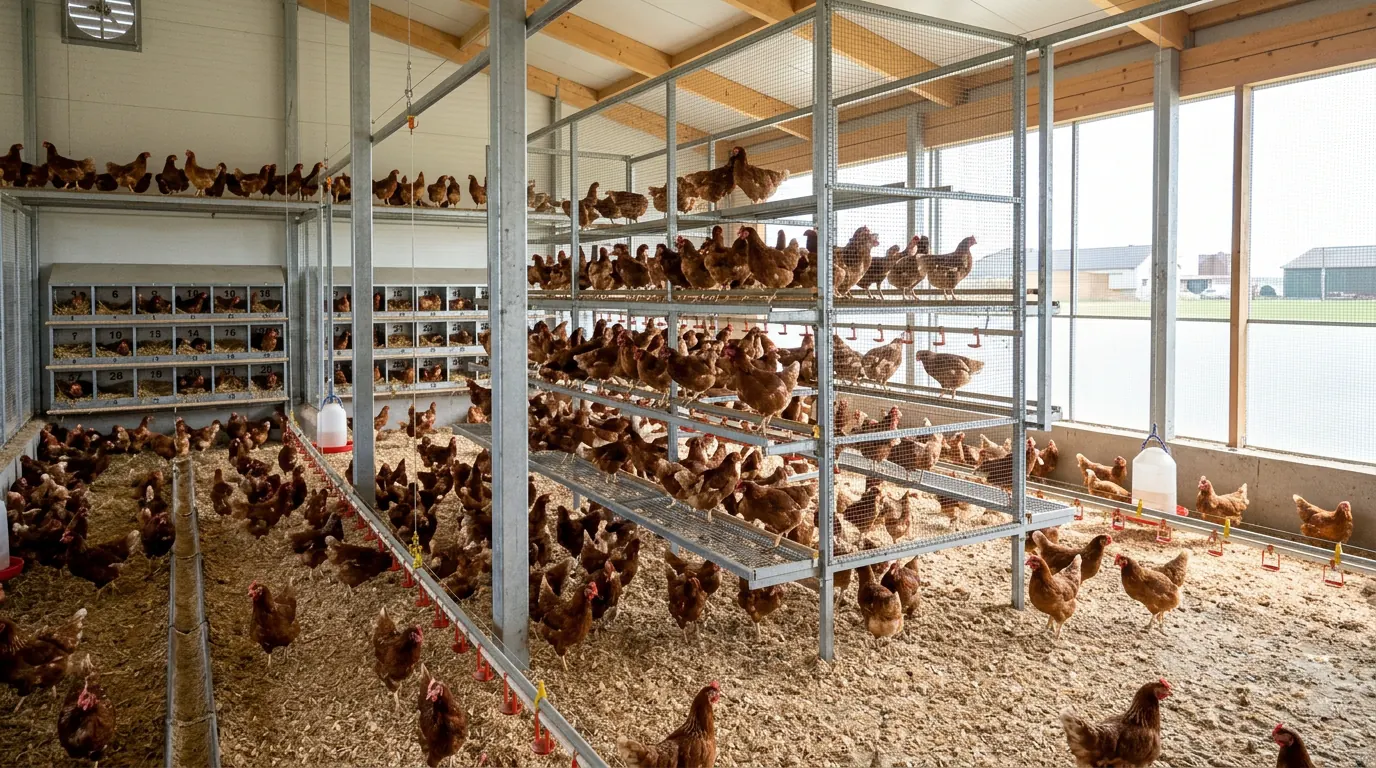
Chicken glasses are small plastic or metal frames fixed to the beak near the nostrils. They narrow the bird's field of view to the front, so the hen reacts less to the movement and feathers of her flock mates. They are a supporting method. You use them when the flock already pecks feathers and you could not remove the cause. They do not replace better housing, because the problem usually comes back once the glasses come off. First find out what triggers the pecking, then decide about glasses. For the basics of housing, see coop requirements for laying hens.
Why hens peck feathers
Feather pecking rarely has a single cause. Usually several factors add up: too many birds for the space, nothing for them to do, a diet low in fiber or protein, light that is too bright, and parasites that cause itching. A hen with too little room and nothing to do looks for an occupation in other birds' plumage. Once one hen is injured, the rest of the flock is more willing to peck the same spot. So watch which birds are hurt and where in the coop the pecking happens. Changing conditions in one place often eases the problem across the whole flock. We describe feeding rules for layers in feeding laying hens.
Where feather pecking comes from
Crowding and boredom
Too little space per bird is the most common cause of pecking in the coop. Hens that cannot move away from the others are in constant contact and react with aggression more often. Boredom works the same way: a flock with nothing to do, no litter to scratch and no place to hide looks for entertainment in other birds' feathers. Check that every hen can reach the feeder, drinker and perch without shoving. If the coop is dark and cramped, give the birds more access to the run or add activities such as litter to scratch in.
Diet
A shortage of fiber and protein encourages pecking, because the bird does not satisfy its natural need to forage and eat. Hens that spend too little time on feed turn their attention to feathers more easily. Talk to a nutrition adviser about the ration and about whether the flock gets enough feed through the day. Do not change rations without advice, because wrong feeding can lower laying and weaken the flock.
Light and parasites
Light that is too bright and intense in the coop raises stress and excitement in the birds. Check whether the lighting is too strong and whether you can dim part of the house. External parasites such as mites cause itching and nervous pecking at the plumage. Have a vet assess parasites and choose the control method. The medicine and dose are always chosen by a vet.
How glasses work and when to fit them
How they work
Glasses reduce the hen's field of view to the front and sides. The bird cannot see movement ahead of her clearly and is less willing to attack other birds' feathers. They are not corrective lenses and they are not a treatment. The effect depends on whether the hen gets used to the frame and whether the cause of pecking has been removed. In practice, glasses are mostly a temporary measure while you improve conditions in the coop.
When to consider glasses
Glasses make sense when pecking continues despite changes to stocking density, feeding and activities, and the flock still causes wounds. Use them once you have a plan to improve conditions and want to stop the problem from getting worse. Do not fit glasses on birds that are already badly injured without calling a vet first. Injured hens need treatment and isolation, not just a change of equipment.
Fit and checks
The frame must not press on the nostrils or cover the beak, or the bird cannot drink and eat. After fitting, check every day that the glasses are in place, do not rub the skin, and that the hen eats and drinks normally. Adjust or remove the glasses if you see any injury. Record the date you started using glasses and how the flock behaves, so you can judge after a few weeks whether they work.
What to improve before fitting glasses
Run and enrichment
A run with plants, litter and a place for dust bathing reduces boredom and helps release tension in the flock. Hens prefer scratching litter to pecking other birds. Make sure the run is open during the day and has a covered spot for shelter. Read more in the run for hens.
Grit and fiber
Birds need access to grit, the small stones that help digestion. Grit helps grind feed and lowers the urge to peck at other objects. Added fiber in the diet makes eating last longer and reduces frustration. We describe how to offer grit in grit for hens.
Coop and density
Check that the coop has enough feeders, drinkers and perches so birds do not fight for access. Too few feeding points and drinkers increase conflict. If the coop is overcrowded, moving part of the flock or rebuilding the interior can reduce the problem faster than glasses. You will find equipment and dimensions in coop design and equipment.
When to call a vet
Wounds and cannibalism
If a hen has open wounds, is bleeding, or the flock starts pecking skin and not just feathers, contact a vet as soon as possible. Isolate the injured bird so the rest of the flock does not attack the wound. The vet chooses the medicine and the way to dress the wound. Do not use products without advice, because some have a withdrawal period and can affect products from your farm. Write down the symptoms and injuries before the vet arrives. EFSA, the European Food Safety Authority, separates gentle feather pecking, which usually causes minor damage, from severe feather pecking, which involves pulling and removing feathers and causes feather loss and pain. More on the worst case is in cannibalism in laying hens.
Keeping records
Keep a simple log: the date pecking started, the number of injured birds, changes to feeding and to the coop, and the date you fitted glasses. This history helps your vet and adviser judge what worked. If you treat birds, also record the products given and the withdrawal period in the treatment log, so you do not mix up dates when selling eggs.
Welfare requirements and sources worth checking
Where to find current rules
You can find the rules on poultry welfare and keeping hens in ISAP, Poland's online database of legal acts (Internetowy System Aktów Prawnych). The legal state this text refers to is 22.11.2026. Check the requirements for space, equipment and activities for birds directly in the legal acts, not in forum posts. The Veterinary Inspection (Inspekcja Weterynaryjna) supervises housing conditions, and the Chief Veterinary Inspectorate (Główny Inspektorat Weterynarii) publishes information about its work.
Welfare and performance
A well-kept flock usually uses feed better and gets sick less often. So enriching the coop and the run is also an investment in results. The Institute of Animal Science (Instytut Zootechniki PIB) researches the welfare of farm animals, including poultry. Follow its materials before you make bigger changes to how you keep the flock.
Frequently asked questions
Are chicken glasses good for hen welfare?add
Glasses are a supporting method that limits pecking but does not remove the cause. They must fit well and must not press on the nostrils or make eating and drinking harder. Always improve conditions in the coop and run first.
What should I do first when hens peck feathers?add
Start by checking stocking density, the number of feeders and drinkers, activities in the coop and the diet. Also check the light level and look for parasites. If the pecking does not stop, talk to a vet.
Can hens wearing glasses still lay eggs?add
Glasses limit vision but should not affect laying if the bird eats and drinks normally. If you see laying drop, remove the glasses and tell your vet. Keep your observations in a log.
How long should hens wear glasses?add
Glasses are usually temporary, while you improve conditions in the flock. Decide when to stop after talking to your vet, once the pecking has stopped. Do not remove them suddenly without monitoring, because the problem may return.
Are glasses enough without changes to the coop?add
Glasses alone are usually not enough. Hens will still react to boredom, crowding and diet gaps. Glasses work best as part of a wider plan to improve conditions.
When is pecking an emergency?add
Wounds, bleeding and pecking at skin, not just feathers, need urgent action. Isolate the injured bird and have a vet examine it. Do not give any products without advice.
Sources & resources
- linkChief Veterinary Inspectorate (Główny Inspektorat Weterynarii) — gov.pl/web/wetgiw
- linkInstitute of Animal Science (Instytut Zootechniki PIB) — izoo.krakow.pl
- linkInternet System of Legal Acts (ISAP) — isap.sejm.gov.pl
- linkMinistry of Agriculture and Rural Development — gov.pl/web/rolnictwo
- linkEFSA — efsa.europa.eu
Prepared by: DlaFerm Team based on data from the sources listed · Publisher: INSTA-TECH sp. z o.o.
Do you keep a laying flock and want to track bird health?
In the DlaFerm coop records module you can log observations from the coop, changes in conditions and the dates you introduce each fix. Create a free farm account at DlaFerm.pl and see how it works in practice.
Phone
+48 796 258 151