Chicken catching jobs: how a poultry catching crew works
Chicken catching, poultry catching and poultry loading are usually the same job under different names in Polish job ads: taking birds out of the house and loading them into crates or modules for transport to the slaughterhouse. Here is what the work really involves, why it happens mostly at night, and how hand catching differs from machine catching.
verifiedFrom the team that has organised work on poultry farms for years.
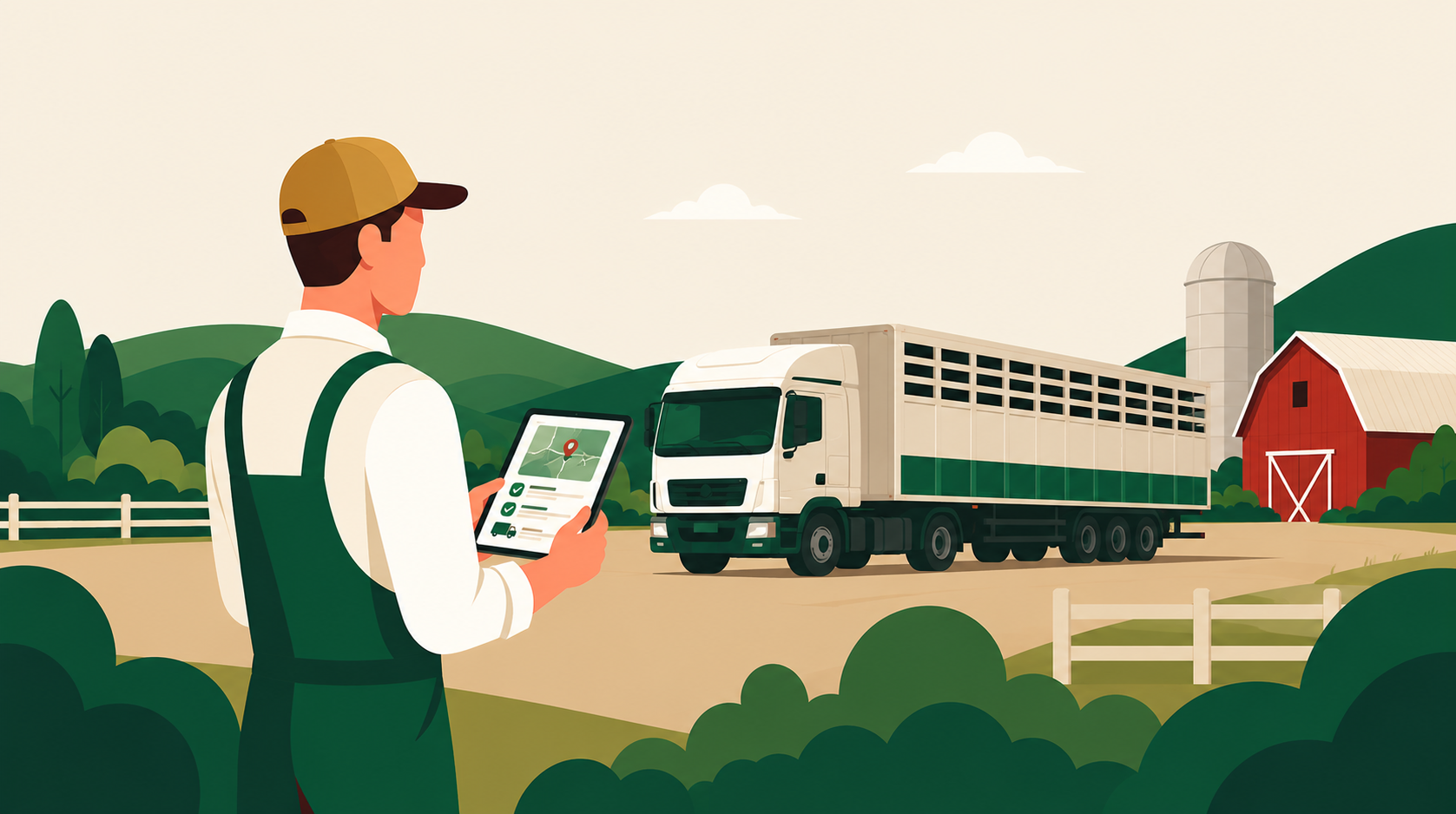
Chicken catching or poultry catching is everyday talk for one of the most physically demanding jobs on a farm: taking birds out of the house and loading them into transport crates before they go to the slaughterhouse. It is team work, rarely done by one person. The standard is a catching crew of a few to a dozen or so workers. We describe other kinds of farm jobs (flock care, technical roles) in our article on working on a poultry farm. Here we cover only catching and loading.
Catching and loading: the same job?
Job ads use these names interchangeably, and in practice they describe the same process. The crew does not stop at catching a bird. It must also place the bird safely in a crate or transport module, and then load those onto the truck. So "catching chickens", "catching poultry" and "loading poultry" are usually one position, not two. Some companies stress catching in their ads and others stress loading, but the duties overlap almost completely.
Why poultry catching happens mostly at night
Birds are usually collected at night or in the early morning, when the house is dark or lit with dimmed blue light. This is deliberate. In low light birds are calmer, panic less and run off less often, which lowers the risk of bruising and injury to the birds and also makes the work safer for the crew. For a worker this almost always means shift work at unusual hours, set by the transport and slaughterhouse schedule rather than a standard working day.
How a catching crew works
Crew size and organization
A typical catching crew has a few to a dozen or so people, led by a foreman or coordinator. This person sets the pace, places the crates and keeps in touch with the transport driver and farm staff. Some crews are employed directly by the farm, but many work for specialized service companies that serve several farms in a region during the week, not one fixed site.
Physical demands and the course of a shift
The work means hours of bending, grabbing and carrying birds, and carrying and stacking crates. It is repetitive and done at the pace set by the rest of the crew and the waiting truck. A shift usually lasts until the whole house is empty, and then the crew often drives on to another farm the same night. Dust, smell, noise and tight space between feeder lines are part of the job, not exceptions. If you run such a crew, or a service company coordinating several teams, see how the program for poultry catching crews organizes jobs and shift schedules, and what cooperation model DlaFerm.pl offers service companies working for many farms.
Hand catching vs machine catching
Hand catching: still the main method
Hand catching is still the most widespread way of collecting birds in Poland, especially on small and medium farms. The crew moves through the house, grabs the birds and puts them in crates. This method needs no investment in equipment, but it depends entirely on the size and pace of the human team.
Machine catching: harvesters
Machine catching uses special machines, harvesters: funnel-and-belt devices that pick birds up from the floor and pass them on to transport modules without anyone grabbing each bird by hand. The industry points to this as a way to reduce stress and bruising in birds compared with fully manual catching, and to lower the physical load on the crew. It is still team work. The machine does not replace the crew but changes its role to operating the device, guiding birds and supervising the process. Its use in Poland is growing, though it is not yet standard on every farm.
Frequently asked questions
How much do chicken catchers earn?add
There is no single honest figure. Pay depends on the region, the form of employment (employment contract, civil-law contract, work through an agency or service company) and the employer. Collection is often paid by the piece or by the house cleared, not by the hour, which makes ads harder to compare. Check the current range in the specific offer.
Is chicken catching hard work?add
Yes, plainly so. It is hours of physical work at night or at unusual times, in the dust, noise and smell typical of a poultry house, at the pace set by the crew and the waiting truck. It is not for everyone, but for people ready for this routine it can be a real, accessible job that does not require experience.
What does a working day in a catching crew look like?add
A shift usually starts in the evening or at night, when the house has dimmed light. Under the foreman's supervision the crew catches the birds, puts them in crates and loads them onto the truck, working until the whole house is empty. If the crew has several jobs in a row, it often moves on to another farm the same night.
What is the difference between hand and machine catching?add
In hand catching a crew member grabs each bird, and it is still the dominant method in Poland. Machine catching uses harvesters that pick birds up from the floor and pass them to transport modules, reducing stress and bruising in the birds and the physical load on the crew. At the machine the crew operates and supervises instead of catching each bird by hand.
Sources & resources
- linkMinistry of Agriculture and Rural Development: labor market in agriculture
- linkCouncil Regulation (EC) No 1/2005: protection of animals during transport
- linkStatistics Poland (GUS): employment in agriculture and processing
- linkPublic Employment Services (praca.gov.pl)
Prepared by: DlaFerm Team based on data from the sources listed · Publisher: INSTA-TECH sp. z o.o.
Do you run a catching crew or a service company for poultry farms?
DlaFerm.pl helps coordinate jobs, shift schedules and per-piece settlements for crews collecting birds on many farms at once. Create a free farm account or get in touch, and we will show you how it works in practice.
Phone
+48 796 258 151