Cattle squeeze chute: types and when you need one
A squeeze chute (also called a cattle crush or restraint) is a structure that holds cattle still during an exam, vaccination, ear tagging or treatment. No Polish rule names one type of device for every farm. But animal protection law requires safe and humane handling, and a chute is the simplest way to meet that. We explain the types and when it pays to have one.
verifiedFrom the team that has organised work on poultry farms for years.
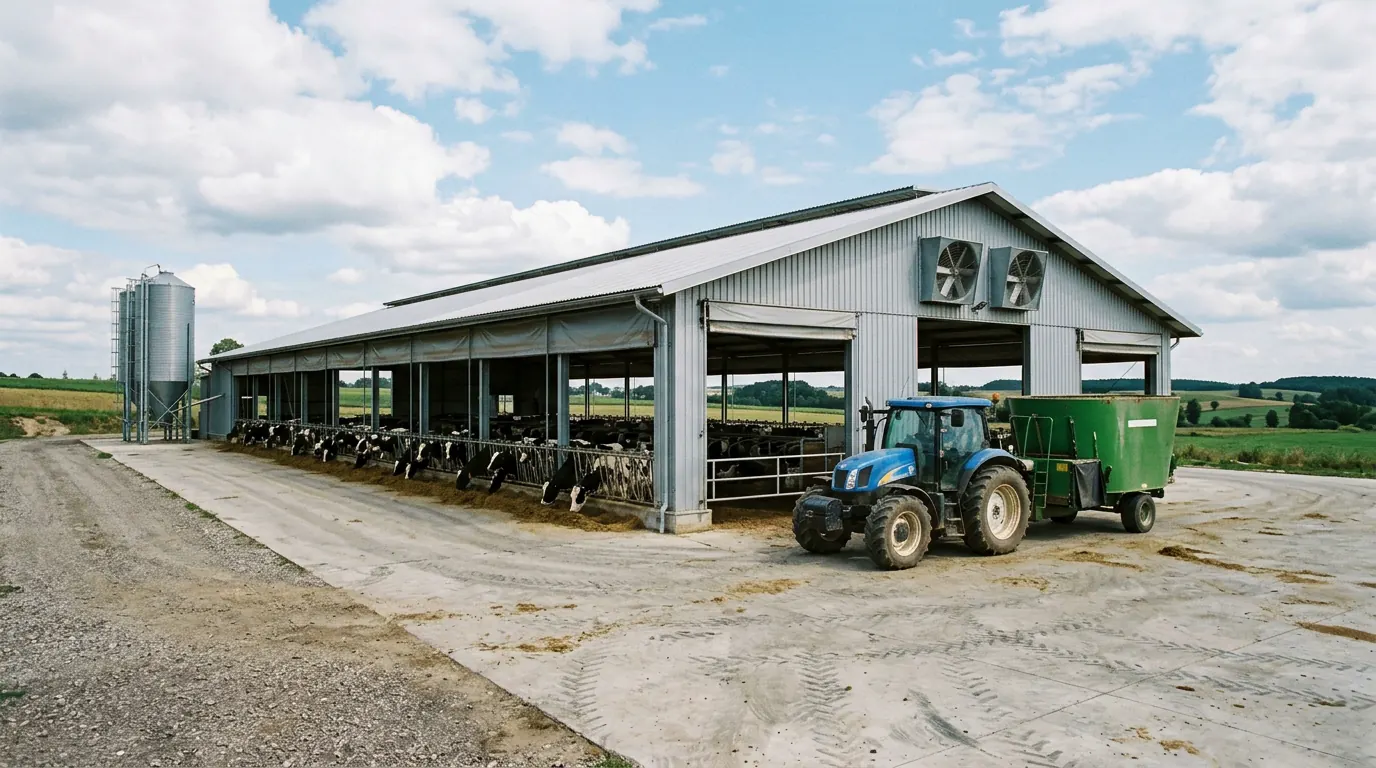
A cattle chute holds the animal in place and limits its movement while you work: an exam, an injection, tagging, weighing or hoof and body care. The text of the law does not require a specific type of chute. Animal protection rules do oblige the keeper to handle animals safely and humanely. In practice a chute is the most common way to do that, especially with adult cattle, whose weight can endanger the person handling them. Before you buy, check the current legal position in ISAP (Poland's Internet System of Legal Acts).
When a chute is practically essential
You need a chute for jobs you cannot do safely on a loose animal. These include injections, a vet exam, drenching or worming in the pen, weighing and ear tagging. If you vaccinate or treat on your vet's advice, a chute lets you do it faster and with less stress for the animal. Calves have milder requirements, and Directive 2008/119/EC sets minimum standards for the protection of calves, including general housing conditions. Write down the rules you use on the farm and pass them to everyone who works with the cattle.
Fixed and portable chutes
Fixed chute
You install a fixed chute permanently next to the barn or in a handling pen. It has a concrete or hardened floor, side walls with gates, a head catch and an exit to the alley. It needs a permanent spot and a bigger investment, but it makes frequent herd work easier. It pays off with larger numbers, where gathering and holding animals takes a lot of time. The design should let the vet reach the animal freely.
Portable and folding chute
A portable chute is a steel frame you can unfold, move on a trailer and set up in a yard or on pasture. It suits small farms and places where cattle graze in several locations. Before use, stabilize and anchor it, because a light frame on soft ground can shift. When choosing, look at the weight of the frame and how easily it folds, since that decides whether you will use it regularly.
How to choose a chute for your herd
Size and weight
Match the width and length of the chute to the heaviest animals in the herd, not to the average cow. A chute that is too tight causes injuries and stress, and one that is too loose will not hold the animal. Adult cows and bulls need a strong build with solid posts and a stable base. Calves need smaller dimensions. Measure the heaviest animal in the herd and choose a chute with some spare room before you buy a ready-made unit.
Equipment
A chute should have a front gate and a side gate, a head catch, and easy access to the animal from behind and from the side. You can add an integrated scale, which lets you weigh cattle without moving them elsewhere. Gates should open without force and not jam when you change direction. Also check that one person can operate it, because on a small farm that is often how the work is done.
Working safely at the chute
Setup and handling
Place the chute on firm, non-slip ground, where you can see both the entrance and the exit. A second person helps, watching the gates and calming the animal. Do not step in front of the animal or stand in the alley behind it. Write down how to open the gates and the order of steps, and share it with staff, for example in the staff app, so everyone knows what to do at each moment.
Welfare while restrained
An animal held for a long time in a tight space soon gets upset, and stress raises the risk of injury to both cattle and people. Plan treatments so the restraint is as short as possible. Gather cattle calmly, without shouting or hitting, and do not rush at the chute. If an animal thrashes, stop and wait until it settles. Good handling means both safer staff and a healthier herd.
Chute treatments, medicines and records
Treat only on your vet's advice
Your vet chooses the medicine, the dose and the way of giving it. A chute makes it easier to give a drug but does not change the rules of treatment. After every treatment, record the date, product name, batch number and the end date of the withdrawal period. Without that entry it is hard to prove an animal can go to slaughter or sale. Keep these entries in a treatment and withdrawal record that reminds you of deadlines and shows quickly which animals are still under withdrawal.
Tagging and reports to IRZ
Ear tagging and reporting events to the animal database (IRZ, Poland's animal identification and registration system run by ARiMR) are best done in one pass, while the cattle are already restrained. This means fewer drives and fewer mistakes with numbers. You can add chute data such as weight or tag number as you go and link it with IRZplus, ARiMR's online animal register, instead of retyping it later by hand.
Cleaning and disinfecting the chute
Clean after every group
After each group, remove manure and leftover bedding from the alley and the gates. Disinfect surfaces with a product approved for this use, following the manufacturer's instructions and your vet's advice. Clean tools such as ear taggers and needles separately and do not use them across several groups without washing. Add the cleaning rules to your biosecurity plan, which the biosecurity plan generator can help you build for your farm.
Structural checks
From time to time check the welds, hinges, pins and latches. A loose part or a cracked frame is not only an injury risk but also a risk that the chute will not hold the animal during a treatment. Replace worn parts at once and record each inspection with a date. Such a record helps during an inspection and shows that the farm looks after the safety of people and animals.
Frequently asked questions
Is a cattle chute required by law?add
Animal protection rules require safe and humane handling of animals, but they do not name one type of device for every farm. In practice a chute is the most common solution for treatments and exams. Check the current legal position in ISAP, Poland's Internet System of Legal Acts, as of 22.11.2026, and ask your vet if in doubt.
What chute should I choose for a small herd?add
For a few animals a portable or folding chute is often enough, since it needs no permanent investment. It must be stable and suited to the weight of your heaviest animal. For a larger herd with frequent treatments, a fixed chute works better.
Can a chute replace a vet?add
No. A chute only holds the animal. Your vet chooses the medicine, dose and method, and you follow the advice and keep a record of the treatments.
How often should I clean a cattle chute?add
After every group of animals, and after any treatment that involved contact with blood or discharges. Use a disinfectant as the manufacturer and your vet advise. Record what you did so you can easily show hygiene control.
Do calves need a different chute?add
Calves need a smaller structure and gentler handling. Directive 2008/119/EC sets minimum standards for the protection of calves, and you should size the chute to the weight and age of the group. If unsure, talk to your vet.
Where can I check the rules on cattle restraint?add
The most reliable places are ISAP and the website of the Chief Veterinary Inspectorate (Główny Inspektorat Weterynarii). Rules change, so always check the position on a specific date rather than relying on an old article.
Sources & resources
- linkTeagasc (Ireland) — Teagasc Beef Manual — Section 7: Animal Health
- linkEFSA AHAW Panel — Welfare of calves (EFSA Journal 21(3):7896)
- linkEU / Publications Office of the EU — Council Directive 2008/119/EC laying down minimum standards for the protection of calves
- linkChief Veterinary Inspectorate (Główny Inspektorat Weterynarii) — gov.pl/web/wetgiw
- linkInternet System of Legal Acts (ISAP) — isap.sejm.gov.pl
Prepared by: DlaFerm Team based on data from the sources listed · Publisher: INSTA-TECH sp. z o.o.
Running a cattle herd and want all treatments in one place?
The treatment and withdrawal module records treatments and withdrawal dates for every animal or group. Create a free farm account in DlaFerm.pl and see how it works in practice.
Phone
+48 796 258 151