Cattle prices and buying in Warmińsko-Mazurskie province
The cattle buying price is not a fixed rate from a price list. The plant works it out from the weight and value of the animals it buys, and the result depends on category, weight, age and the way the deal is settled. We explain what drives the price, how to read offers and where to check current data.
verifiedFrom the team that has organised work on poultry farms for years.
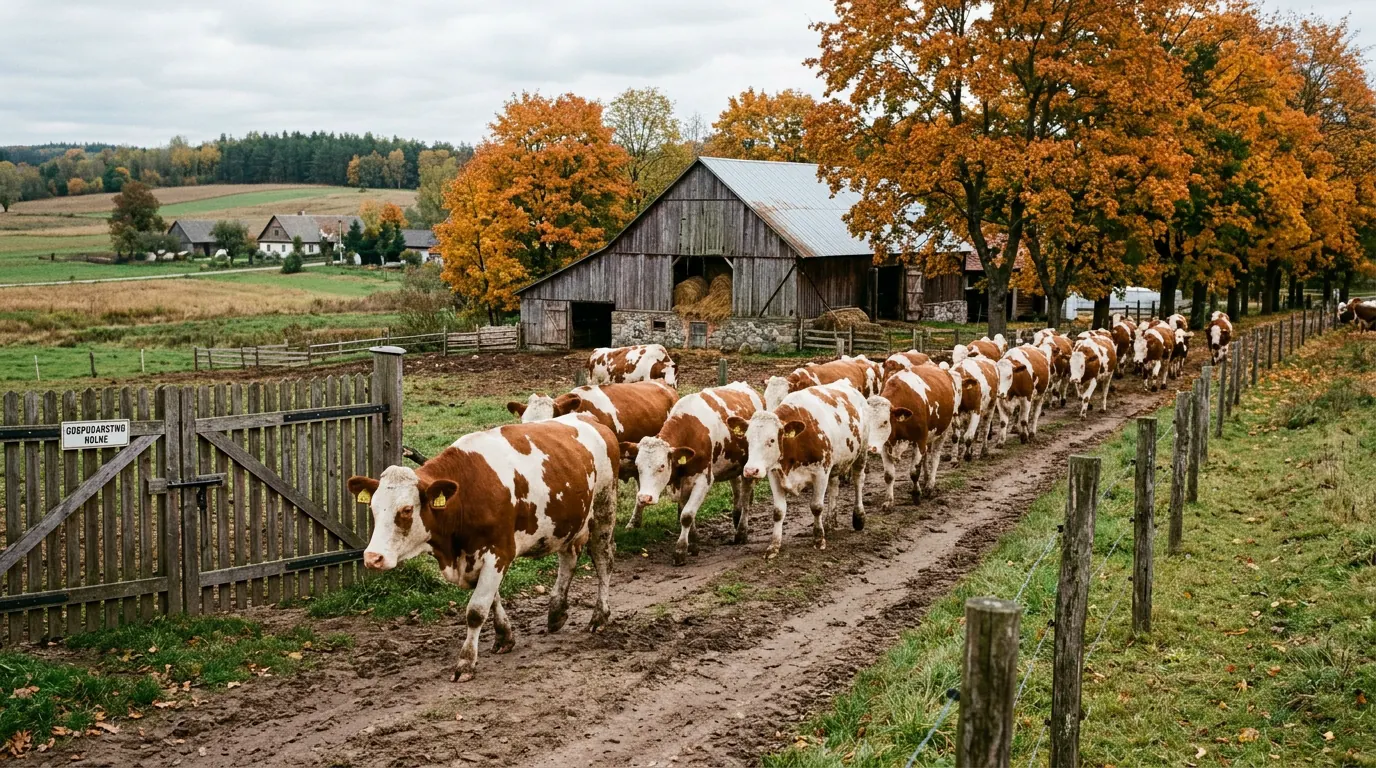
The cattle buying price in Warmińsko-Mazurskie province (Warmia-Masuria, in north-east Poland) is not a fixed rate from a price list. The buying plant works it out from the weight and value of the animals. In practice it depends on category, age, weight, breed and how the deal is settled: per kilogram of live weight or per kilogram of chilled carcass. We do not give amounts on this page, because quotes change every week and go out of date fast. We describe what drives the price, how to read buying offers and where to check current market data.
Why the settlement method matters
Market data on beef and veal is collected under a methodology from Poland's Ministry of Agriculture and Rural Development (MRiRW). It describes the area of purchase and slaughter of cattle and the rules for recording data. When you compare offers, always check what the quoted price refers to: live weight, carcass, or a base price with possible extra payments. Offers are compared in a similar way in poultry, so it helps to look at poultry buying prices in Warmińsko-Mazurskie too.
What drives the cattle buying price
Base price and carcass weight
According to the MRiRW methodology, the base price is calculated from the value of the slaughter cattle bought and the weight of chilled carcasses. The document also gives an example where the base price is the average of three subclasses. For you, this means the result depends not only on the rate per kilogram but also on the class the plant gives the animal. Before you sell, ask which classification the plant uses for the batch and what weight it takes for the calculation.
Live weight and extra payments
When a plant buys cattle by live weight, the price is calculated separately, under a different rule described in the methodology. The document also names a price correction for additional payments. This is why an offer on paper can differ from the amount that reaches your account. For every batch, compare the price per kilogram, the weighing method, the weight used for settlement and any payments added to or taken off the base price.
What raises carcass weight and fattening results
Crossbreds and young bulls
IZ PIB, Poland's Institute of Animal Production, compared crossbreds from black-and-white dairy cows and beef-breed bulls, fattened to 12 and 15 months of age. According to a table in the work of J. Trela and B. Choroszy (WZ 2011), the dressing percentage of young bulls fattened to 12 months ranged from 57.54 to 60.40 percent. The highest meat output at 15 months came from crossbreds with Piedmontese bulls: 133.7 percent of the control group. These figures come from conditions different from your farm, so treat them as a reference point.
Pasture and fattening intensity
Research by P. Wójcik and A. Czubska (WZ 2014) shows that extensive fattening on grassland can produce high-quality beef cattle. On mountain pastures in the Beskid Niski region, Simmental cattle achieved higher daily gains. Adding one or two grazing seasons lowers fattening intensity, but the cost of each unit of gain is clearly lower. When you judge profitability, count not only the gain but also the cost of feed and labor per kilogram of weight.
Sales records and settlement with the plant
What to record for each batch
Record the dispatch date, number of animals, live weight, carcass weight according to the plant, price and payment date. This data lets you compare batches and check whether the settlement matches the contract. You keep full farm records in farm management software. You can bring together treatment history and withdrawal periods in the treatment and withdrawal records module, and you issue and store invoices for animals sold in KSeF invoicing (KSeF is Poland's national e-invoicing system).
Withdrawal period before slaughter
An animal given a medicine must not go to slaughter before the withdrawal period has ended. The length comes from the medicine's documentation and is set by the vet in charge of the treatment. Do not guess it and do not rely on memory. Write down the date of treatment and the name of the product, and check the record before loading.
Factors that move the quotes
Season and supply
Cattle prices change with the season, the number of animals offered for sale and the state of the meat market. Compare quotes from several weeks and set them against offers from plants in other regions. Check whether the plant has steady demand for your category, because that decides how willing it is to take batches of unusual weight.
Weight, age and category
The plant prices an animal by classification and weight. Cattle outside the expected class may be settled differently from standard animals. Before delivery, check which weights and ages the plant accepts and ask how it calculates adjustments for weight that is too low or too high. Plan fattening from earlier weighings so you hit a good selling date.
Welfare at loading
Stress during loading and transport lowers weight at weighing and can reduce meat quality. When you deliver, handle the animals calmly, give them enough space in the trailer and keep waiting time short. Welfare rules for transport are described in EFSA opinions, and you can check the rules and veterinary supervision on the site of Poland's Chief Veterinary Inspectorate (Główny Inspektorat Weterynarii).
Where to get data and how to compare offers
Data sources
Market data on beef and veal is published by the agriculture ministry, and an MRiRW document describes how it is recorded. You can find current information on agricultural policy at gov.pl/web/rolnictwo. Quotes change often, so check them before every sale. The methodology documents show the rules for calculating the price, not the current rate.
How to compare two offers
Put the offers side by side in the same units. Convert a live-weight price to a carcass price only when you know the plant's rules. Check the weight used for settlement, extra payments, the payment date and the cost of transport. An offer with a higher rate can end up worse after deductions, so work out the result per animal. Offers are compared in a similar way in poultry, see poultry buying prices in Warmińsko-Mazurskie.
Frequently asked questions
How much do cattle sell for at the buying plant in Warmińsko-Mazurskie?add
Amounts change every week and depend on category, weight and the plant, so we do not give them here. Check current quotes in the market data published by the agriculture ministry and in offers from several buyers in the region. Compare offers from the same week.
Is the cattle price paid per kilogram of live weight or carcass?add
It depends on the plant and the way of buying. The MRiRW methodology describes a separate calculation of the base price from the weight of chilled carcasses, and a different rule for cattle bought by live weight. Always ask what the quoted rate refers to.
What affects the price of slaughter cattle?add
The most important are the animal's category, weight, age, the plant's classification and extra payments. Market supply and the season also play a part. Before you sell, check which weights and ages the plant accepts.
Is fattening cattle on pasture worth it?add
It depends on your farm's costs. IZ PIB research shows that pasture lowers fattening intensity, but the cost per unit of gain can be lower. Work out the cost of feed, labor and weight gain in your own conditions.
How long after treatment can cattle go to slaughter?add
The animal must not go to slaughter before the withdrawal period has ended. The length comes from the medicine's documentation and is set by the vet. Record the date of treatment and check the entry before loading.
How do I keep records of cattle sales?add
Record the dispatch date, number of animals, live weight, carcass weight according to the plant, price and payment date. This data lets you compare batches and check that the settlement matches the contract. Keep treatment documents too.
Sources & resources
- linkMRiRW (ZSRIR) — Methodology for recording market data on the beef and veal market
- linkIZ PIB — WZ — 60 years of IZ work on beef cattle (J. Trela et al.), WZ XLIX(2011)4:11–56
- linkIZ PIB — WZ — Breed selection and breeding work in beef cattle herds under organic conditions (P. Wójcik, A. Czubska)
- linkChief Veterinary Inspectorate (Główny Inspektorat Weterynarii) — gov.pl/web/wetgiw
Prepared by: DlaFerm Team based on data from the sources listed · Publisher: INSTA-TECH sp. z o.o.
Selling cattle and want everything in one place?
The KSeF invoicing module in DlaFerm.pl helps you keep sales documents together with your farm records. Create a free farm account or get in touch, and we will show you how it works with beef cattle.
Phone
+48 796 258 151