Cattle prices and buying in Podlaskie, Poland
Cattle buying prices in Podlaskie province depend on live weight, dressing percentage, the animal's category and market quotes. We do not list current prices here because they change every week. We show how to read quotes, how a purchase price is worked out and what to check before you sell.
verifiedFrom the team that has organised work on poultry farms for years.
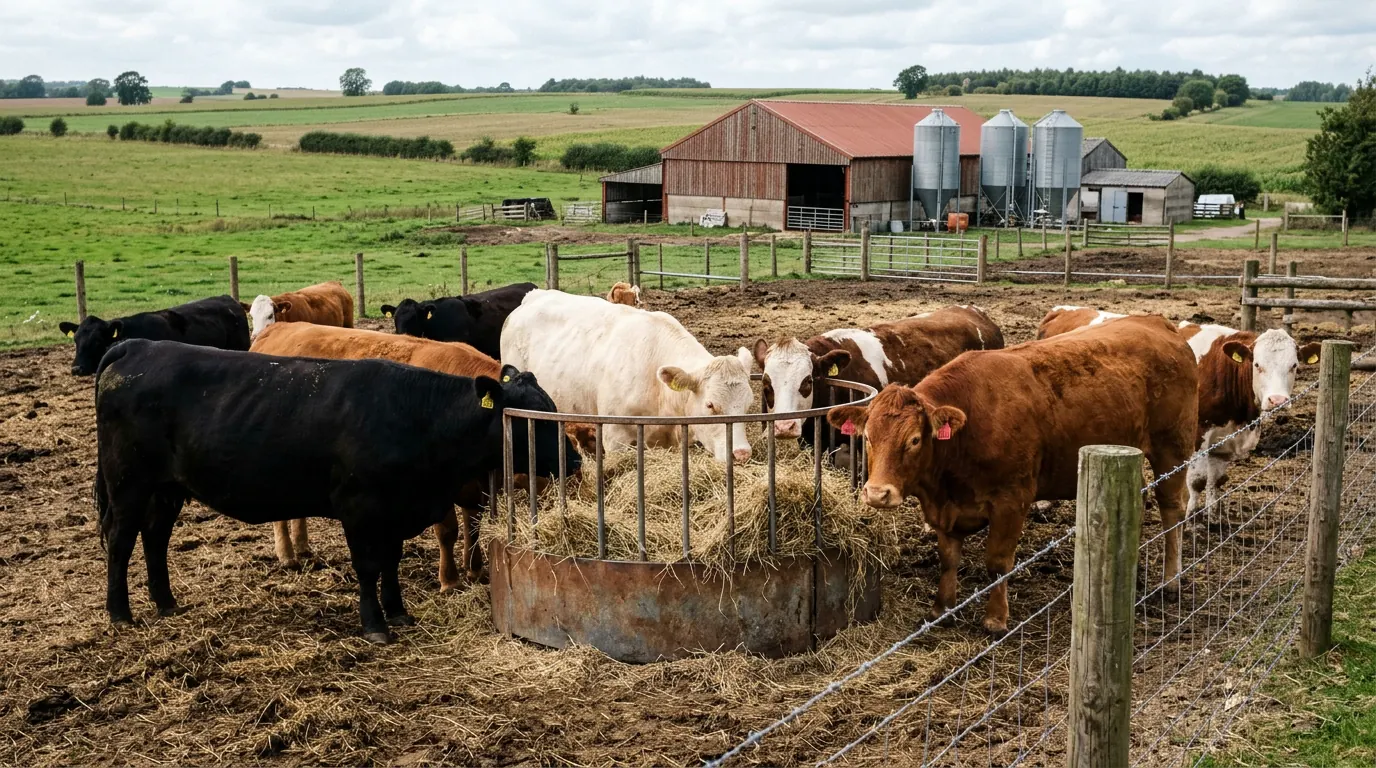
Cattle buying prices in Podlaskie province are set by negotiation between the farmer and the buyer, but the reference point is registered market data and quotes. We give no specific amounts, because they change from week to week. Instead we explain what drives the price per kilogram of live weight and of carcass, and how to check whether a buyer's offer is fair. We compile province data in the DlaFerm.pl marketing module, in the same way as poultry buying prices in Podlaskie.
Per kilogram live weight or per kilogram carcass
Cattle are most often bought in one of two ways: on live weight or on chilled carcass weight. The methodology for registering market data, from the Agricultural Markets Department of Poland's Ministry of Agriculture and Rural Development (MRiRW), describes both. The purchase price is calculated from the value of the cattle bought and the weight of chilled carcasses, and the price of cattle bought on live weight is calculated separately. For you this means one thing. Before you sign a contract, ask what the price will be based on and whether any extra adjustments apply.
What the buying price depends on
Dressing percentage and carcass class
The price depends not only on live weight but also on dressing percentage. According to data from IZ PIB (Poland's National Research Institute of Animal Production), from work by J. Trela et al. (WZ 2011), young bulls over 12 months old from crosses with beef breeds reached a dressing percentage of 58.9% to 60.4%, while the control group of black-and-white crossbreds reached about 57.5%. The difference looks small, but on a tonne of live weight it means clearly more kilograms of meat. So when you value cattle, compare the slaughter result, not just the weight on the scale.
Age at sale
Plan the time of sale, because meat gain changes with age. The same IZ PIB study compares young bulls raised to 12 and to 15 months. In the groups raised longer, meat output rose more clearly against the control, but longer rearing means higher feed and pasture costs. Work out the return for your own farm before you move the sale date.
Where quotes come from
The ministry methodology
Quotes are based on registered data from the buying and slaughter of beef cattle. The methodology, prepared in the Agricultural Markets Department of MRiRW, sets the duty to register data, the range of information collected, how the base price is calculated as an average of sub-classes, and how extra payments are counted. It also covers recording trade volume and the requirements for the software that calculates the price. This document helps you understand where the number in a quote comes from, rather than just copying it.
How to compare offers
Before you agree to a price, check it against the latest quote. An offer may be given per kilogram live weight, per kilogram carcass or as a price per head. Convert each one to the same unit, using weight and dressing percentage. Write offers down with the date, which makes later settlement easier and helps you show turnover in your records. Compare prices from the same date, because quotes change every week.
What can hold up a sale
Withdrawal period after treatment
Cattle cannot go to slaughter after treatment until the withdrawal period has passed. The product leaflet gives the length of the withdrawal period, and a vet chooses the medicine and dose. Record every treatment with the date given and the animal's number, so that when you book a delivery you know which animals are ready. Sending a batch with a withdrawal period not yet over risks rejection, and that is a loss for the whole load.
Infectious disease and movement
Lumpy skin disease (LSD) can affect animal movement and sale dates, and decisions rest with the official veterinarian. The LSD leaflet from PODR Szepietowo (a regional agricultural advisory center) describes the symptoms and the rules to follow. Buying prices may change locally in such a situation, so check current guidance with your vet and with the Chief Veterinary Inspectorate (Główny Inspektorat Weterynarii).
How to keep sales records
A record for every animal
Describe each sale: the animal's ID number, departure date, live weight, slaughter result and price. From these records you can work out your average price per kilogram over the year and compare it with quotes for the province. It helps to keep them in one place together with treatment records, for example in the farm management software, which holds your farm data in one place.
Invoices and KSeF
A cattle sale settled by invoice needs a correctly issued document. Agree with your accountant whether, and from when, your invoices go through KSeF (Poland's national e-invoicing system). If you issue invoices in the software, look at the KSeF invoicing module and compare it with your accountant's requirements.
Where to check quotes and rules
Quotes and methodology
You can find the methodology for registering market data for beef and veal on the MRiRW website. Check current quotes in official sources and with several buyers in your region. Differences between the advertised and the actual price often come from weight, dressing percentage and adjustments, so compare the same parameters.
Status as of 22.11.2026
This description reflects the position as of 22.11.2026. Changes to the methodology or rules may shift how settlement works, so check current documents before a larger deal. We compile poultry buying prices for Podlaskie separately in the poultry buying prices module, using the same principle of comparing dates and units.
Frequently asked questions
What is the current cattle buying price in Podlaskie?add
We do not give current amounts, because quotes change every week. Check current data in official sources and compare several offers from the same day. Remember that the price depends on the settlement method and the slaughter result.
Does the price differ between selling on live weight and on carcass weight?add
Yes. When you settle on live weight, the slaughter result does not directly affect the price, and when you settle on carcass, the weight of the chilled carcass counts. Before the contract, find out which method applies and what adjustments are planned.
What is dressing percentage and why does it matter?add
Dressing percentage is the carcass weight as a share of live weight before slaughter, given in percent. According to IZ PIB, young bulls from crosses with beef breeds reached about 58.9–60.4% after 12 months, against about 57.5% in the control group. A higher percentage means more meat from the same live weight.
Do I have to wait to sell cattle after treatment?add
Yes, cattle cannot go to slaughter after treatment until the withdrawal period has passed. The product leaflet gives the length, and a vet chooses the medicine and dose. Record the dates given so you know which animals are ready for the buyer.
Where can I find the methodology used to calculate cattle prices?add
The methodology for registering market data for beef and veal was prepared by the Agricultural Markets Department of MRiRW. This description reflects the position as of 22.11.2026. Check for changes before a larger deal.
Sources & resources
- linkMRiRW (ZSRIR) — Methodology for registering market data for beef and veal
- linkIZ PIB — WZ — 60 years of IZ work on beef cattle (J. Trela et al.), WZ XLIX(2011)4:11–56
- linkPODR Szepietowo — Lumpy skin disease (LSD) — leaflet (Z. Marciniak)
- linkChief Veterinary Inspectorate — gov.pl/web/wetgiw
Prepared by: DlaFerm Team based on data from the sources listed · Publisher: INSTA-TECH sp. z o.o.
Want to keep your farm data in one place?
The farm management software in DlaFerm.pl helps you organize farm records and documents. Create a free farm account or get in touch, and we will show you how to set it up.
Phone
+48 796 258 151