Calf and Bred Heifer Prices
A calf or an in-calf heifer has no single set price. It depends on sex, weight, age, health and papers, and on the market that week. We show what drives these prices and where to check current quotes.
verifiedFrom the team that has organised work on poultry farms for years.
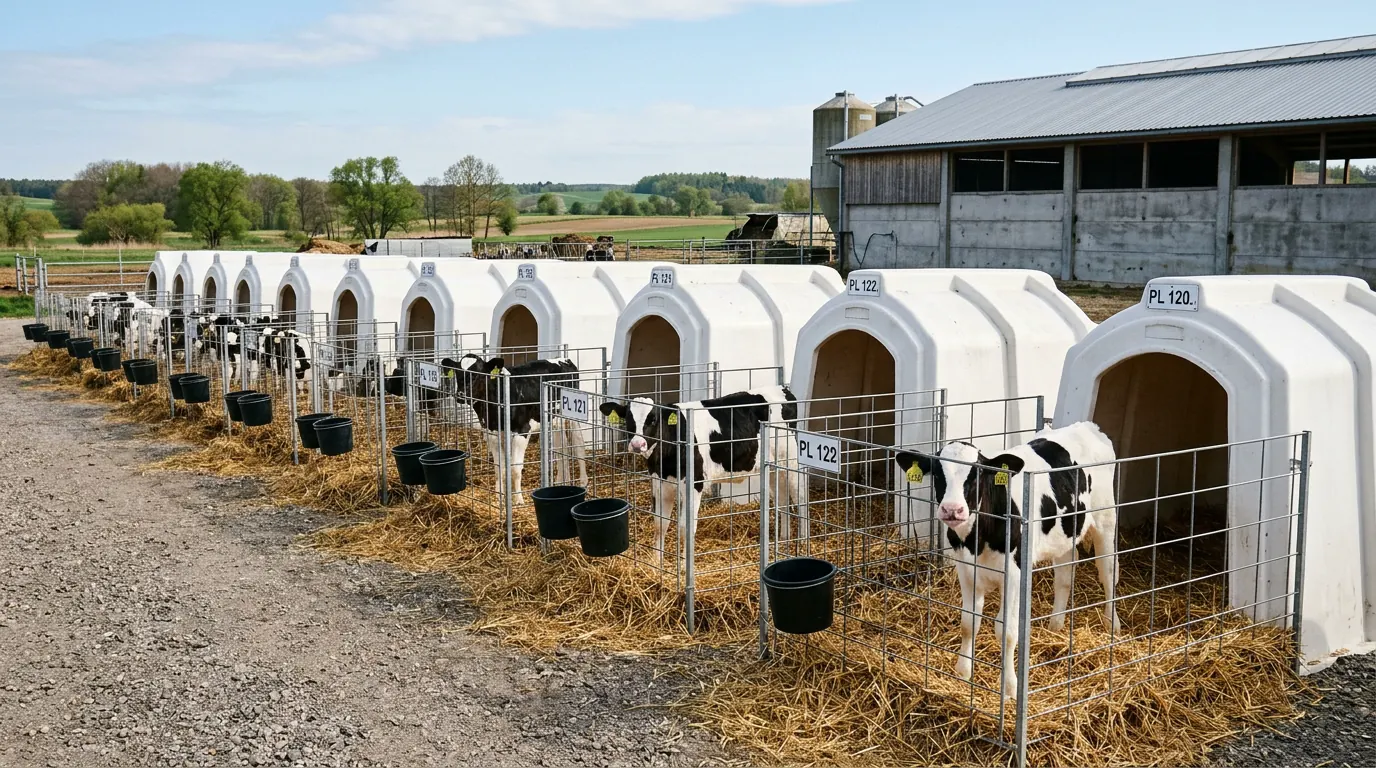
The price of a calf or an in-calf heifer comes from several traits, not from one number in a table. The most important are sex, body weight, age, health and complete papers. Local market conditions and the season add to that. We give no amounts, because quotes change every week and the value of an animal depends on the actual deal. We show how these factors work and where to check current rates. If you keep a beef herd, start with good records in farm management software, because without data it is hard to compare offers.
Why the price is not fixed
Calves and in-calf heifers are usually sold in small lots, and each animal has a different weight and history. Two calves from the same barn can differ in value if one is healthy and has full papers and the other does not. The buyer also counts the cost of further rearing, since that sets how much he can pay. The younger the animal, the more depends on how it is prepared for sale. A good offer with weight, date of birth and treatment history lets you talk about real value, not just a general market rate. Such a talk usually ends faster and with less risk of misunderstanding on both sides.
What sets the price of a calf
Sex and birth weight
According to a 2011 publication by IZ PIB (Poland's National Research Institute of Animal Production), beef calves in the institute's data weighed about 34 kg at birth (heifers) and 36 kg (bull calves). The gap is small, but the buyer looks at it together with weaning weight. The same publication gives weaning weight at 160 days: 175 kg for heifers and 185 kg for bull calves. A calf that falls well below such values is less attractive. The final result still depends on breed, feeding and housing, so compare animals in the same category.
Age and growth rate
The same IZ PIB publication gives an average daily gain to weaning of 881 g/day for heifers and 885 g/day for bull calves. Growth rate shows how an animal does in the herd, so an experienced buyer asks for exact weight and age. Write down birth and weighing dates, because without them a fair price is hard to set. Planning of batches and the production cycle helps keep dates in order across the herd. Before you name a price, check that you have this data at hand.
What a buyer checks in an in-calf heifer
Weight and readiness to calve
An in-calf heifer is an animal in late pregnancy, usually before her first calving. According to the 2011 IZ PIB publication, heifers were bred at a body weight of about 380 kg, and weight gain during the breeding period was then about 140 kg. The Teagasc Beef Manual (Ireland's agriculture and food research body) advises making sure heifers are big enough at calving, because a too-small animal more often has trouble giving birth. So the buyer checks not only weight but also condition and age at first calving. A heifer in good condition and at the right weight usually draws more interest than one that is thin or too fat.
Calving risk
A hard birth lowers the value of the heifer and her calf. Teagasc recommends choosing an easy-calving bull, especially for heifers, and being present at birth in case a weak calf needs quick help. The calf should get colostrum as soon as possible after birth. The same manual says navel infection comes from weak immunity and a dirty birthing area, so it can be prevented. Know how each calving went and be able to describe it to the buyer. The question about birth often comes before the question about price.
How season and market affect the rate
Calving season
Calving date matters for the weight and value of calves. On the organic farm in Kołbacz described by IZ PIB, calves born in autumn had a slightly higher birth weight than those born in summer. The difference is not large, but it shows that timing is worth planning. At sale, it also counts whether your offer appears when buyers look for animals or when the market is flooded. This changes from year to year, so there is no single fixed rule for the whole country.
Is rearing worth it
The calf price is one side of the sum. The other is the cost of feed and labor, which rises with the intensity of rearing. A sample calculation from PODR Lubań (a regional agricultural advisory center) shows income from beef production at different intensity levels, so the result depends on the model you use. When you price an animal, compare your own cost with what is really offered on the market. Such a calculation gives you a floor below which selling stops paying. Repeat it every season, because feed costs change faster than sale rates.
Diseases and papers that lower the price
Health status and movements
A disease outbreak can restrict cattle trade. One example is lumpy skin disease, on which PODR Szepietowo prepared a leaflet. In practice the buyer asks about the herd's health status and whether the animal can be moved without extra formalities. The rules are set by your vet and the county veterinary officer (powiatowy lekarz weterynarii), so ask them before the sale, not only the dealer. When a movement ban or an inspection appears, price should not be the only basis for the decision.
Treatment and withdrawal periods
Every treatment must be recorded: the drug, the date given and the withdrawal period. Selling before the withdrawal period ends is a serious problem, so keep the entries in one place. Use treatment records and drug withdrawal periods so you do not hunt for dates in a notebook on sale day. Keep ID papers and animal notifications up to date through the IRZplus integration (ARiMR's online animal register). The vet always chooses the drug and dose; you keep the record and the date.
Where to check current quotes
Local market
The closest information on calf and heifer prices comes from the local market: buying points, ads and talks with neighboring breeders. Agricultural chambers and advisory centers, including ODR (regional agricultural advisory centers), know regional rates and can show where the data come from. Always compare the same category: age, sex, weight and origin. An offer of a "calf for a price" without these details says nothing. Also write down the date and place of each deal, so in a month you can compare results and see how the market moves in your region.
Papers at sale
Selling animals involves an invoice and documents, and it pays to settle them in the system right away. Issue invoices in the KSeF invoicing module (KSeF is Poland's national e-invoicing system) so sale data stay in one place. We give no quotes here, because they change fast. Set the price on the day of the deal, based on a current local offer, not on earlier entries. If a buyer names a rate different from the market, ask for the reason and check the animal's weight and age.
Frequently asked questions
How much does a beef calf cost?add
We give no specific amounts, because quotes change every week and depend on region. The price is set by sex, weight, age, health and papers. Check current rates at a local buying point, with neighboring breeders and at the agricultural chamber.
What is the price of an in-calf heifer?add
An in-calf heifer is priced differently from a calf, because readiness for first calving and health count. The buyer looks at weight, age and the course of pregnancy. The rate is set in talks, not from one table.
Is a steer worth more than a bull calf?add
A rearing guide from KPODR Minikowo (a regional advisory center) says steers are calmer and their gains are close to those of heifers. The highest price is paid for beef from heifers and steers, but that is the meat price, not the live animal price. At sale, ask the buyer which sex category he values higher.
At what weight should heifers be bred?add
The 2011 IZ PIB publication says heifers were bred at about 380 kg. That is a value from one herd, not a universal norm. Set weight and timing with your vet or an animal nutrition advisor.
How can I raise the value of a calf?add
Most reliably by preparing it well for sale: colostrum in the first hours, good health and kept records. Weaning weight and complete papers matter too. Records let you show these traits to the buyer in a way that can be checked.
Where can I check heifer prices?add
Current heifer prices depend on age, weight, condition and origin. Compare offers at a local buying point, in ads and at the agricultural chamber. Write down the date and place of each deal to build your own reference point.
Sources & resources
- linkIZ PIB — WZ — 60 years of IZ work on beef cattle (J. Trela et al.), WZ XLIX(2011)4:11–56
- linkIZ PIB — WZ — Beef cattle farming at the Glinna organic farm — ZD IZ PIB Kołbacz
- linkKPODR Minikowo — Rearing beef calves (guide, SGGW authors)
- linkTeagasc — Teagasc Beef Manual — Section 7: Animal Health
- linkODR Lubań (PODR publication) — Sample farm income calculation for beef production (different intensity levels)
- linkPODR Szepietowo — Lumpy skin disease (LSD) — leaflet (Z. Marciniak)
Prepared by: DlaFerm Team based on data from the sources listed · Publisher: INSTA-TECH sp. z o.o.
Want to run your beef herd in one place?
The Integrations with IRZplus and sensors module links animal data with daily work on the farm. Create a free farm account at DlaFerm.pl or leave your contact details, and we will show you how it works in practice.
Phone
+48 796 258 151