Bull, steer, ox: what a male cow is called
In farming, a male cow is a bull: an adult, uncastrated male kept for breeding. A castrated male raised for fattening is called a steer or an ox (in Polish, wół). Below we explain how to use these terms in your herd and paperwork, and how to manage a bull from body condition scoring to the herd register entry.
verifiedFrom the team that has organised work on poultry farms for years.
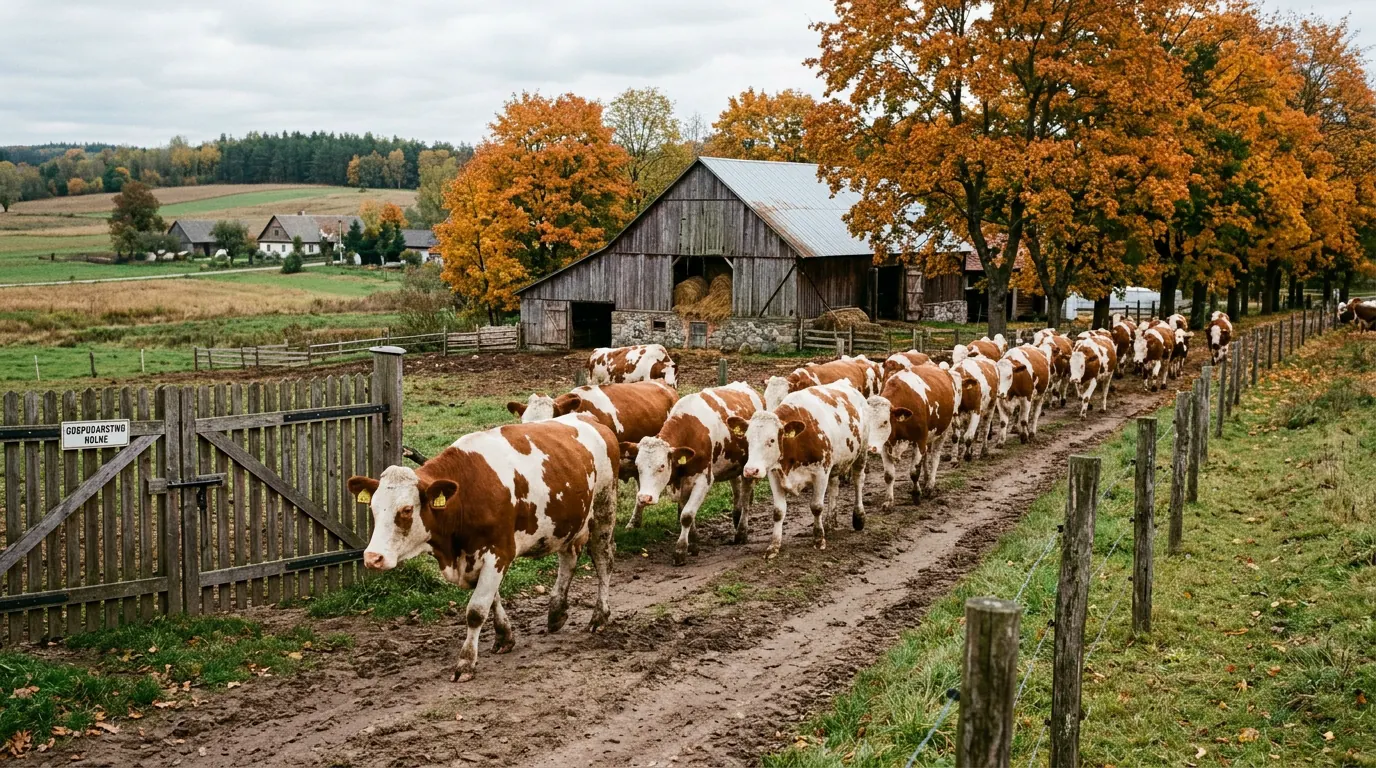
A male cow has no separate name in farming. Most often he is called a bull (in Polish, buhaj): an adult, uncastrated male kept to serve cows and heifers. In Polish, everyday speech and some texts also use the word "byk" for the same animal, so the two Polish names are interchangeable. A castrated male raised only for fattening is a steer (wół). His gains and carcass weight differ from a bull's, and he has no breeding role in the herd.
Why the name matters in your records
Farm management software needs a category for every animal. If a bull and a steer land in one group in your herd list, you will miscount feed, medicine use and sale dates. Separate the breeding bull, the young fattening bull and the steer from the start, and only then give them trade names. Good records also let you tell breeding animals from animals bound for slaughter before an inspection arrives.
Bull, young bull and steer: the differences step by step
Bull: the adult breeding male
A bull is an uncastrated male that has reached sexual maturity and is kept for mating. In beef herds he is usually the sire of calves born to suckler cows. When you talk to a vet, a buyer or an official, state the age, weight and whether the animal is in the breeding herd. This avoids mistakes when ordering medicine and filling in documents.
Steer: the castrated male
A steer is made from a young male by castration. The procedure reduces aggressive behavior and changes body development, so the animal fattens more calmly and with a different pattern of gains than a bull. For that reason, do not keep steers and bulls in one fattening group without a clear need. A steer does not mate, so he should not appear as a sire in your breeding records. Write the date of the procedure in the animal's record.
A male cow at different ages
Male calf and young bull
A newborn male is a calf. After weaning, everyday Polish often calls him a "byczek" (young bull). Teagasc's beef manual describes production from the suckler cow to the finished bull. According to those data, bulls reach 695 kg live weight at 18 months, with a target carcass weight of 400 kg. The figures come from Irish conditions and a specific breed, so in Poland treat them as a point of reference, not a standard for your herd.
Fattening bull
Bulls are usually finished faster than steers because they grow faster. Teagasc notes that in this system the gain targets are high and call for good management and stockmanship. While fattening, watch the feeding: growth that is too fast on poor feed lowers the result. Set the slaughter date by weight and condition, not by age alone. Keep gain records in your register so you can compare animals from different calving groups.
Keeping and feeding a bull
Condition before the season
AHDB Beef & Lamb (the UK's agriculture levy board) recommends scoring a bull's condition about eight weeks before the breeding season. The target is BCS 3: a healthy, fit animal, not a fat one. An overweight bull moves worse and serves less well. Write the score and date in the animal's record, and add a new entry whenever his weight changes. That shows you whether winter feeding is working.
The bull's diet
AHDB warns against high rates of concentrate for breeding bulls, because they can worsen gait, semen quality and libido. In an example diet for an 800 kg bull gaining 0.45 kg a day over a 180-day winter, AHDB gives 35 kg of grass silage and 1.8 kg of concentrate. The example reflects British feeding assumptions, so before changing a ration, ask a feed adviser to recalculate it for your own feed.
Keeping bulls with cows
In the description of 60 years of work at the National Research Institute of Animal Production (Instytut Zootechniki PIB), bulls were kept together with female stock in free-stall barns, and heifers were fed grass silage, spring straw and a little hay. This layout saves space but needs control over who is with whom and when. Record mating and calving dates in the batch and cycle planning module so you know which bull served which cows.
Records for bulls, steers and young bulls
Categories in your register
Keep separate categories in your herd list: breeding bull, fattening young bull, steer, suckler cow and heifer. Every animal should have an ID number and an entry in IRZplus, ARiMR's online animal register. When a category changes, for example after castration of a young male, note the date and the reason. Then an inspection or a sale does not mean rebuilding the history from memory. Keep treatment entries and withdrawal periods in a separate register; the vet chooses the medicine and dose. Treatment records and drug withdrawal periods help with this.
Rules and legal status
Duties to identify and register cattle come from national and EU rules. We describe the legal state as of 22.11.2026. Check current rules in the Internet System of Legal Acts (Internetowy System Aktów Prawnych) and on the pages of the Chief Veterinary Inspectorate (Główny Inspektorat Weterynarii) at gov.pl. For applications to ARiMR (Poland's Agency for Restructuring and Modernisation of Agriculture), start with how to log in to ARiMR e-Wniosek. Rules change, so check them again before every sales decision.
Common naming mistakes
Mixing up bulls and steers in orders
When ordering feed, medicine and services, state sex and status: breeding bull, fattening young bull or steer. Different categories have different feeding and finishing times, so a general word like "male" can lead to wrong calculations. Use the same rule in work orders for crews and when selling. A description with age and weight shortens explanations and cuts disputes when animals are collected.
Where to start
If you are keeping a beef herd for the first time, list all males and assign each a category in a single day. After that, record only changes. See how setup works in practice on the page how we get you started, and decide which module to begin with.
Frequently asked questions
What is the difference between a bull and a "byk"?add
In farming, a bull (buhaj) is an adult, uncastrated male used for breeding. "Byk" is the everyday Polish word and in practice means the same animal. When ordering and in documents, describe age, weight and purpose, because the name alone is not enough.
What is a steer?add
A steer (wół) is a castrated male raised for fattening. Castration changes development and the pattern of gains, and a steer has no breeding role in the herd. Record the category together with the date of the procedure.
What is a young male cow called?add
A newborn is a male calf. After weaning, everyday Polish often calls him a "byczek" (young bull). If he is destined for fattening, enter the fattening category right away, not only at sale.
What body condition should a bull have before mating?add
AHDB Beef & Lamb recommends scoring about eight weeks before the season and aiming for BCS 3: a healthy, fit animal, not a fat one. Record the score and date in the animal's record. Set feed rates with a feed adviser or vet.
How many cows can one bull serve?add
The number of cows per bull depends on the bull's age, condition and grazing conditions. We give no figure here because the materials behind this article do not include one. Keep mating records so you know which bull served which cows.
Does a bull have to be registered and identified?add
Every animal in the herd should be identified and registered under the rules. Check current requirements in the Internet System of Legal Acts and on the Chief Veterinary Inspectorate pages. If in doubt, ask your county veterinary officer (powiatowy lekarz weterynarii).
Sources & resources
- linkIZ PIB — Wiadomości Zootechniczne — 60 years of IZ work on beef cattle (J. Trela et al.), WZ XLIX(2011)4:11–56
- linkTeagasc (Ireland) — Teagasc Beef Manual — Section 3: Beef Systems
- linkAHDB Beef & Lamb (UK) — Beef BRP Manual 5: Feeding suckler cows and calves for Better Returns
- linkInternet System of Legal Acts (Internetowy System Aktów Prawnych) — isap.sejm.gov.pl
- linkChief Veterinary Inspectorate (Główny Inspektorat Weterynarii) — gov.pl/web/wetgiw
Prepared by: DlaFerm Team based on data from the sources listed · Publisher: INSTA-TECH sp. z o.o.
Do you run a beef herd with bulls and steers?
The IRZplus and sensor integrations module helps you keep animal category records in one place. Create a free farm account or get in touch, and we will show you how it works in practice.
Phone
+48 796 258 151