Broiler ducks: rearing for meat, weight and finishing time
A broiler duck is a meat duck raised in a short, intensive finishing period up to slaughter. There is no single finishing time or target weight, because the result depends on the line, the sex of the birds, the feed and the house conditions. We show how to set up rearing, weigh the flock and judge weight uniformity.
verifiedFrom the team that has organised work on poultry farms for years.
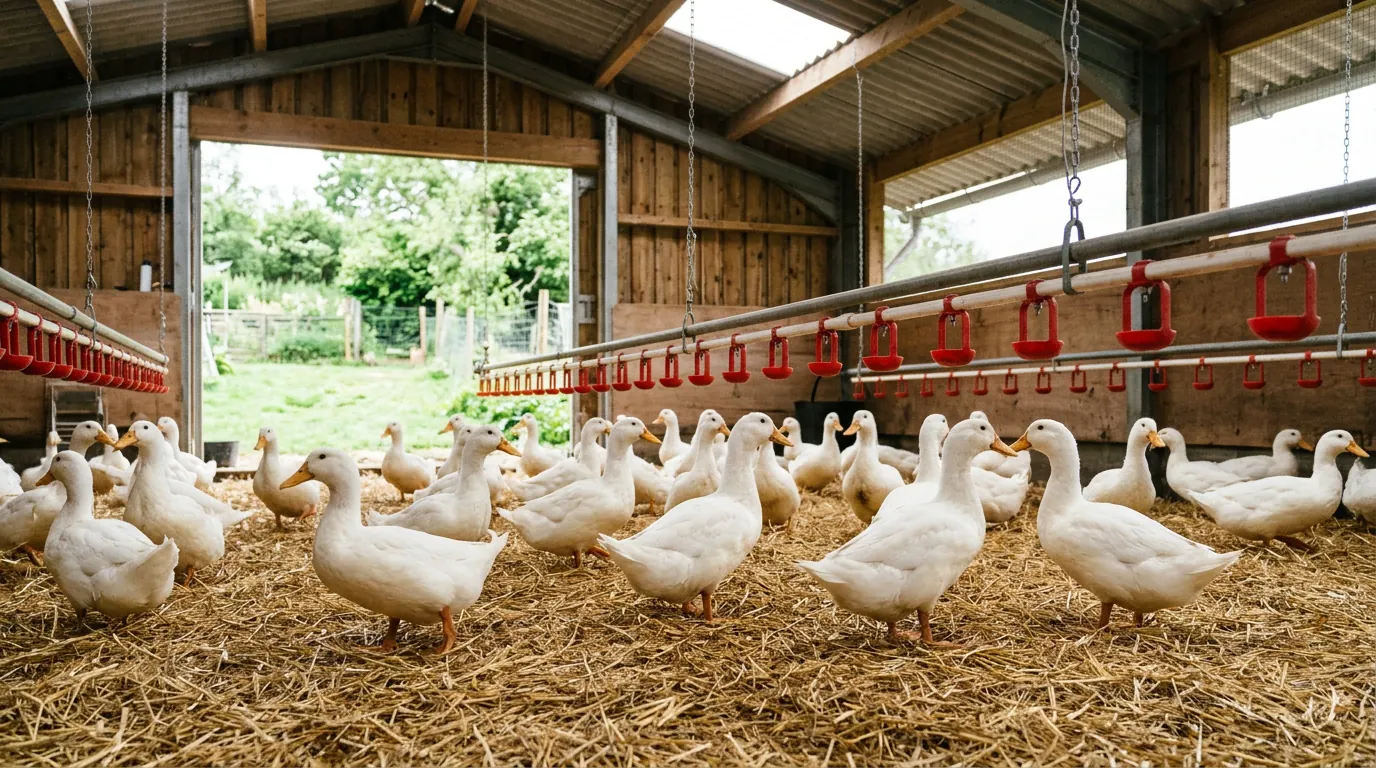
A broiler duck is a meat duck raised in a short, intensive finishing period up to slaughter. There is no single finishing time or target weight. The result depends on the genetic line, the sex of the birds, feed quality and house conditions. The data sets we use cover mainly broiler chickens, so this guide gives no ready-made weeks or kilograms for ducks. We show the principles, how to assess a flock, and where to find guidelines for your specific line. We describe the general rules of rearing in our guide to broiler rearing.
What the finishing result depends on
Four things make up the result: where the young birds come from, how you rear them in the first days, the diet at each stage, and keeping them in a clean, well-ventilated house. A weak start is hardest to make up at the end of finishing. So at placement you check drinker and feeder positions, heating and ventilation. We describe building requirements in house requirements for broilers and ventilation rules in a separate guide. The Ross 308 handbook for chickens recommends easy access to water and feed from day one, and minimum ventilation from the first day. This applies to every broiler, ducks included, though you must set exact parameters for your own flock.
How to weigh the flock and judge uniformity
Why uniformity matters
A uniform flock is predictable: most birds reach a weight close to the average at the same time. A spread-out flock causes trouble at slaughter, because some birds are too light and some too heavy for the order. The 2025 Ross 308 handbook states that variation in results grows as CV% rises, and that this affects both profitability and the efficiency of the processing plant. The aim is to limit variation, not just to reach a high average.
How to calculate CV%
The 2023 Ross Parent Stock handbook gives the formula: CV% = (standard deviation ÷ average body weight) × 100. You can work out the standard deviation in a spreadsheet or with a scientific calculator. After weighing, you calculate four figures: average weight, range (highest minus lowest weight), CV% and the uniformity of the flock. Record the results for each batch straight away, so you can compare the following weeks of finishing. The same formula works for chickens and ducks, because it is simple statistics.
Weighing without catching birds
Weighing a sample stresses the birds and takes crew time. Camera measurements and flock records that combine weight data with house observations are used more and more. We describe this in our article on flock weight without catching birds. Enter the results in the digital flock record, where you see the trend in average weight and batch variation at once.
Feeding broiler ducks at each stage
Sex and growth rate
The Ross 308 handbook for chickens says that males grow faster, use feed better and carry less fat in the carcass than females. Rearing the sexes separately reduces flock variation, because you can adjust feed and stocking density for each group. In ducks the advantages may look different, so before you split the flock, ask your bird supplier for data on your specific line. Do not carry chicken figures over without checking.
Feeding phases
Ross handbooks divide broiler feeding into age phases: starter, grower and several finisher stages, each with a different energy level. The specifications for chickens are given as guidelines, not norms that apply everywhere, because local conditions and ingredient availability change the result. Set the duck feed plan with a feed nutritionist or feeding adviser, based on your own weighings. The rules are collected in our guide to broiler feeding, and you track feed efficiency with the indicators in the FCR and EPEF online module.
Withdrawal feed
Withdrawal feeds are used before slaughter if medicines were given during finishing. The Ross handbook says withdrawal feed should meet local requirements for the withdrawal period. Before you send a batch to slaughter, check in your records when the last medicine was given and when the withdrawal period ends. The treatment and withdrawal module helps with this.
Flock health during finishing
Biosecurity and cleanliness
The Ross handbook states that high standards of hygiene and biosecurity reduce disease pressure in the flock. With ducks, water is a further issue: dirty drinkers quickly worsen litter condition and gut health. Plan entries, disinfection and the movement of people following the rules of a biosecurity plan. Check formal requirements with Poland's Chief Veterinary Inspectorate (Główny Inspektorat Weterynarii), because they change with the regulations.
Gut health and salmonella
Healthy guts are the basis of feed use. We cover microbiome problems and infections in our guide to broiler gut health, and the salmonella threat in a separate article on salmonella in broilers. A sudden drop in appetite, diarrhea or higher mortality calls for contact with a vet. The vet chooses the medicine and dose; the keeper does not pick them based on internet opinions.
Planning the cycle and catching
Planning placements
When planning the cycle, set the target weight from your supplier's guidelines and your own weighings. Spread placements over time so that batches do not all finish in the same week. In the placement and cycle planning module you see which batches are already close to target weight.
Catching and crews
Catching poultry needs a coordinated crew, prepared crates and a short holding time. If you hire an outside crew, settle the service by the agreed rules. The software for poultry catching crews and the poultry service settlements module help with this.
Batch records and finishing results
What to record
For each batch record the placement date, number of birds, each weighing, average weight, CV%, feed and water use, and every medicine given with its withdrawal date. This data lets you calculate production indicators and spot deviations early. Poultry farm management software gathers it in one place, and house records show the state of each building.
Frequently asked questions
How many weeks do you raise a broiler duck?add
We have no numerical data for ducks, so we give no ready-made time. Finishing length depends on the genetic line, the sex of the birds and the target weight. The supplier of the young birds gives guidelines for a specific line, and you compare your own results with them at each weighing.
What weight should a broiler duck reach before slaughter?add
Target weight comes from the processing plant's order and the line guidelines. Set it before placement, then check average weight every week. If the flock departs from the planned curve, check feed, water and ventilation, and contact a vet if there are signs of disease.
How do you calculate flock uniformity?add
Work out the standard deviation of bird weights, divide it by the average weight, and multiply the result by 100. This gives you CV%. The lower the figure, the more uniform the flock. Ross handbooks for chickens use the same formula, so you can use it for ducks.
Should you raise male and female ducks separately?add
Ross handbooks for chickens show that rearing the sexes separately improves uniformity, because each group can be fed and stocked separately. Whether it pays off with ducks depends on the line and how far growth rates differ. Ask your supplier for data on your line before you split the flock.
Can I give my ducks medicine myself?add
No. A vet who knows the state of the flock chooses the medicine and dose. The keeper must record every treatment and observe the withdrawal period before slaughter. Keep your records in the treatment and withdrawal module so you do not send a batch with medicine still in the birds.
How should I record weighing results?add
Record the date, number of birds weighed, average weight, range and CV% for each batch. This shows the trend over time and lets you compare with the previous cycle. The digital flock record collects this data in one place.
Sources & resources
- linkRoss Broiler Management Handbook 2025
- linkRoss Parent Stock Management Handbook 2023 (Interactive)
- linkRoss 308 / 308 FF Broiler Nutrition Specifications 2022
- linkChief Veterinary Inspectorate (Główny Inspektorat Weterynarii) — gov.pl/web/wetgiw
Prepared by: DlaFerm Team based on data from the sources listed · Publisher: INSTA-TECH sp. z o.o.
Do you finish ducks alongside other poultry?
In the digital flock record module you can log weighings, average weight and CV% for each batch, and compare results with the previous cycle. Create a free farm account on DlaFerm.pl and start with your first batch.
Phone
+48 796 258 151