Boar taint — castration, immunocastration and fattening entire males
Boar taint is an unpleasant smell and taste in the meat of uncastrated male pigs, caused mainly by androstenone and skatole. We explain where it comes from, how surgical castration differs from immunocastration, and how to manage entire males to lower the risk to meat quality. Legal and knowledge state as of 22.11.2026.
verifiedFrom the team that has organised work on poultry farms for years.
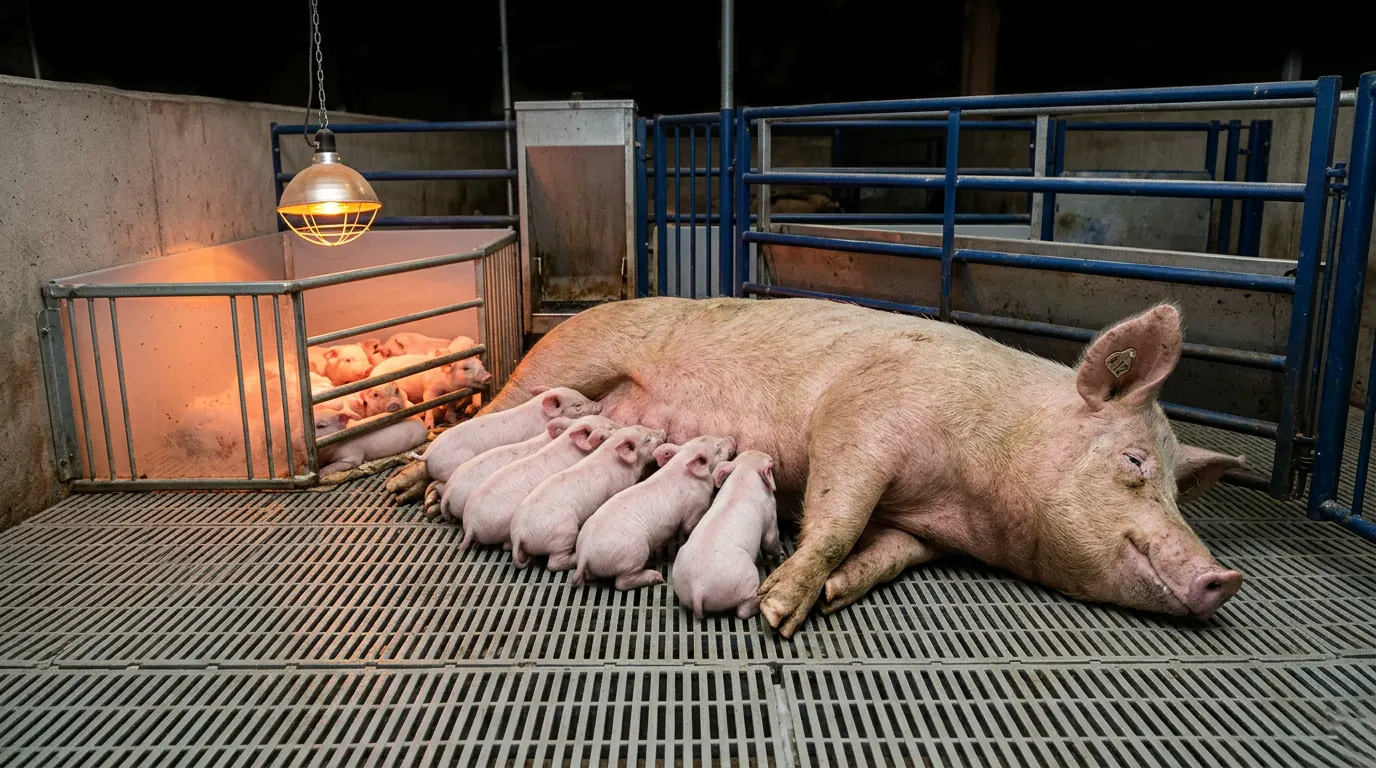
Boar taint is an unpleasant smell and taste in the meat of uncastrated male pigs, most noticeable after cooking. Two compounds cause it: androstenone, a steroid pheromone produced in the testes, and skatole, a breakdown product of tryptophan. According to EFSA, the problem affects pigs fattened longer than usual, beyond 6 months, and reaching high weights. The surest ways to prevent it are surgical castration or immunocastration. When you fatten entire males, feeding and careful planning matter too. This is the state as of 22.11.2026.
Short answer for the farmer
If you fatten young males, you have three options: fatten them entire and accept the risk of taint, castrate surgically and cause the animal pain, or use immunocastration, which means two vaccine injections. The choice depends on what your buyer requires, how long the fattening lasts and what your vet recommends. Below we describe each option, feeding and record keeping.
Where boar taint comes from
Androstenone from the testes
Androstenone is a steroid pheromone produced in the boar's testes. It causes taint in the meat and affects the animal's sexual behavior. According to the KPODR Minikowo handbook (a Polish agricultural advisory center), the compound is present at lower levels in gilts and castrates. Changing the feed will not remove it in practice. According to the same source, you can reduce it only by castration or by suppressing the action of luteinizing hormone (LH). Diet alone does not solve the problem.
Skatole from protein metabolism
Skatole forms when tryptophan, an amino acid from protein, breaks down. According to KPODR, you can regulate its level through feeding, which sets it apart from androstenone. When you plan protein and amino acid rations, take skatole into account, but feeding alone will not remove taint caused by androstenone. Castration and feeding decisions go together. Fattening results such as weight gain and feed use help you judge the effect. You can track them in the FCR and EPEF online module.
Surgical castration and its cost to the animal
Pain and stress
According to KPODR, surgical castration causes pain, seen as physical resistance, a faster heart rate and squeals above 1 kHz. Blood concentrations of ACTH and cortisol are pain indicators. They rise 40 and 3 times respectively above baseline. Castrates without anesthesia play less and are less active at the sow's udder. They rub their rear on the ground and turn their head toward the operated area.
Anesthesia and health after the procedure
General anesthesia in piglets wears off slowly, and afterwards the animals may be apathetic and have a low body temperature, which may raise mortality. For this reason it is usually not used routinely. Local anesthesia is an alternative, for example lidocaine given into the testes. Your vet chooses the product and the method of administration. Record every procedure, and remember the withdrawal period for any medicine. You can keep treatment records in the Treatment and withdrawal periods module.
Immunocastration — principle and schedule
How the vaccine works
Immunocastration is active immunization against gonadotropin-releasing hormone (GnRH), which is important for reproductive function. According to EFSA, the method delays sexual maturation by at least 10 weeks, and then maturation returns. The pig is vaccinated twice, under the skin at the base of the ear, 4 weeks apart. A special applicator is used, designed to prevent accidental self-injection. The second dose is part of the schedule, so plan it in advance.
Results compared with castration
A study cited by EFSA found that after the second dose, the behavior and growth of vaccinated pigs become similar to those of surgically castrated animals. A meta-analysis of 78 studies showed that, over the whole fattening period, immunocastrated animals have higher daily gains and leaner meat than boars and surgically castrated males. EFSA names this method a realistic alternative to surgical castration for pigs fattened longer than usual and reaching high weights. Such animals should not be left entire, because taint affects the quality of meat and meat products.
Planning the dates
Write the dates of the first and second dose into the group schedule so that slaughter falls after the right interval from vaccination. You can plan placement dates and fattening cycles in the Placement planning module. Your vet always decides the product, dose and method of administration, and you should choose the slaughter date together with the vet and the carcass buyer.
Feeding males after immunocastration
Amino acids and energy
The Topigs Norsvin recommendation for Duroc progeny is simple: for up to 10 days after the second dose, raise standardized ileal digestible lysine (SID) and other amino acids to the level for unvaccinated boars. From 10 days after the second dose to the end of fattening, keep the level for castrates. Set the energy density of the feed so the animals can eat ad libitum. We give no specific recipes, because they depend on the genetic line and feed composition. A nutritionist sets them.
How much of the feed advantage remains
The feed efficiency advantage of vaccinated animals shrinks with each week after the second dose, by 1.5 to 2.0% per week according to Topigs Norsvin (Puls, 2013). Even so, immunocastrated animals remain more efficient than surgically castrated pigs for at least seven weeks after the second dose. At the same time, belly yield improves as time passes after the second injection. So choose the slaughter date by weighing growth results and carcass quality. You can also monitor feed use in the Silo monitoring module.
Fattening entire males and separating sexes in practice
Separating sexes in groups
According to the 2026 IZ PIB monograph (Poland's Institute of Animal Production, National Research Institute), in the United Kingdom separating the sexes of fattening pigs is to become mandatory once they reach 50 kg, from 3 March 2026. The aim is to limit aggression of entire males toward gilts. In mixed groups gilts are sometimes attacked repeatedly, and injuries such as lameness are one result. Check the requirements in Poland with the Veterinary Inspection (Inspekcja Weterynaryjna), because the British rules do not apply here.
How many males are fattened entire
According to IZ PIB, in the United Kingdom only about 2% of male piglets intended for fattening are castrated, which shows how much practice differs between countries. The monograph also notes that from a body weight of 30–50 kg animals start to grow at different rates and have different nutritional needs. Separating by sex therefore lets you adjust the diet. You can collect data on groups, placements and slaughters in the Pig farmer app module. You can assign tasks to staff, such as the date of the second vaccination, in the Staff app.
Frequently asked questions
What is boar taint?add
It is an unpleasant smell and taste in the meat of uncastrated male pigs, most noticeable after cooking. It is caused mainly by androstenone from the testes and skatole formed in the gut. The problem affects mostly animals fattened longer and reaching high weights.
Can you remove boar taint with feed?add
Not entirely. According to KPODR, you can reduce skatole through feeding, but no change of feed removes androstenone. You can reduce it only by castration or by suppressing the action of LH. Diet is therefore a supplement to the procedure, not a replacement.
How many doses of the boar taint vaccine do pigs get?add
According to EFSA, immunocastration needs two doses under the skin at the base of the ear, 4 weeks apart. Your vet decides the product, dose and timing. The injection is given with a special applicator that protects against accidental self-injection.
How long after the second dose are pigs more efficient than castrates?add
According to Topigs Norsvin, vaccinated animals remain more efficient than surgically castrated pigs for at least seven weeks after the second dose. The advantage shrinks by 1.5 to 2.0% per week. Carcass quality also counts when you plan slaughter.
Does surgical castration hurt the pig?add
Yes. According to KPODR, the procedure causes pain seen in behavior, heart rate and squeals, and blood levels of ACTH and cortisol rise. Local anesthesia is an alternative, but your vet chooses the product and the method of administration.
Can you fatten male pigs without castration?add
You can, but taint affects meat quality. EFSA states that pigs fattened beyond 6 months and reaching high weights should not be left entire. For shorter fattening, make the decision together with your vet and the buyer.
Sources & resources
- linkKPODR Minikowo — Pig behavior and welfare (P. Dorszewski et al.)
- linkEFSA AHAW Panel — Welfare of pigs on farm (EFSA Journal 20(8):7421)
- linkTopigs Norsvin — Feeding Manual TN Duroc progeny
- linkIZ PIB — Pig welfare in a sustainable animal production system (eds. A. Rekiel, G. Żak)
Prepared by: DlaFerm Team based on data from the sources listed · Publisher: INSTA-TECH sp. z o.o.
Fattening entire males or planning immunocastration?
The DlaFerm pig farmer app helps you manage groups, placements and treatment records in one place. Create a free farm account on DlaFerm.pl and see how it works with your herd.
Phone
+48 796 258 151