Backyard chicken: lifespan, feed and egg laying
A backyard chicken usually lives several years. Its feed needs and egg count depend on breed, age, temperature and feed quality. No single number fits every yard. We show what drives the results and how to check them in your own flock.
verifiedFrom the team that has organised work on poultry farms for years.
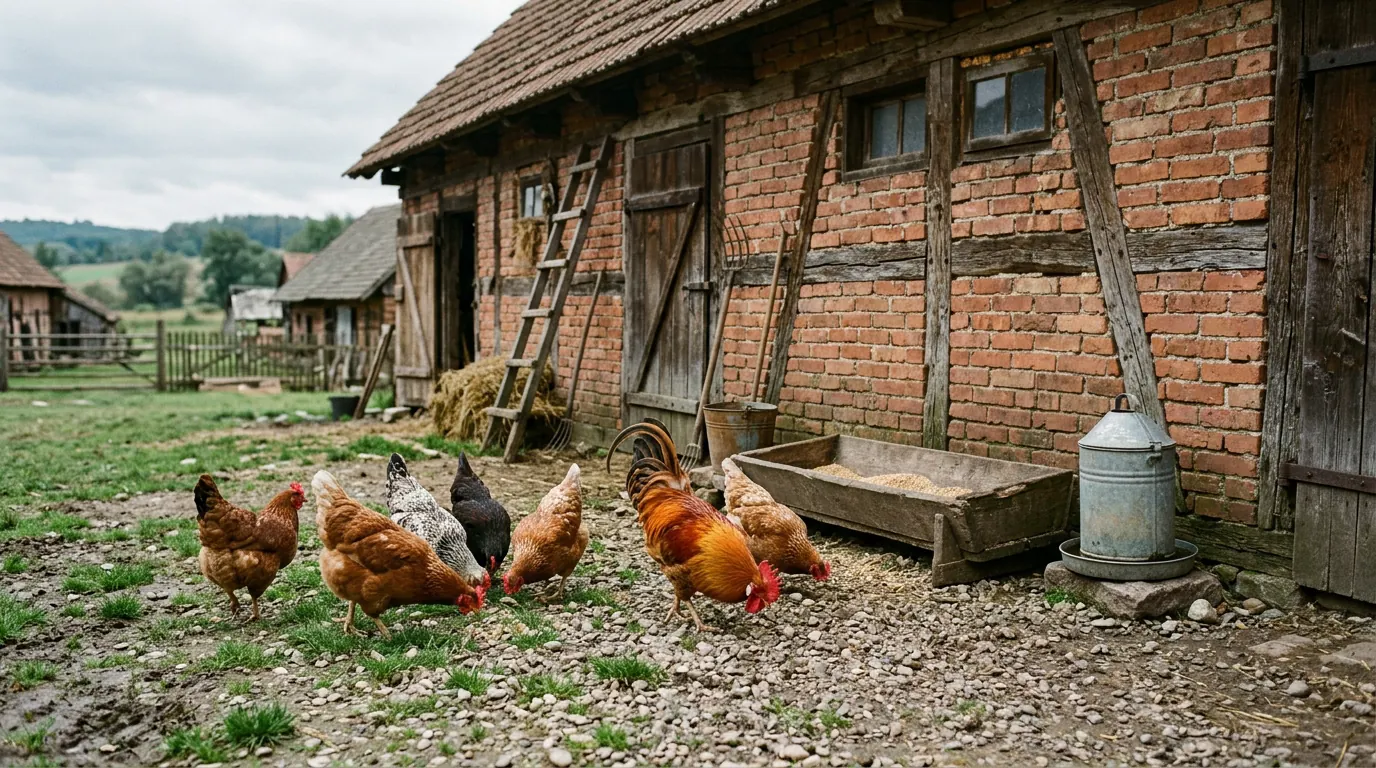
A backyard chicken is a bird from a home coop, usually a dual-purpose breed or a crossbred, not a specialized laying line. Its lifespan, daily feed intake and egg count depend mainly on breed, age, temperature and feed quality. Below we cover each factor and show how to check the results in your own flock. When choosing a breed, see our pages on the Sussex hen and how long a chicken lives.
Why there is no single standard
Backyard chickens differ in weight, build and temperament. Light breeds usually lay more eggs and eat less. Heavy meat breeds eat more and lay more slowly. Crossbreeds from random breeding give very different results from bird to bird. So instead of hunting for one number, watch your own flock for a few months and write down what changes.
How long a backyard chicken lives
What helps hens live longer
The most important things are dry litter, a tight coop without drafts, and a run protected from foxes, hawks and dogs. A flock in good condition keeps laying and stays resistant for longer. Regular worming and checks for external parasites are basic care, but a vet always chooses the medicine and dose. A hen kept under stress, in a crowded pen or with constant access to dirty water, gets sick more often and loses condition faster.
When a hen stops laying
After a long laying period, hens usually lay fewer eggs, and their feathers and comb may look worse. This is a natural process, but sudden weakness, lethargy or loss of appetite needs checking. We describe the causes in a lethargic hen: causes. If you suspect disease, contact a vet and do not decide on treatment yourself.
How much a backyard chicken eats and what to feed
What sets the daily ration
Feed intake depends on body weight, outside temperature, age and whether the hen is laying heavily. In winter a hen eats more, because her body spends energy on staying warm. In summer appetite drops. With a permanent run, a hen finds some food herself, but this does not replace complete feed. The best way is to set the ration by how much feed is left in the feeder after a few hours, and adjust it every few days.
Water, calcium and grit
A hen needs constant access to clean water, because a lack of it quickly lowers laying. Laying needs calcium, so layer feed contains more of it, and you can also offer crushed limestone in a separate container. Hens that eat grit or small stones digest food better in the gizzard. If you feed table scraps, keep it moderate and never give salty or moldy food.
How many eggs a backyard chicken lays
What decides the egg count
Hens usually lay the most eggs in their first year after laying starts. After that, laying slowly declines. Day length matters: in spring and summer hens lay more often, in autumn and winter less. Stress, molting and a change of flock also cut production. Differences between breeds are large, so before you buy, check the breed description and decide whether you want eggs or looks. For example, the Wyandotte and the Plymouth Rock differ in this respect.
Eggs without a rooster
A hen lays eggs whether or not a rooster is present. You need a rooster only to fertilize the eggs when you want chicks. Unfertilized eggs need no incubation and taste and are worth the same. We explain this in more detail in does a hen lay eggs without a rooster.
Hatching eggs and hatching
Storing hatching eggs
Keep eggs meant for hatching in a cool, stable place and turn them before they go into the incubator. Storing them too long lowers the hatch rate, so collect eggs daily and use them within a few days. We give the details in storing hatching eggs.
Incubating at home
At home you most often hatch with an incubator. A broody hen sits on eggs herself if she has the instinct, but not every breed does. With an incubator, follow the manufacturer's instructions and control temperature and humidity. We describe how to choose equipment in the guide homemade egg incubator. Rules on selling eggs and poultry are available from Poland's Chief Veterinary Inspectorate (Główny Inspektorat Weterynarii) and in the acts published in ISAP, Poland's online legal database.
Keeping a flock at home
What to record
Record the date a hen joined the flock, her breed, eggs laid per week, feed use and health events. After a few months these notes show when laying starts to drop and whether a feed change made a difference. You can keep them in a notebook, but in a system it is easier to compare data and not lose it after the season.
Coop records in practice
The coop records module in DlaFerm.pl lets you assign birds to a coop, log laying and events, and go back to earlier entries. For a small flock it is a simple way to see which hen is slipping before the drop shows up in the egg basket.
Frequently asked questions
How long does a backyard chicken live?add
A backyard chicken usually lives several years. Lifespan depends on breed, coop conditions, access to feed and water, and protection from predators. If a bird is ill, a vet decides on treatment.
How much does a backyard chicken eat per day?add
The daily ration depends on body weight, temperature and laying. A hen eats more in winter and less in summer. The best way is to watch how much feed is left in the feeder and adjust the ration every few days.
How many eggs does a backyard chicken lay in a year?add
The number depends on breed, age and day length. Hens lay the most in their first laying year, then laying slowly declines. Record laying in your flock to see your own result.
Does a hen lay eggs without a rooster?add
Yes, a hen lays eggs without a rooster. You need a rooster only to fertilize eggs if you want chicks. Unfertilized eggs taste the same and are worth the same.
Why has my hens' egg laying dropped?add
The usual causes are a change in day length, stress, molting, disease, lack of water or unsuitable feed. If the drop is sudden, check the flock and talk to a vet.
Can you keep backyard chickens in a town?add
In Poland, rules on keeping poultry in towns are set by local council and veterinary regulations. Before you build a coop, check them with your local council office and the county vet (powiatowy lekarz weterynarii).
Sources & resources
- linkChief Veterinary Inspectorate (Główny Inspektorat Weterynarii) — gov.pl/web/wetgiw
- linkNational Research Institute of Animal Production (Instytut Zootechniki PIB) — izoo.krakow.pl
- linkEFSA — efsa.europa.eu
- linkInternet System of Legal Acts (ISAP) — isap.sejm.gov.pl
Prepared by: DlaFerm Team based on data from the sources listed · Publisher: INSTA-TECH sp. z o.o.
Keeping a few hens and want tidy records?
The coop records module lets you log your flock, laying and events in one place. Create a free farm account and start with your first coop.
Phone
+48 796 258 151