Aubrac cattle: traits, breeding, fattening
Aubrac is a French beef breed, listed in the Polish ARiMR register under the code AU. We explain what the breed is like, how to run a suckler herd with it and what to watch during fattening. Figures come only from IZ PIB publications and the other sources listed in the article.
verifiedFrom the team that has organised work on poultry farms for years.
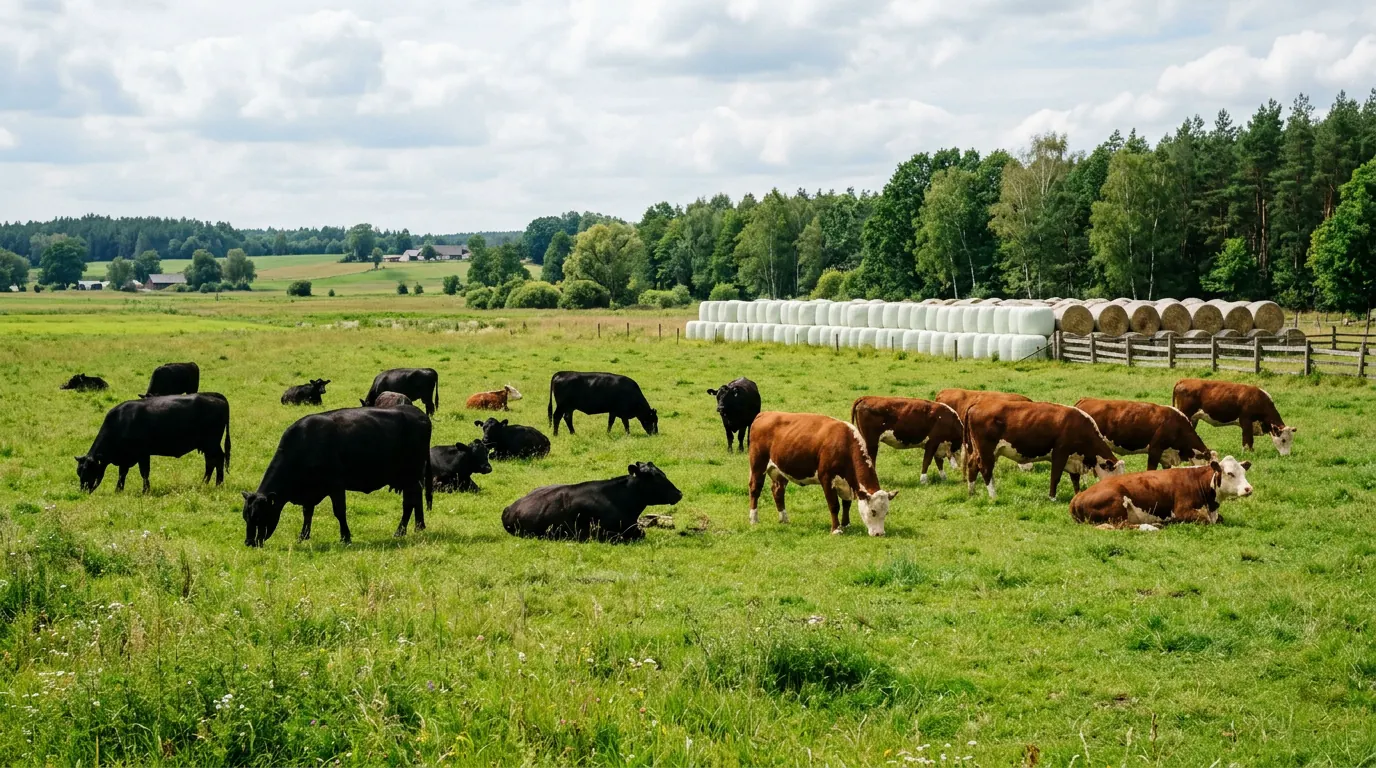
Aubrac is a French beef breed. In the list of letter codes that Poland's ARiMR (Agency for Restructuring and Modernisation of Agriculture) uses to mark cattle breeds, it has the symbol AU. In suckler herds it is used to produce calves for fattening and in commercial crossbreeding. The breed is described as calm and good on pasture. There are no published figures for the number of Aubrac cattle in Poland, so we do not quote any. Below we cover breed traits, breeding work, fattening and paperwork.
Who this breed is for
Aubrac works best on farms with access to pasture and time to watch the herd. A beef breed gives no milk to sell, so income depends on selling calves, young cattle and possibly meat. Before you buy, compare the cost of feed, labor and pasture with the expected revenue. The calculators for farmers let you work out the result with your own data.
Appearance and performance of Aubrac
Build and coat
Aubrac has a compact, medium-sized frame and a typical fawn coat. Cows and bulls are usually calm to handle, which makes work at the pen and during inspections easier. When buying, look at how even the group is, the build of the hindquarters and the animal's health, and check its origin in the documents. Looks do not decide results, though: performance and herd health matter most.
Beef performance
In beef cattle, dressing percentage and weight gain decide the result. Research by IZ PIB, Poland's National Research Institute of Animal Production (J. Trela et al., 2011), shows how the sire breed affects the outcome. Crossbred young bulls out of black-and-white cows reached a dressing percentage of 57.54% in the control group at 12 months and 57.81% at 15 months. Crosses with Piemontese reached 60.18% at 12 months and 61.98% at 15 months. Aubrac was not compared in this research, so we do not apply the results directly to the breed.
Breeding work in a suckler herd
Selection and crossbreeding
The assessment of performance and breeding value of beef breeds relies on data from evaluations carried out in Poland. A table from IZ PIB (Z. Choroszy et al., 2018) shows changes in the number of crossbred cows in 2007–2016 and how the share of individual breeds changed. Aubrac is not listed separately, so conclusions about its role in crossbreeding have to come from your own herd data. Make selection decisions with an advisor and record the results of every cow, so that after a few years you can see which lines give good calves.
Reproduction and cycle planning
A suckler herd needs planned calving. It makes feed, labor and calf sales easier to plan across the season. Record dates of mating, calving and weaning, then compare them with your plan. Records quickly show which cows need attention and help when you talk to your vet. The batch and cycle planning module helps you keep dates in order without counting by hand.
Fattening young Aubrac cattle
Feeding in an organic system
IZ PIB research on feeding beef cattle in organic farming (K. Bilik et al.) points to limits on the use of concentrates. According to the authors, the main factor in feeding efficiency of cows and young fattening cattle on organic farms is the quality of roughage and maximizing its share all year round. This also matters outside organic farming, because good roughage lowers fattening costs. Check every feeding plan against the actual feed batches and compare the results with animal gains.
Slaughter age and dressing percentage
Slaughter age affects dressing percentage and the cost of each kilogram of meat. IZ PIB research (J. Trela et al., 2011) compared results at 12 and 15 months of age. In young bulls from Piemontese crosses, dressing percentage rose from 60.18% to 61.98%, while in the control group the change was small. So choose slaughter age on the basis of a calculation, not habit. PODR Lubań (a regional agricultural advisory center) prepared a sample calculation of beef liveweight income for different intensity levels, and you can enter your own data in the calculators for farmers.
Veterinary care and welfare
Treatment and withdrawal periods
Treating cattle always starts with a call to your vet. The vet chooses the medicine and dose, and you follow the instructions and record every administration. After treatment a withdrawal period applies: the time before which the animal cannot go to slaughter. Keep records of medicines and withdrawal dates in the treatment and withdrawal module, so you can check all dates before animals are shipped.
Animal welfare
EFSA (European Food Safety Authority) opinions on beef cattle welfare describe requirements for housing, care and herd health. Calves have extra protection standards, including suitable pen conditions and care in the first weeks of life. Welfare is also practical: calm handling, a clean bed and regular checks of body condition make work easier and cut losses. Check the detailed requirements in national rules and with your vet.
Records and paperwork
Breed code and registration
In the ARiMR list of letter codes, the Aubrac breed has the symbol AU. This code goes into animal documents, and the animals are registered in IRZplus, ARiMR's online animal register. The list is updated from time to time, so check the latest version on the ARiMR website before you file a report. You can synchronize farm data with the registers through the IRZplus integrations, which cuts down on retyping numbers and dates.
Herd records on the farm
Besides reports to the registers, keep your own records: animal numbers, dates of calving, weaning and sale, and health events. Then you do not have to hunt for data in notebooks during an inspection. The farm management software keeps these records in one place, also for beef cattle.
Frequently asked questions
What does the AU code mean in the ARiMR list?add
AU stands for the Aubrac breed in the list of letter codes for marking cattle breeds kept by ARiMR. The symbol goes into the documents of animals of this breed. Check the current list on the ARiMR website before you file a report, because it is updated from time to time.
Is Aubrac suited to grazing?add
The breed is described as doing well on pasture, so it is a good candidate for farms with meadows. Pasture quality and access to roughage affect results more than the breed itself, though. Set your grazing plan with an agricultural advisor.
At what age should you fatten Aubrac cattle?add
Slaughter age depends on your goal, feeding system and profitability. IZ PIB research compared results at 12 and 15 months of age, and the differences depended on the sire breed. Choose the age on the basis of a calculation and talk it over with your vet.
How much does an Aubrac cattle cost?add
The price depends on the animal's age, sex, origin and pedigree. We give no amounts, because quotes change every week. Check current prices with breeders, in adverts and with local agricultural chambers.
Who decides how to treat calves?add
The vet always chooses the medicine and dose. You follow the instructions and record every administration. After treatment a withdrawal period applies, and it must pass before the animal is slaughtered.
Do you have to register cattle in Poland?add
In Poland cattle are recorded in IRZplus, and animals must be tagged and reported as the rules require. Check the details with ARiMR or the county vet, because requirements can change.
Sources & resources
- linkARiMR — List of letter codes for marking cattle breeds
- linkIZ PIB — Wiadomości Zootechniczne — Breeding work in a beef cattle herd (Z. Choroszy et al.), WZ L(2012)1:11–20
- linkIZ PIB — WZ — 60 years of IZ work on beef cattle (J. Trela et al.), WZ XLIX(2011)4:11–56
- linkIZ PIB — WZ — New methods of assessing the performance and breeding value of beef cattle (Z. Choroszy et al.), WZ LVI(2018)3:17–23
- linkIZ PIB — WZ — Feeding beef cattle in organic production (K. Bilik et al.)
- linkEFSA AHAW Panel — Welfare of beef cattle (EFSA Journal 23:9518)
Prepared by: DlaFerm Team based on data from the sources listed · Publisher: INSTA-TECH sp. z o.o.
Do you run a beef cattle herd?
The DlaFerm farm management software keeps your herd work in one place. Create a free farm account or get in touch, and we will show you how it works in practice.
Phone
+48 796 258 151